Antarctic Whales Rebound After Decades Near Extinction
Humpback whales and other species are making a remarkable comeback in Antarctic waters after a global whaling ban saved them from extinction. Scientists are now racing to protect their recovery as industrial fishing expands in the same waters where these giants feed.
For decades, Antarctica's waters were silent. Commercial whaling had pushed most whale species to the brink of extinction, leaving the Southern Ocean nearly empty of its largest inhabitants.
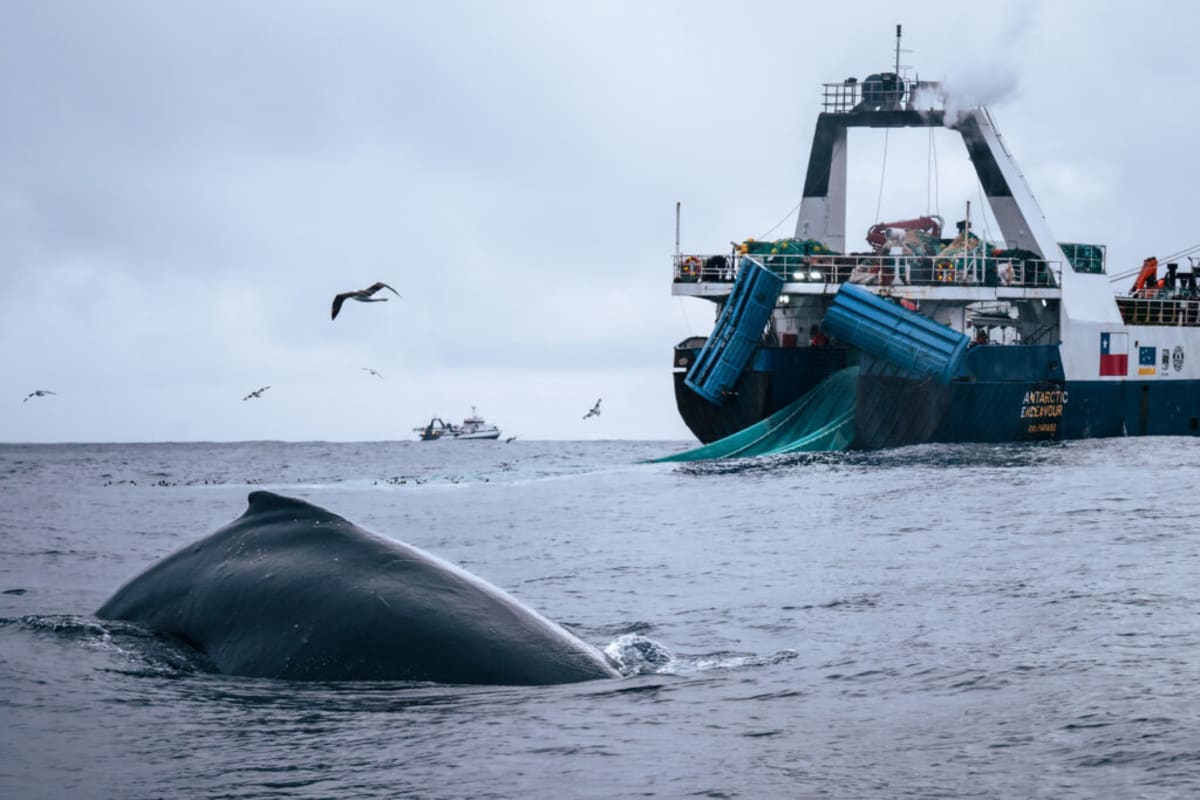
Today, those waters are alive again. Humpback whales have largely recovered since the global whaling ban took effect in the early 1980s, and researchers recently documented 1,000 whales feeding together near the South Orkney Islands—the largest gathering observed since industrial whaling ended.
Blue whales and fin whales are returning too, though more slowly. Their presence marks one of conservation's greatest success stories, proving that protective measures can bring species back from near extinction.
Scientists like Matthew Savoca from Stanford's Hopkins Marine Station are now studying these recovering populations. He joined a month-long research voyage earlier this year to document whale numbers and feeding patterns around the South Orkney Islands.
The research comes at a critical time. For the second year running, Antarctica's industrial krill fishing fleet reached its seasonal catch limit of 620,000 tons and stopped early. The fleet harvests tiny shrimp-like crustaceans that serve as the primary food source for whales, penguins, and seals.
A rule change in 2024 now allows fishing boats to concentrate their catch in smaller areas. These happen to be the same spots where krill—and therefore whales—gather in the highest numbers.
Peter Hammarstedt from Sea Shepherd Global explains the challenge: "We have a growing number of whales down in the Southern Ocean, an expanding krill fishery, and these two bodies are competing for a decreasing number of krill."
The Commission for the Conservation of Antarctic Marine Living Resources, which manages Southern Ocean fishing, established catch limits in the 1990s. But those rules were created when few whales remained alive in Antarctica and didn't account for their potential return.
The Bright Side
Scientists and conservation groups are gathering data to help decision-makers understand how fishing impacts whale recovery. Researchers partnered with Sea Shepherd to study whale populations, and their findings will inform international delegates when they meet next month in Hobart, Australia, to negotiate new fishing rules.
The information could reshape how the commission balances commercial fishing with protecting the ecosystem that supports these recovering whale populations. Plant-based alternatives to krill oil supplements already exist, offering a path forward that doesn't require choosing between industry and conservation.
Decades of protection brought whales back from near extinction—now scientists are working to ensure their remarkable comeback continues.
Based on reporting by Inside Climate News
This story was written by BrightWire based on verified news reports.
Spread the positivity!
Share this good news with someone who needs it