Antarctica Study Reveals Key to Future Mars Mission Success
Scientists discovered that astronauts preparing for Mars missions face an unexpected challenge: too much togetherness can hurt team performance. A 10-month Antarctica experiment shows how to better prepare crews for long space journeys.
Twelve people spent 10 months in one of Earth's most isolated places, and what researchers learned could help astronauts survive the journey to Mars.
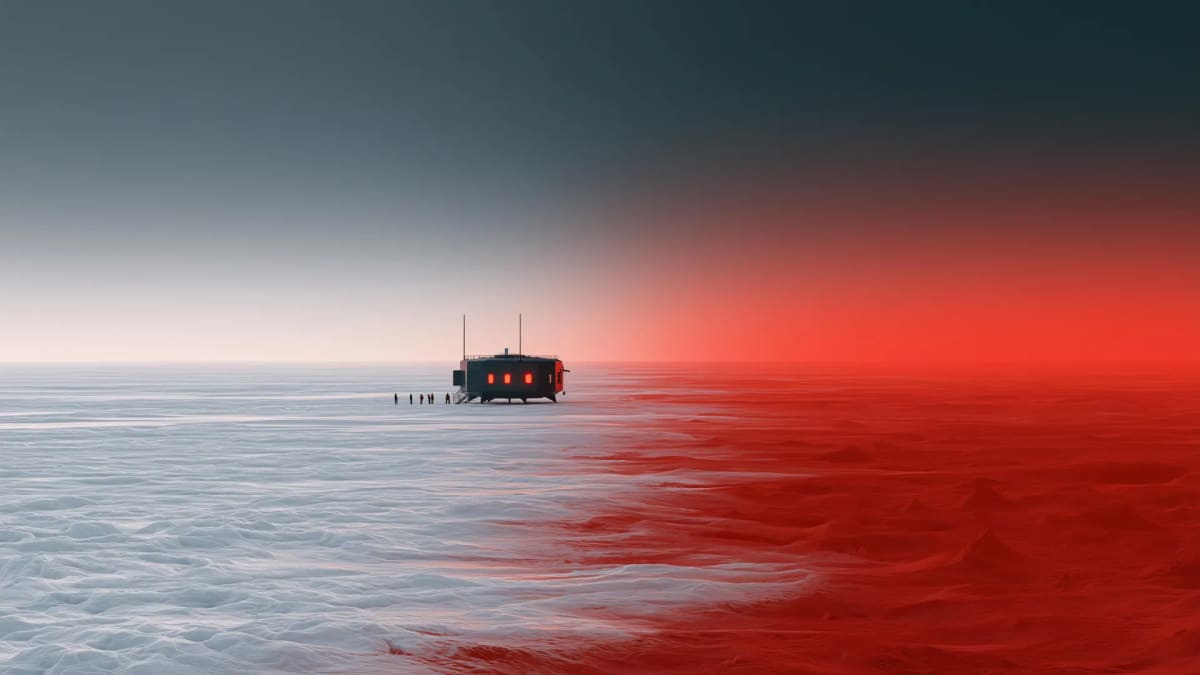
Scientists tracked a crew at Concordia Station in Antarctica, where winter temperatures plunge to minus 80°F and escape is impossible. The setting mirrors what astronauts will face on long space missions, making it the perfect testing ground for understanding how isolation affects human teamwork.
The University of Zurich research team gave crew members questionnaires and equipped them with sensors that tracked every social interaction. The sensors measured when people were together and how long they stayed near each other, creating a detailed map of the crew's social life over 10 months.
What they found surprised everyone. More time together didn't make the crew happier or more effective.
Instead, frequent contact actually increased conflict and mistrust. Crew members who spent more time around others reported lower performance and greater tension, suggesting that constant closeness in tight spaces becomes its own form of stress.
"In small teams under extreme conditions, more contact doesn't automatically equate to social support, but can actually increase tensions," says Jan Schmutz, the psychology professor who led the study. The lesson is clear: future Mars astronauts will need private space just as much as they need companionship.
The sensors revealed another pattern as months passed. The crew gradually split into smaller groups based on shared language and nationality, seeking comfort in familiar cultural connections during the harsh winter.
These bonds helped individuals feel supported during difficult times. However, they also created divisions that could weaken team unity on missions where cooperation is critical for survival.
Why This Inspires
This research represents genuine progress toward making Mars missions safer and more successful. Understanding these social dynamics now means space agencies can design better crew quarters, plan private spaces into habitat layouts, and train astronauts to recognize when they need solitude versus socializing.
The wearable sensors proved they can work reliably in extreme conditions without disrupting daily routines. Future studies will use this technology to identify which types of interaction relieve stress and which add to it, fine-tuning preparation for the next generation of space explorers.
The findings also apply closer to home. Submarine crews, offshore platform workers, and remote research teams all face similar challenges and can benefit from these insights about managing isolation and forced togetherness.
Space agencies now have concrete data to help astronauts thrive on humanity's longest journeys yet.
Based on reporting by Health Daily
This story was written by BrightWire based on verified news reports.
Spread the positivity!
Share this good news with someone who needs it