Antarctica's Blood Falls Reveals Ancient Ocean Trapped in Ice
Scientists discovered marine life thriving in Antarctica's crimson Blood Falls waterfall, proving the water comes from an ancient ocean trapped beneath a glacier for thousands of years. The finding shows how life adapts and survives even the most extreme changes on Earth.
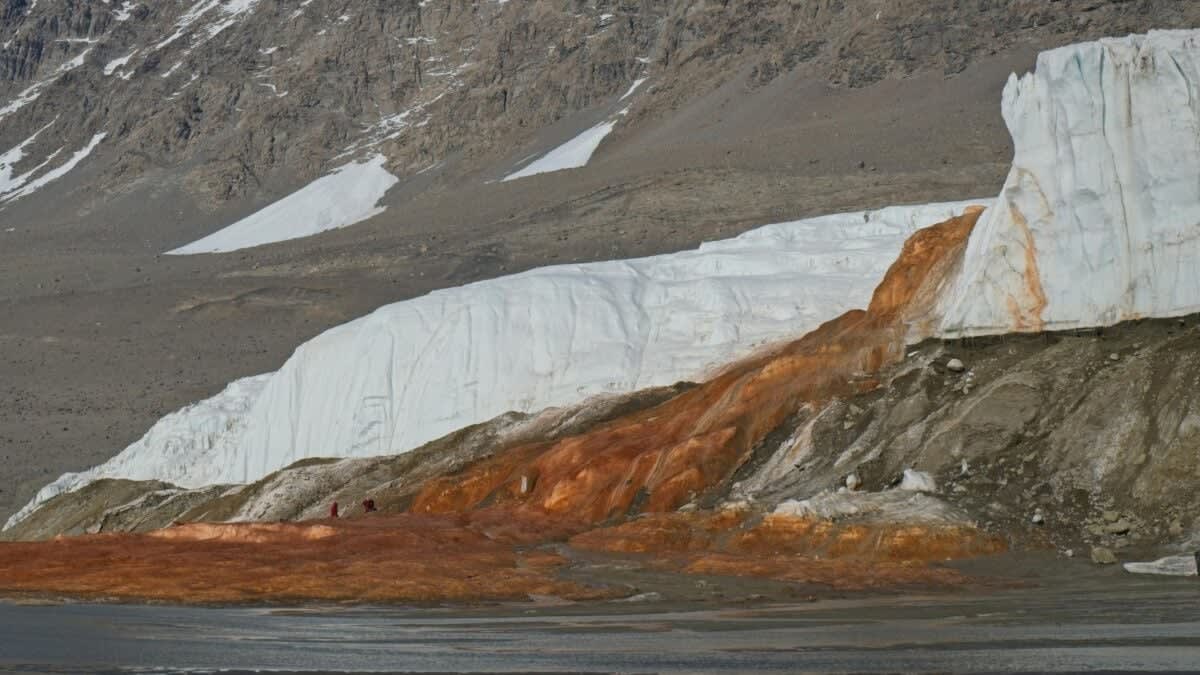
Deep in Antarctica's frozen desert, a glacier bleeds crimson water into the valley below, and scientists just solved a decades-old mystery about where it comes from.
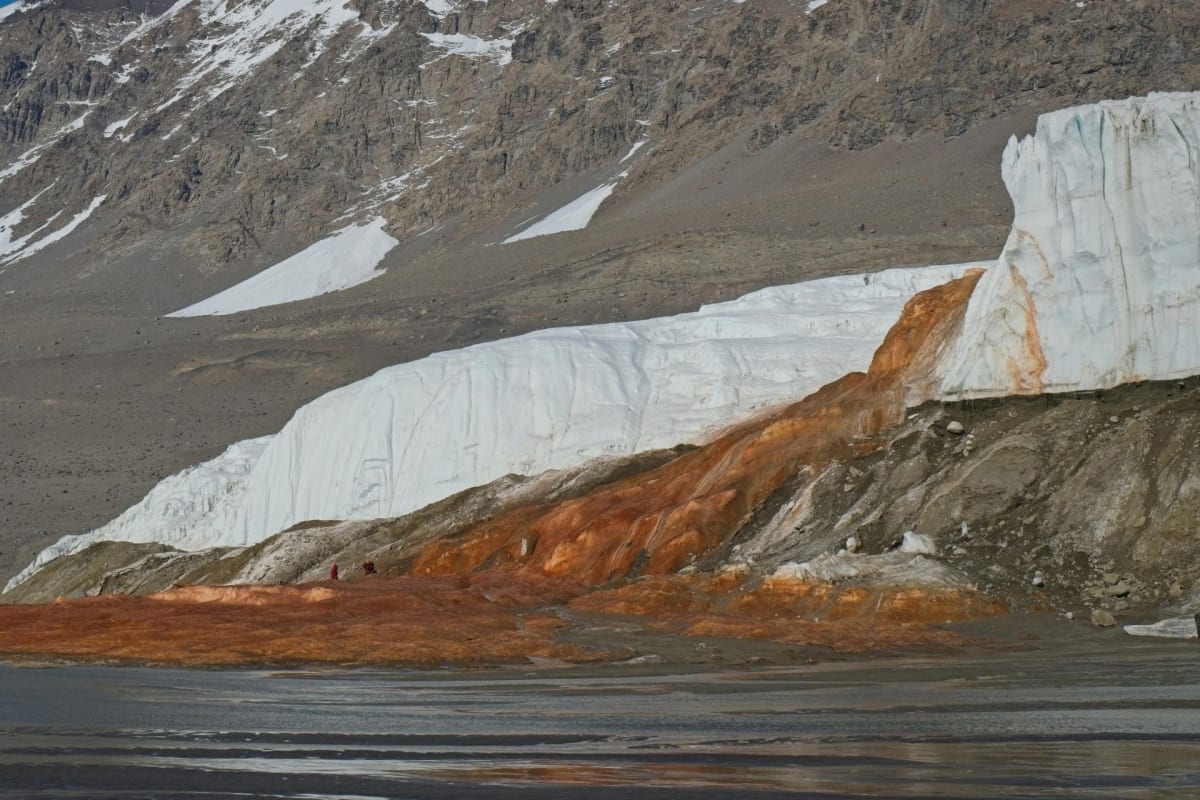
Blood Falls has puzzled researchers since its discovery at Taylor Glacier in Antarctica's McMurdo Dry Valleys. The waterfall's striking red color comes from iron-rich brine flowing from beneath the ice, but no one could prove where this unusual water originated.
A new study in Nature Geoscience finally has the answer. The water is ancient seawater that flooded the valley during warmer periods thousands of years ago. When temperatures dropped and sea levels fell, the ocean water became trapped beneath the advancing glacier, preserved in a hidden pocket more than 20 miles from the nearest ocean today.
The proof comes from tiny survivors living in the scarlet waters. Researchers from Scripps Institution of Oceanography analyzed 167 samples of water, sediment, and air from the region. They found nearly all the microorganisms in the red ice and mud at the glacier's edge were marine species, while surrounding areas contained freshwater and land-based life.
"Finding what is effectively a marine oasis in a polar desert was extraordinary," said Andrew Allen, a marine biology professor who co-authored the study. The team identified both simple bacteria and more complex organisms with specialized cells, all showing strong connections to ocean environments rather than freshwater or terrestrial ecosystems.
Why This Inspires
These microscopic communities offer a powerful reminder that life finds a way, even when conditions change dramatically. The organisms living in Blood Falls survived being cut off from the ocean, buried under ice, and exposed to extreme cold and darkness. They adapted and thrived for potentially thousands of years in complete isolation.
The discovery also opens new doors for understanding Earth's climate history. By studying these resilient microbes, scientists can piece together when the flooding happened and how Antarctica's landscape evolved over time. The biological clues locked inside these tiny survivors could reveal important details about past warm periods and environmental shifts.
"Time and again, we're learning that when we use the right tools to look in the right places, even the harshest environments reveal rich, highly specialized ecosystems," Allen explained.
The finding proves that life's resilience extends far beyond what we typically imagine, thriving in places that seem impossible for survival.
More Images

Based on reporting by Google News - Science
This story was written by BrightWire based on verified news reports.
Spread the positivity!
Share this good news with someone who needs it