Antarctica's First Dinosaur Found in Museum After 40 Years
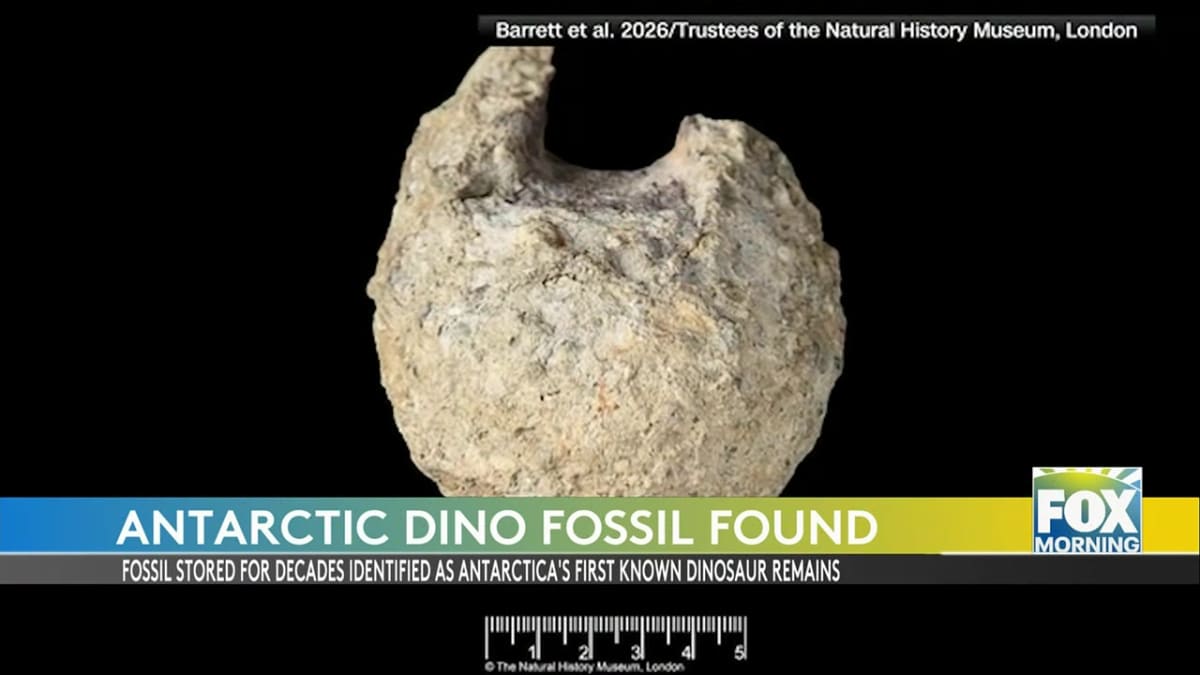
A bone fragment collected in 1985 and stored in London's Natural History Museum has been confirmed as Antarctica's first dinosaur fossil. Modern imaging revealed the 82-million-year-old bone belonged to a young long-necked herbivore that roamed the continent when it was warm and green.
Scientists just confirmed that a tiny bone sitting in a London museum drawer for nearly four decades is Antarctica's first confirmed dinosaur fossil, proving the frozen continent once teemed with prehistoric life.
The bone fragment was collected during a 1985 Antarctic expedition but was mistakenly labeled as belonging to a marine reptile. For 40 years, it sat largely ignored in the Natural History Museum's collection.
Everything changed when international paleontologists recently reexamined the specimen using advanced imaging technology. They discovered subtle features that confirmed it came from a young sauropod, a long-necked herbivorous dinosaur that lived 82 million years ago.
Back then, Antarctica looked nothing like the ice-covered wasteland we know today. The continent was part of the ancient supercontinent Gondwana and enjoyed temperate climates with lush vegetation capable of supporting large plant-eating dinosaurs.
The discovery rewrites the timeline of dinosaur habitation in Antarctica. It proves these massive creatures didn't just pass through but actually thrived there, suggesting land bridges once connected the southern continents and allowed species to migrate freely.
Why This Inspires
This breakthrough shows that groundbreaking discoveries don't always require new expeditions to remote locations. Sometimes the most important finds are already sitting on museum shelves, waiting for the right technology and fresh eyes to reveal their secrets.
Museums worldwide house millions of fossils collected under challenging conditions over centuries of exploration. Many remain unstudied or misclassified due to limitations of past technology.
Modern tools like high-resolution CT scanning and 3D modeling now allow scientists to revisit these collections with completely new perspectives. What once seemed ordinary can suddenly become extraordinary.
The Antarctic dinosaur discovery encourages researchers globally to dig back through archives and reexamine specimens that previous generations might have overlooked. Climate change is also unlocking new fossil sites across Antarctica as ice sheets retreat, promising even more revelations about Earth's prehistoric past.
The finding also helps scientists understand how dramatically our planet's climate has shifted over millions of years. Evidence of dinosaurs roaming a green Antarctica provides crucial data for reconstructing ancient environments and tracking continental drift.
Museums are now doubling down on efforts to digitize collections and invest in new analytical technologies, ensuring no fossil goes unexamined and every specimen gets the scientific attention it deserves.
More Images




Based on reporting by Google: fossil discovery
This story was written by BrightWire based on verified news reports.
Spread the positivity!
Share this good news with someone who needs it