Apollo Footprints Will Last a Million Years on the Moon
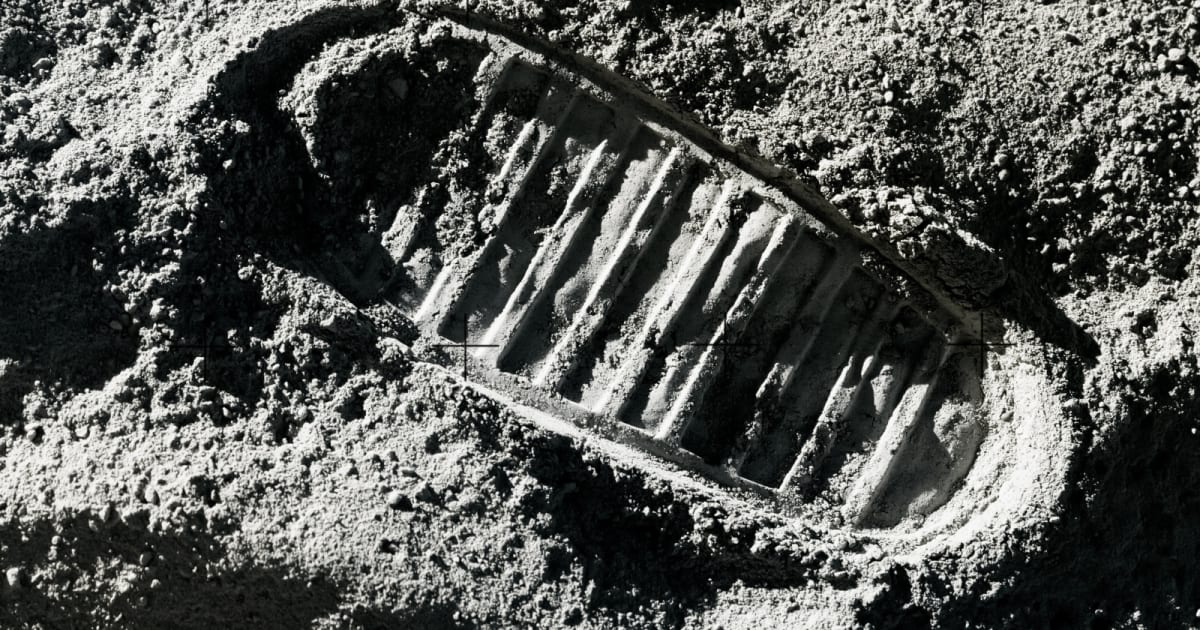
The bootprints Neil Armstrong and his fellow astronauts left on the Moon in 1969 will still be visible a million years from now. Without wind or rain to erase them, these marks of human achievement are outlasting nearly everything we've built on Earth.
The footprints pressed into lunar dust over 50 years ago aren't going anywhere anytime soon, and that's a testament to one of humanity's greatest adventures.
When the Apollo astronauts stepped onto the Moon's surface, they left behind more than just tracks. They created a time capsule of human exploration that will survive longer than any monument, building, or artwork on our home planet.
The secret to their longevity is beautifully simple. The Moon has no atmosphere, no rain, no wind, and no living things to disturb the ground. The forces that wash away a footprint on a beach in hours simply don't exist there.
The lunar surface itself helps preserve history. Moon dust, called regolith, is made of sharp, crushed rock that holds its shape when compressed. When a boot presses down, the print stays crisp and clear.
NASA's Lunar Reconnaissance Orbiter has proven this isn't just theory. Decades after the landings, its cameras still capture sharp images of astronaut tracks and rover trails crisscrossing the landing sites.
The Moon does experience erosion, just on a timescale that makes human history look like an eyeblink. Tiny meteorites constantly pepper the surface at thousands of kilometers per hour, very slowly grinding and stirring the top layer of dust.
Scientists estimate this process turns over the top few centimeters of lunar soil roughly every 81,000 years. That sounds fast until you remember we're talking about geological time, not human time.
Why This Inspires
These enduring footprints remind us that exploration leaves marks beyond the moment. The twelve people who walked on the Moon created something that will outlast empires, languages, and possibly our entire civilization as we know it today.
Mark Robinson, who operates the camera on NASA's lunar orbiter, estimates Apollo's traces will remain visible for 10 to 100 million years. The lighter marks will fade first, then smaller equipment, with the heavy landing stages surviving longest.
Moon rocks brought back by Apollo missions erode at about a millimeter per million years. At that pace, even shallow bootprints survive for timespans our minds struggle to comprehend.
The takeaway isn't just about lunar geology. It's about the lasting power of human courage and curiosity, literally stamped into another world for eons to come.
More Images




Based on reporting by Google News - Science
This story was written by BrightWire based on verified news reports.
Spread the positivity!
Share this good news with someone who needs it