Arctic Communities Unite to Protect Earth's Carbon Vaults
Indigenous communities across Finland, Canada, and the U.S. are joining forces to save peatlands that hold twice as much carbon as all the world's forests combined. What started as one family's mission to honor their ancestral land has grown into a groundbreaking restoration movement spanning three countries.
When Bigga-Helena Magga's father died, she made a promise: their ancestral homeland in Finland's Arctic would never become a commercial logging site. Today, that family commitment has sparked what may be the world's first coordinated effort to protect peatlands across three continents.
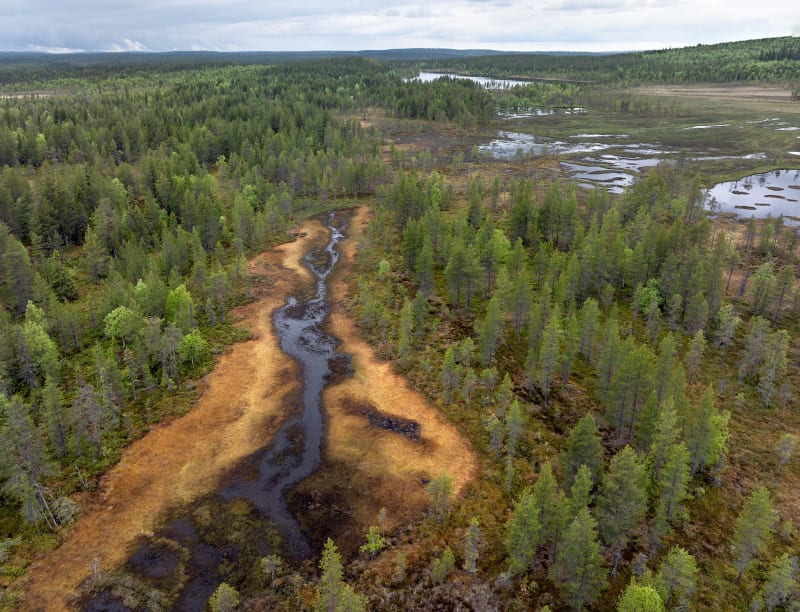
Peatlands cover just 3% of Earth's surface, yet they quietly store one-third of the world's soil carbon. That's twice what all forests combined can hold, making these wetlands unsung climate heroes hiding in plain sight.
Magga's family land, Alttokangas, became Finland's first Indigenous and community conserved area in Sámi territory last year. The boreal forest and peatland along the Ivalojoki river holds deep significance for Sámi culture, supporting traditional reindeer herding, fishing, and berry picking for generations.
Her personal restoration project quickly grew beyond Finland's borders. Communities in Canada's Northwest Territories and Minnesota joined the movement, creating restoration hubs that now protect over 100,000 hectares of critical wetlands.
The initiative builds on work by Snowchange Cooperative, which has restored nearly 200 sites in Finland since 2018. In Canada's Gwich'in territory, Indigenous communities are reopening traditional travel routes and protecting 30,000 hectares of ancestral lands.
"Peatlands are unsung heroes," said Tero Mustonen, founder of Snowchange Cooperative. "We often talk about the Amazon as the lungs of the planet, but peatlands hold equal importance for climate circulation."
In Minnesota's Sax-Zim Bog, conservation groups are taking a creative approach. Artists spend time immersed in the wetlands, then create works that help people understand these overlooked ecosystems and the rare species that depend on them.
The Ripple Effect
What makes this movement special is how communities are leading with local knowledge while thinking globally. Gwich'in communities combine traditional land practices with modern conservation, creating access for hunting and fishing while protecting carbon-rich soils.
Sámi communities in Finland are documenting previously unprotected habitats and safeguarding lands that support their way of life. Each restored site strengthens the community's resilience to climate change and protects against industrial threats like mining.
The coordinated approach means lessons learned in Finland's bogs can help restoration efforts in Canadian wetlands, and vice versa. Communities are measuring carbon storage together and building a shared framework that honors both Indigenous knowledge and scientific research.
From one family's determination to protect their inheritance, a cross-continental alliance is now defending some of Earth's most powerful climate allies, one peatland at a time.
More Images


Based on reporting by Mongabay
This story was written by BrightWire based on verified news reports.
Spread the positivity!
Share this good news with someone who needs it