Arctic Mud Volcano Shelters Thriving Deep-Sea Oasis
Scientists found a rare underwater mud volcano in the Arctic formed after the Ice Age, and it's become an unexpected haven for deep-sea life thriving in total darkness.
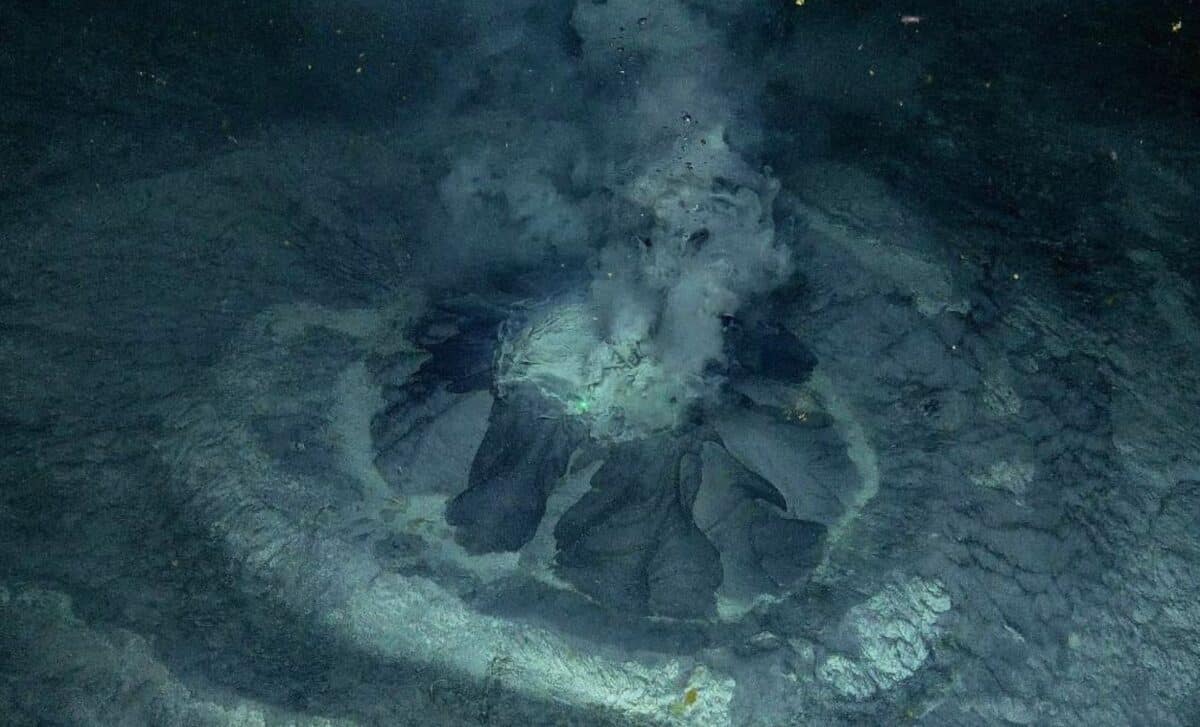
Deep beneath the icy Arctic waters, scientists have discovered something remarkable: a 300-meter-wide crater housing an active mud volcano that's become home to a thriving ecosystem in one of Earth's harshest environments.
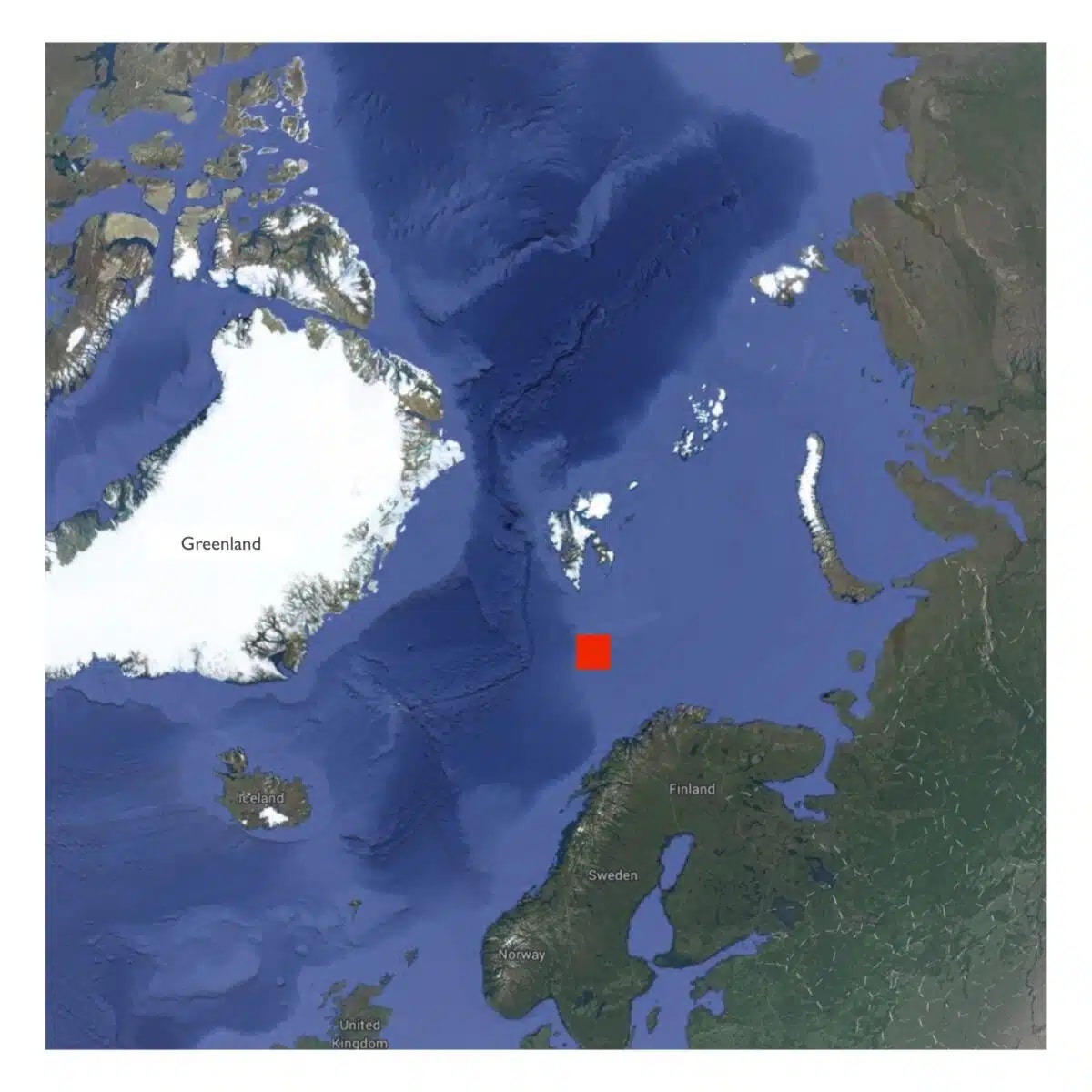
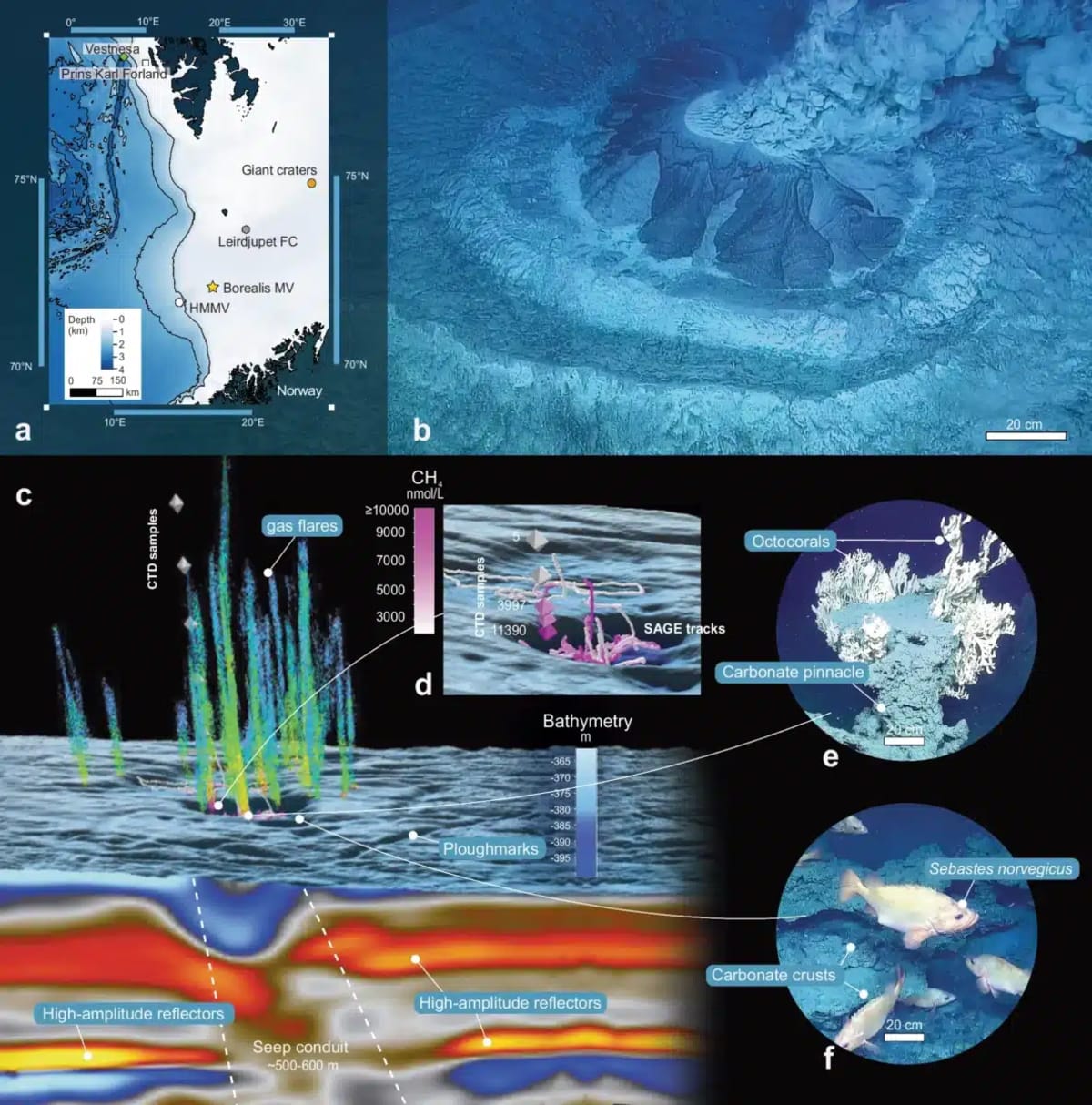
Researchers from UiT The Arctic University of Norway found the Borealis Mud Volcano about 400 meters below the ocean surface, roughly 70 miles south of Bear Island, Norway. The massive crater formed around 18,000 years ago when retreating Ice Age glaciers released pressure on underground methane pockets, triggering a powerful blowout that carved the crater.
Today, the volcano stays active by pushing mud, fluids, and methane up from reservoirs hundreds of meters beneath the seabed. Unlike volcanoes that erupt molten rock, mud volcanoes release sediment, water, and gases from deep geological layers, acting as natural pipelines between Earth's hidden depths and the ocean floor.
What surprised researchers most wasn't the geological wonder itself but the vibrant community living around it. The crater walls host sea anemones, corals, sponges, starfish, sea spiders, crustaceans, and dense bacterial mats, all thriving without sunlight.
These creatures survive on chemosynthetic bacteria that feed on methane and other chemicals rising from the seabed. It's an entire ecosystem powered by Earth's chemistry rather than the sun.
Why This Inspires
Professor Giuliana Panieri calls Borealis "an oasis where different species can thrive and flourish." In a region where life seems impossible, nature found a way to not just survive but create a bustling underwater refuge.
Alex Rogers of REV Ocean notes these formations may function as natural shelters for fragile deep-sea species facing threats elsewhere. Protecting sites like Borealis means preserving biodiversity hotspots we're only beginning to understand.
The discovery also helps scientists piece together Earth's climate history. Stefan Buenz of UiT explains that studying methane seeps reveals hidden information about ancient environments and geological processes we can't access any other way.
Mud volcanoes remain extremely rare in Arctic waters. Before Borealis, only one other had been found in the region: the Håkon Mosby Mud Volcano, discovered in 1995.
Life finds a way, even 400 meters below the Arctic Ocean.
More Images

Based on reporting by Google News - Scientists Discover
This story was written by BrightWire based on verified news reports.
Spread the positivity!
Share this good news with someone who needs it