Arizona Family Owns Mile-Wide Crater After Failed Mining Quest
A lawyer spent 26 years drilling for a meteorite treasure that had vaporized on impact, losing $600,000 but proving Earth's first meteor crater. His family still owns the landmark today, and science vindicated everything except his business plan.
Daniel Barringer lost a fortune chasing a meteorite that no longer existed, but his failure became one of the most important scientific landmarks on Earth.
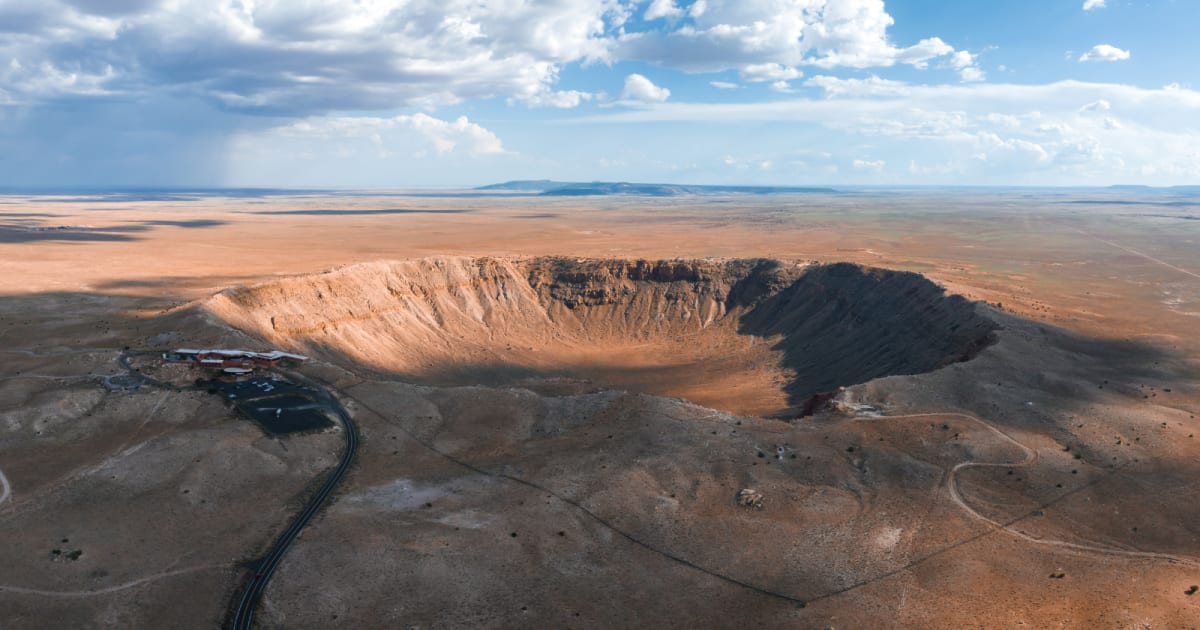
In 1903, the wealthy Philadelphia mining engineer stared at a mile-wide hole in the Arizona desert and saw what America's top geologist had missed. The government said it was a volcano, but Barringer noticed tons of iron meteorite fragments scattered for miles around. He reasoned a giant space rock had punched that hole and millions of tons of valuable iron-nickel ore sat waiting underneath.
He staked mining claims on the entire crater and started drilling. For 26 years, his company bored hole after hole into the floor, finding crushed rock and meteoric dust but no mother lode. In the late 1920s, a drill hit something promising at 1,376 feet deep, then jammed forever. He had spent $600,000 of his own money and his investors' funds, and the treasure remained hidden.
Then came the cruelest blow. In 1929, an astronomer calculated what Barringer had never wanted to face: at 26,000 miles per hour, the meteorite's impact energy equaled a multi-megaton bomb. The 300,000-ton space rock had largely vaporized in the instant it created the crater. The treasure and the excavation were the same event.
Barringer received the devastating report in November 1929, weeks after the stock market crash. Days later, he died of a heart attack at 69, believing his life's work had ended in ruin.
The Bright Side
Science spent the next decades proving Barringer right about everything except the money. In 1960, geologist Gene Shoemaker found shock-formed minerals in the crater rocks that no volcano could produce. Arizona's hole became Earth's first proven meteorite impact site.
The lone engineer with his drilling rigs had been correct against the government's chief geologist and the entire scientific establishment. The crater that bears his name became where scientists learned to read impact scars before finding them on the Moon. Apollo astronauts trained there. The top award in impact studies is now called the Barringer Medal.
And here's where the story takes its warmest turn: the Barringers kept the crater. The mining patent never lapsed, and the family firm still owns Meteor Crater today, one of the only celestial landmarks on Earth in private hands. Where the drills failed, visitors now come by the hundreds of thousands each year to stand at the rim of the hole that rewrote planetary science.
The treasure Barringer sought vanished in fire and physics, but his stubborn conviction gave the world something more valuable: proof that Earth bears scars from space, and the courage to trust your eyes over expert consensus.
More Images

Based on reporting by Google News - Science
This story was written by BrightWire based on verified news reports.
Spread the positivity!
Share this good news with someone who needs it