Arizona Saves Endangered Pronghorn From 21 to Hundreds
In 2002, only 21 endangered Sonoran pronghorn remained in Arizona after a devastating drought. Today, a military base, wildlife refuges, and dozens of partners work together each year to bring this desert speedster back from the brink.
When a severe drought struck Arizona in 2002, it nearly erased the Sonoran pronghorn from American soil. Just 21 of these lightning-fast antelopes remained in the entire United States.
Two decades later, those numbers tell a completely different story. Thanks to an annual gathering of nearly 30 people from military bases, wildlife refuges, and federal agencies, the population has rebounded so dramatically that nearly half of all U.S. Sonoran pronghorn now live on an active Air Force bombing range.
"It really does take a village to save a species," said Aleksa Mckay, the wildlife biologist leading recovery efforts in Arizona. Her team coordinates partners across the Barry M. Goldwater Air Force Range, Kofa and Cabeza Prieta National Wildlife Refuges, Organ Pipe Cactus National Monument, and tribal lands.
The recovery started with six pronghorn borrowed from Mexico to rebuild the gene pool. Scientists established a semi-captive breeding program where wild pronghorn live in large enclosed pens, safe from predators, breeding naturally while researchers monitor their health.
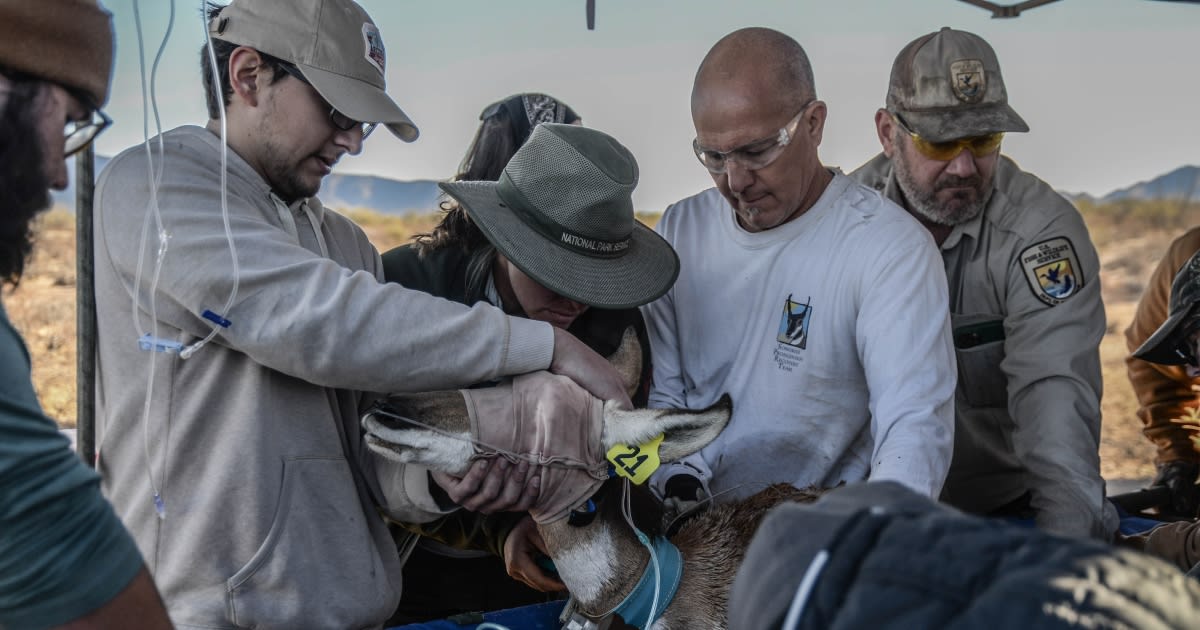
Each winter, before the desert heat becomes dangerous, the team springs into action. They lure pronghorn into circular enclosures called bomas using molasses pellets, then work in near silence to process each animal in under three minutes. Health checks, vaccinations, ear tags, and radio collars happen with the precision of a NASCAR pit crew before the animals speed back to freedom.
The work happens mostly in whispers. These animals evolved alongside the now-extinct American cheetah, making them exceptionally nervous and quick to startle.
Surprisingly, fighter jets and bombs barely faze them. Aaron Alvidrez, the Air Force wildlife biologist who has participated for 20 years, says long-term studies show pronghorn pause briefly when bombs drop, then return to munching desert cacti and thorny bushes. "We have not documented any pronghorn mortality due to Air Force training missions," he said.
The military has become an unexpected conservation champion. At a specially designed feeding station called Uken Tank, named after a retired colonel who championed the species, pronghorn find reliable food and water during brutal drought years. This single development has dramatically increased fawn survival rates.
The Ripple Effect
The Sonoran pronghorn recovery shows how collaboration transforms conservation. Military readiness and endangered species protection now work hand in hand across southwestern Arizona's harshest desert landscapes.
Federal agencies that once operated separately now coordinate releases, track animals across jurisdictional boundaries, and share data seamlessly. The Endangered Species Act requires federal landowners to protect threatened wildlife, but these partners have gone far beyond compliance.
Recovery coordinator Greta Schmidt watches the transformation continue. Each year brings refined capture techniques that reduce stress on the skittish animals. Each release adds genetic diversity to wild populations struggling to expand their range.
From 21 survivors to thriving populations across multiple protected landscapes, the Sonoran pronghorn proves that extinction isn't inevitable when communities choose to act together.
Based on reporting by Google News - Endangered Species Recovery
This story was written by BrightWire based on verified news reports.
Spread the positivity!
Share this good news with someone who needs it