Grey Hornbills Return to India's Gir Forests After 60 Years
Indian Grey Hornbills are thriving and breeding in Gujarat's Gir forests for the first time in six decades, marking a major conservation victory. The success shows how scientific wildlife restoration can bring vanished species back from the brink.
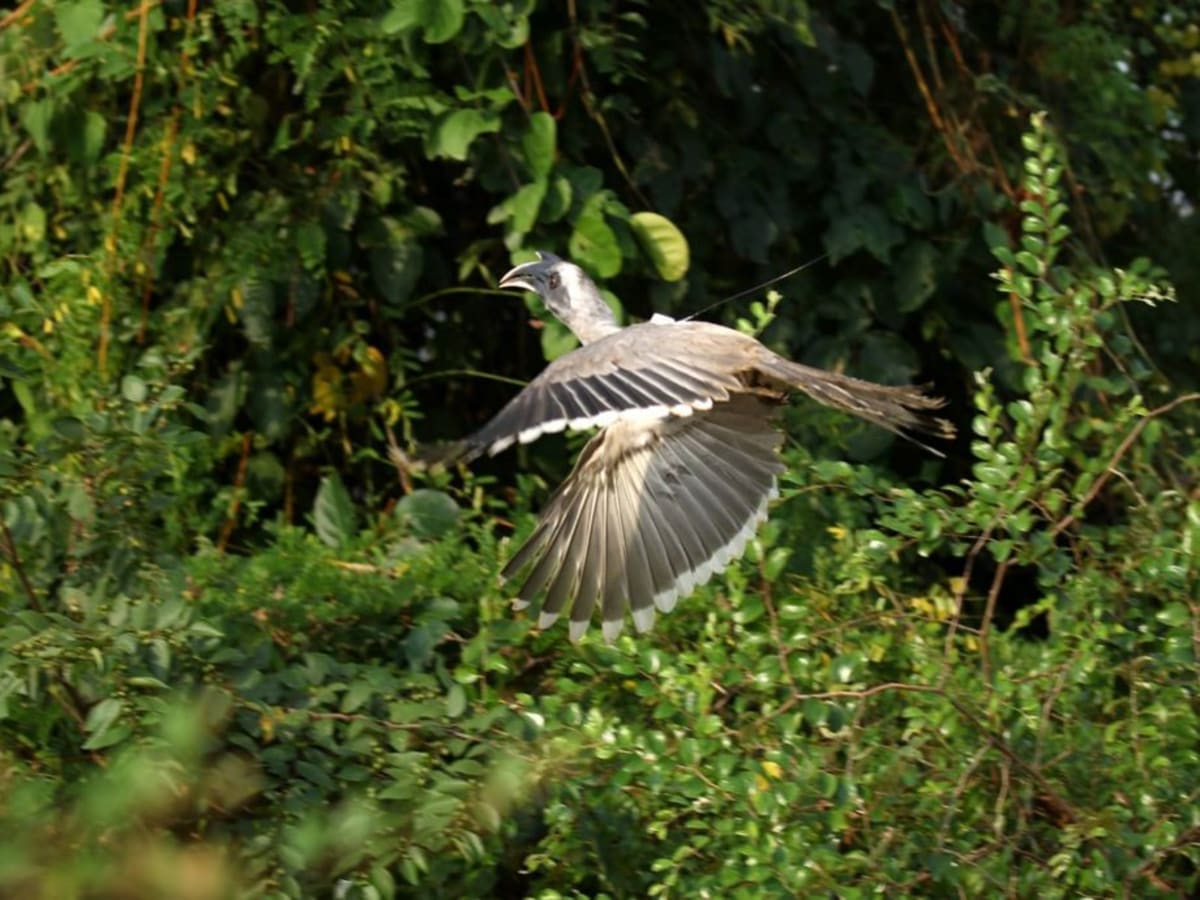
After disappearing for more than 60 years, Indian Grey Hornbills are once again raising chicks in Gujarat's legendary Gir forests. The birds aren't just surviving in their ancestral home—they're breeding, building nests, and doing exactly what conservationists hoped they would.
The Gujarat Forest Department released 40 hornbills in carefully planned phases, tracking each bird with satellite transmitters. Scientists watched as the birds explored their new territory, tested food sources, and gradually settled into stable home ranges across the Gir landscape.
These medium-sized birds with their distinctive curved beaks play a vital role that goes far beyond their beauty. As they feed on fruits and berries, hornbills scatter seeds across miles of forest, essentially planting the next generation of trees. Their return means healthier, more diverse forests for decades to come.
The reintroduction program combined cutting-edge science with patient fieldwork. Researchers studied historical records to understand why hornbills vanished, then addressed habitat needs before bringing the birds back. The team monitored feeding patterns, nesting behaviors, and territorial movements to ensure the population could sustain itself.
The Ripple Effect
The hornbill comeback demonstrates what's possible when conservation gets serious resources and scientific backing. Gujarat's success provides a roadmap for other states working to restore locally extinct species, from vultures to forest owls.
Forest communities who once only heard about hornbills from elders now see them daily. Local participation in monitoring and protecting nesting sites has turned former legends into living neighbors. Children growing up in villages near Gir will know these birds as normal parts of their landscape, not museum curiosities.
The breeding success matters most because it signals true adaptation. These aren't captive birds struggling to survive—they're wild hornbills raising wild chicks, building a population that can grow on its own. Each new nest represents another step toward a self-sustaining population that won't need human help.
India's approach shows that "extinct" doesn't have to mean "gone forever." With scientific planning, habitat restoration, and community support, species can reclaim the skies they once filled. The hornbills' return to Gir proves that conservation victories are possible when we commit to making them happen.
Based on reporting by Google News - Wildlife Recovery
This story was written by BrightWire based on verified news reports.
Spread the positivity!
Share this good news with someone who needs it