Artemis 2 Crew Breaks Distance Record, Sends Stunning Photos
Four astronauts just traveled farther from Earth than anyone in history, capturing breathtaking views of our planet from 252,752 miles away. Their iPhone and professional photos of "Earthsets," hour-long eclipses, and the lunar surface are rewriting what's possible in space exploration.
Four NASA astronauts just became the farthest humans from home, and the photos they sent back are absolutely spectacular.
On Monday, the Artemis 2 crew broke the distance record at 252,752 miles from Earth as their capsule swung around the Moon. During their journey, they captured images that few people will ever witness in their lifetimes.
The crew spent seven carefully planned hours photographing the Moon's surface, switching off in pairs to maximize their observation time. Armed with professional cameras and iPhone 17 Pros, they documented everything from an "Earthset" to a total solar eclipse that lasted nearly an entire hour.
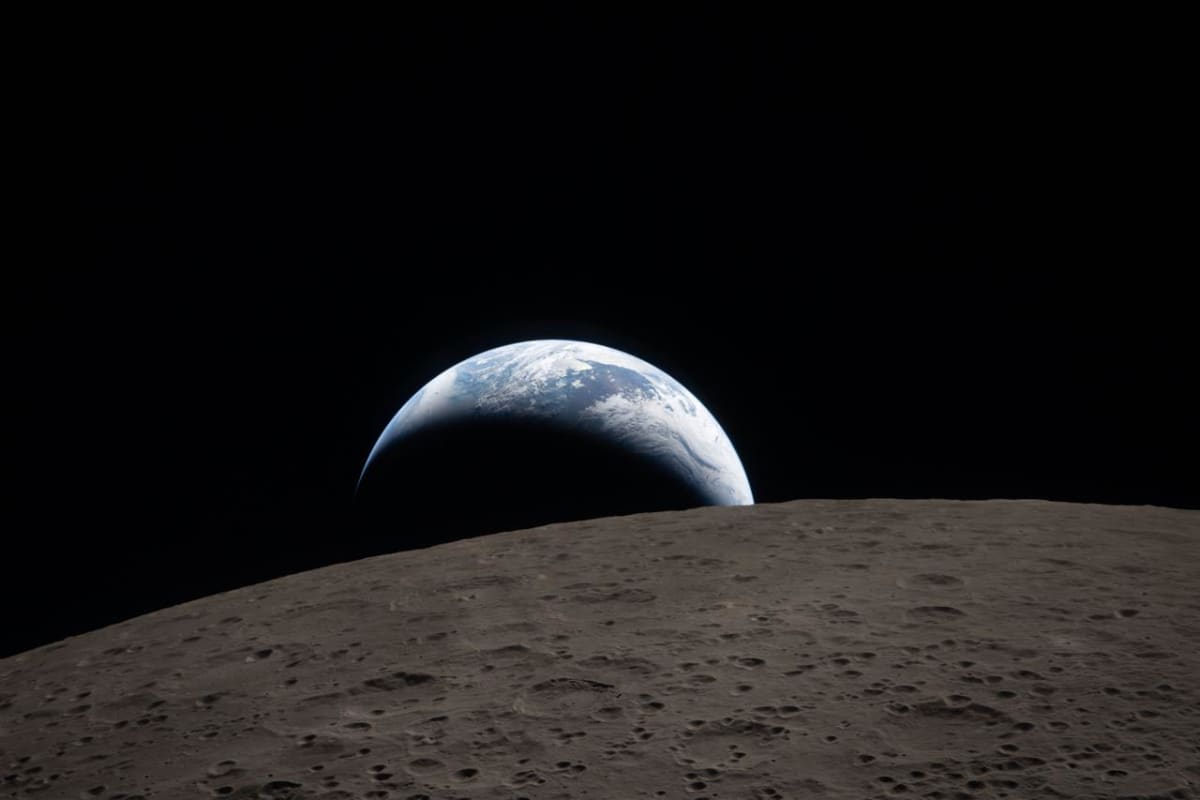
One stunning image shows Earth, half wrapped in nighttime, peeking above the lunar horizon. It's the reverse of a sunset we'd see from home, except the entire planet is setting below the Moon's cratered surface.
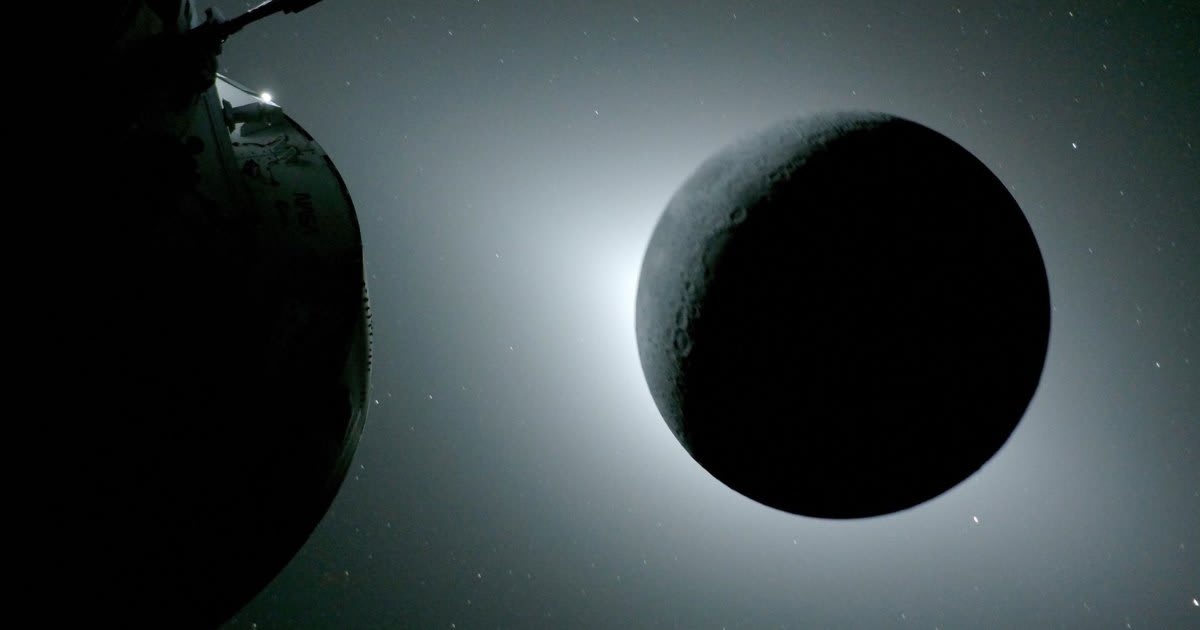
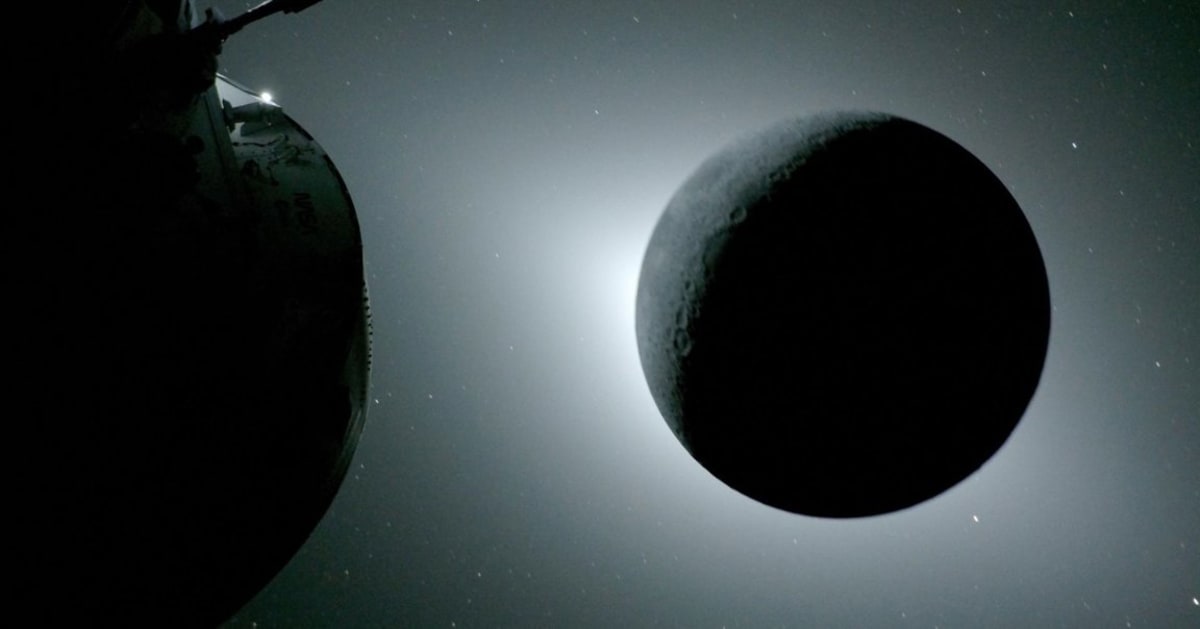
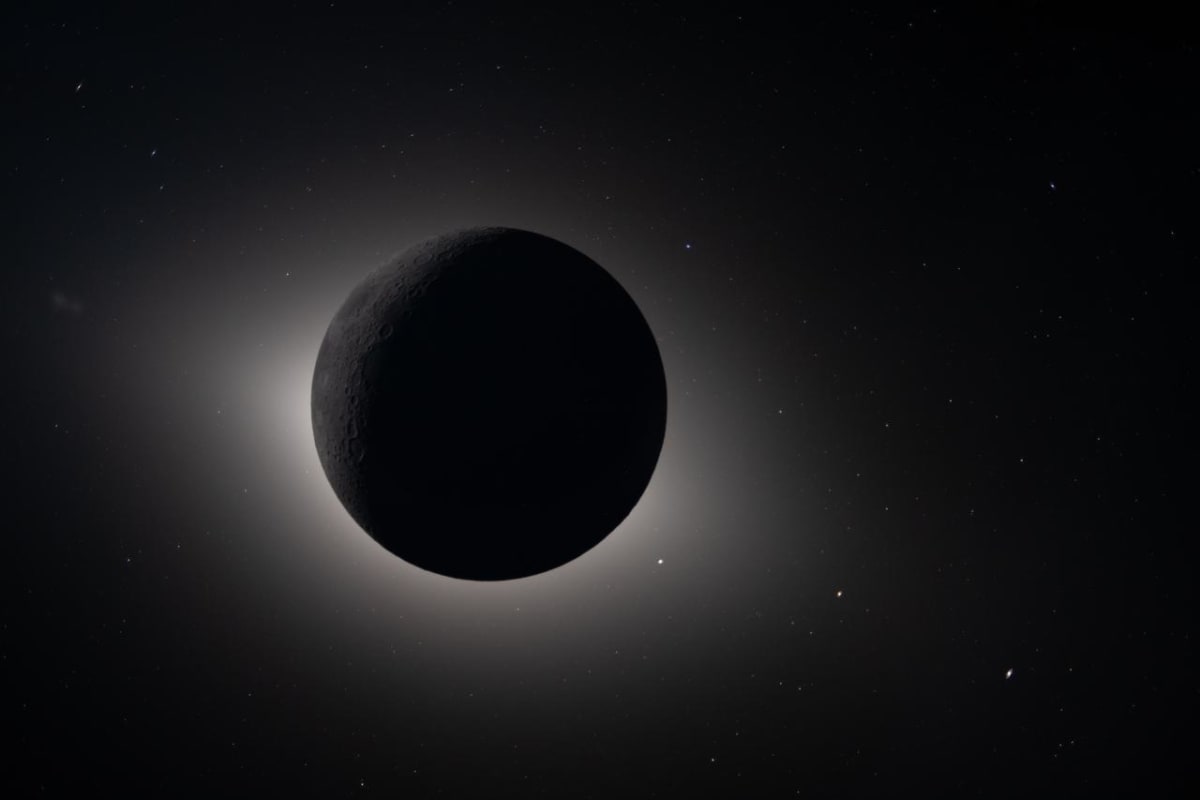
Another photo captures the 54-minute total solar eclipse the crew experienced as the Moon blocked the Sun from their view. The Sun's corona glows like a halo around the dark lunar disk, with Saturn visible as a tiny bright spot below the Moon's edge.
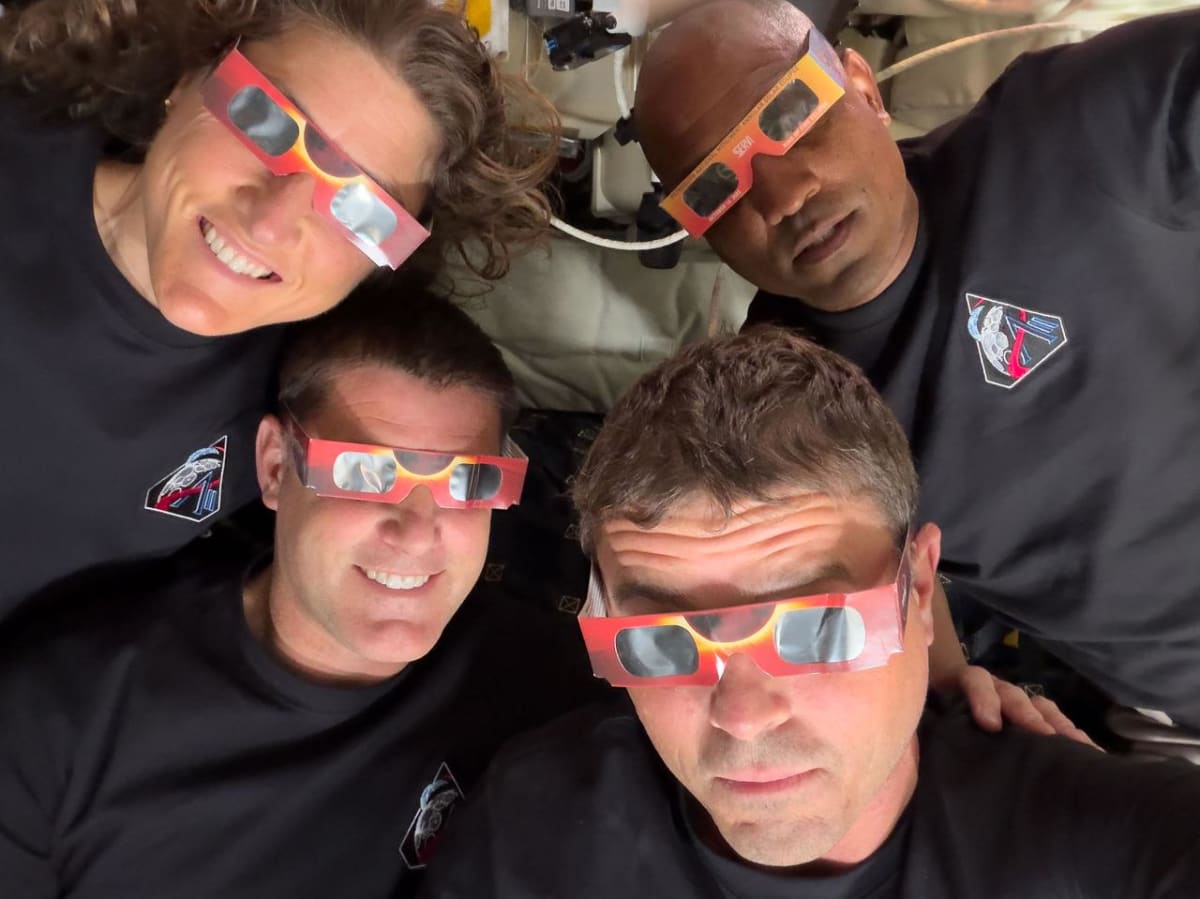
Commander Reid Wiseman even snapped an eclipse selfie wearing protective glasses, proving that some experiences are universal whether you're on Earth or a quarter million miles away. The crew also photographed the South Pole-Aitken basin, where NASA plans to land future missions, and the Orientale Basin, a 600-mile-wide patch of ancient lava that erupted through the Moon's crust billions of years ago.
Why This Inspires
These images represent more than beautiful photography. They're proof that humanity's reach continues to expand, and that we're building the foundation for a future where more people can experience these extraordinary views.
The mission also showcases how accessible space documentation has become. The same smartphone technology in our pockets captured images alongside professional equipment, showing that the tools for exploring and sharing our universe are evolving rapidly.
The crew is set to splash down in the Pacific Ocean on Friday after reentering Earth's atmosphere at 25,000 mph, with their heat shield reaching over 3,000 degrees Fahrenheit.
Their journey marks a historic milestone in space exploration and gives us all a glimpse of what's waiting for us beyond our home planet.
More Images
Based on reporting by Futurism
This story was written by BrightWire based on verified news reports.
Spread the positivity!
Share this good news with someone who needs it