Artemis 2 Crew Captures Stunning 'Earthset' From Moon
Four astronauts aboard NASA's Artemis 2 mission photographed Earth setting behind the moon's horizon, echoing the iconic images captured during Apollo 8 in 1968. The crew later witnessed a total solar eclipse from space, one of the rarest sights in human history.
Four astronauts traveling farther from Earth than any humans in over 50 years just gave us a breathtaking reminder of how beautiful our home planet looks from deep space.
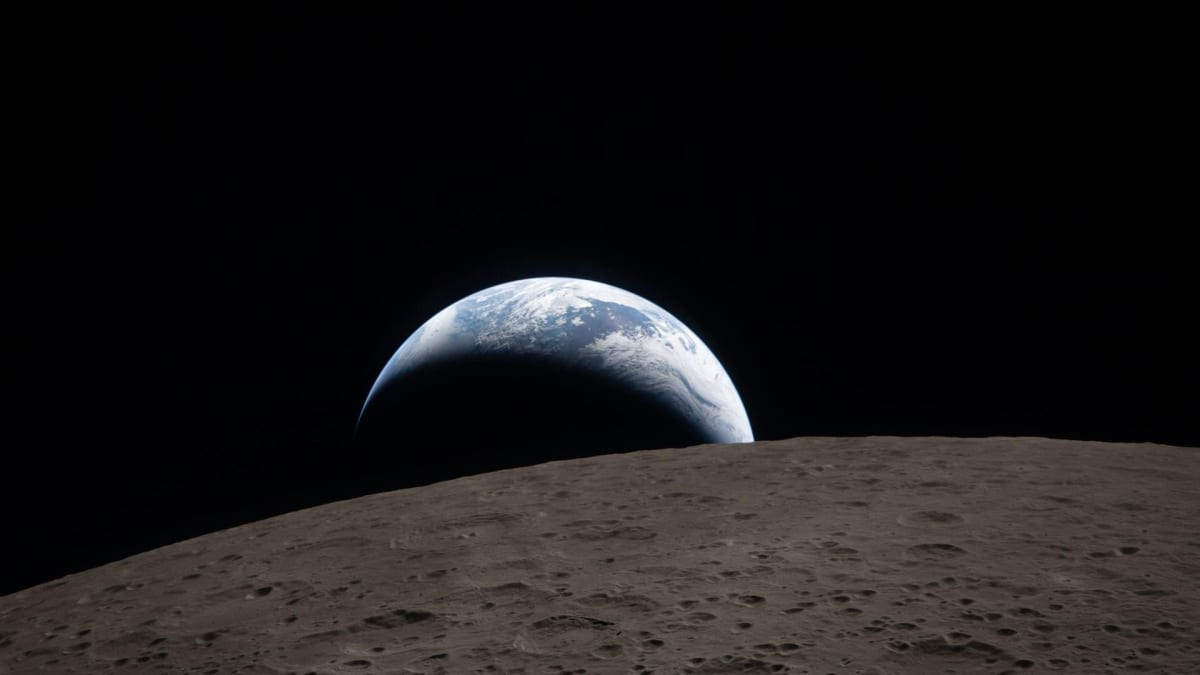
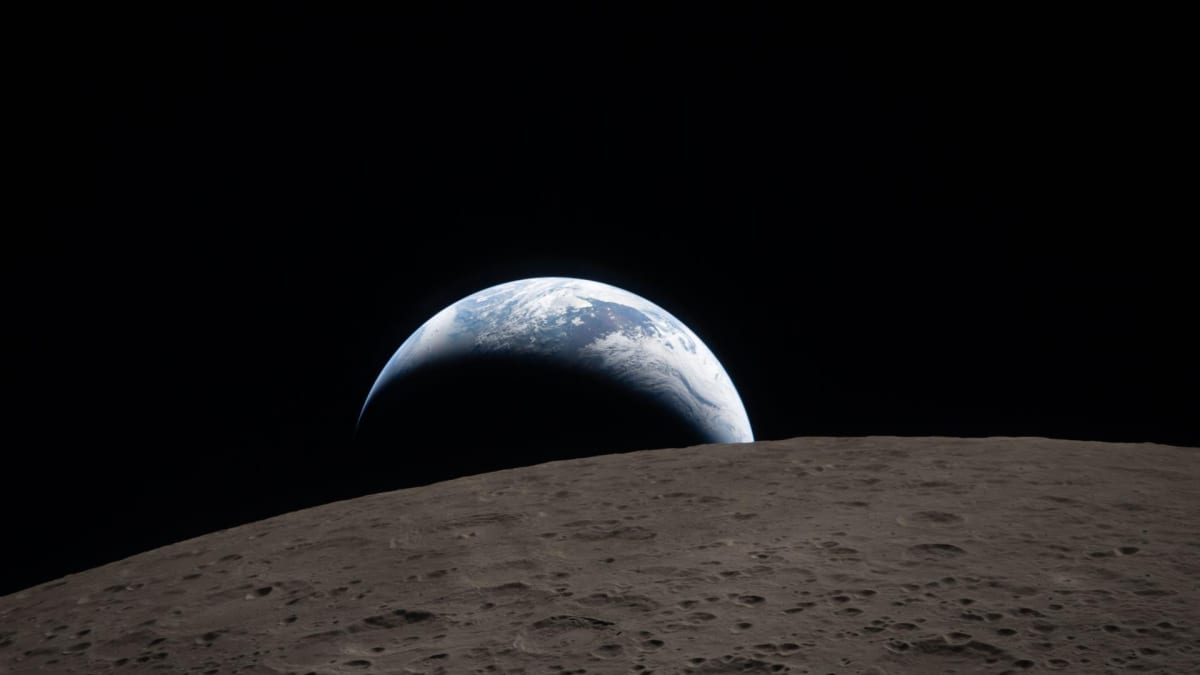
NASA astronauts Reid Wiseman, Victor Glover, Christina Koch and Canadian Space Agency astronaut Jeremy Hansen captured a spectacular "Earthset" photo on April 6 during their Artemis 2 mission. The image shows a thin crescent of Earth illuminated by sunlight, revealing white clouds swirling over Australia and Oceana, as our planet dipped below the moon's crater-scarred horizon.
The crew snapped the photo at 6:41 p.m. EDT while passing over the far side of the moon on Flight Day 6 of their 10-day journey. They named it "Earthset" as a tribute to the legendary "Earthrise" photo captured by Bill Anders during Apollo 8's Christmas Eve flight in 1968.
The lunar surface below them told its own ancient story. Countless craters marked the moon's face, including the 40-mile-wide Ohm Crater with its prominent central peak and terraced rim, visible near where the lunar horizon met Earth's shadowed night side.
Moments after the photo, Earth slipped completely from view as the Orion spacecraft they named "Integrity" swept over the moon's far side. The crew experienced a planned 40-minute communications blackout, traveling beyond the range of NASA's relay satellites in complete radio silence.
When they emerged, they witnessed the reverse: an "Earthrise" even more similar to what Anders saw in the 1960s, as our blue marble climbed back into view from behind its natural satellite.
Why This Inspires
This mission represents the first time humans have ventured to the moon since 1972, opening a new chapter in space exploration. The diverse crew includes the first woman, first person of color, and first Canadian to travel to lunar space.
The astronauts weren't done making history that day. Later, they witnessed something even rarer: a total solar eclipse from a free-flying spacecraft, as Orion's trajectory placed the moon directly between their ship and the sun.
These images remind us that human curiosity and courage continue pushing boundaries, bringing back gifts of perspective that help us see our shared home in ways few ever will.
More Images


Based on reporting by Space.com
This story was written by BrightWire based on verified news reports.
Spread the positivity!
Share this good news with someone who needs it