Wind-Powered Mars Rover Completes Chile Desert Tests
A fuel-free rover that moves like a tumbleweed just finished testing in Chile's Atacama Desert, proving wind alone could power future Mars exploration. The 7.7-pound prototype packed with sensors could slash planetary mission costs by 100 times.
A basketball-sized rover just rolled across one of Earth's driest deserts without using a single drop of fuel, and it might change how we explore other planets.
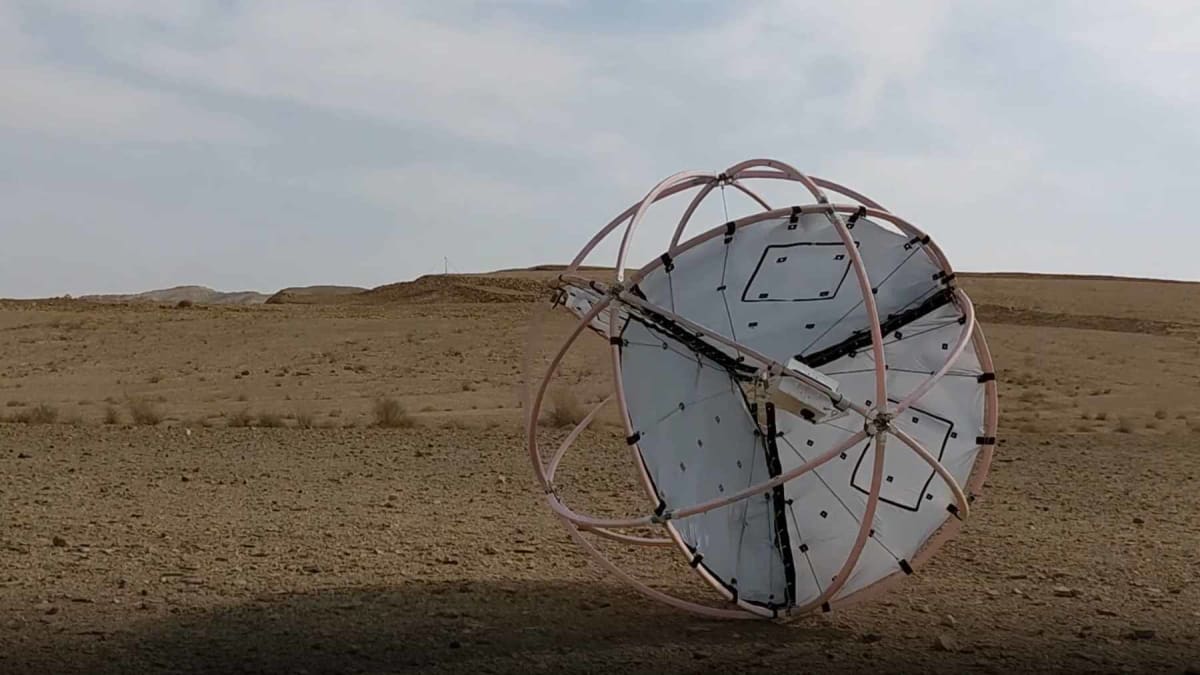
Team Tumbleweed finished testing their wind-powered Mars rover prototype in Chile's Atacama Desert this month. The site sits 40 miles south of Iquique, chosen because its afternoon wind gusts and calm mornings mirror Martian weather patterns.
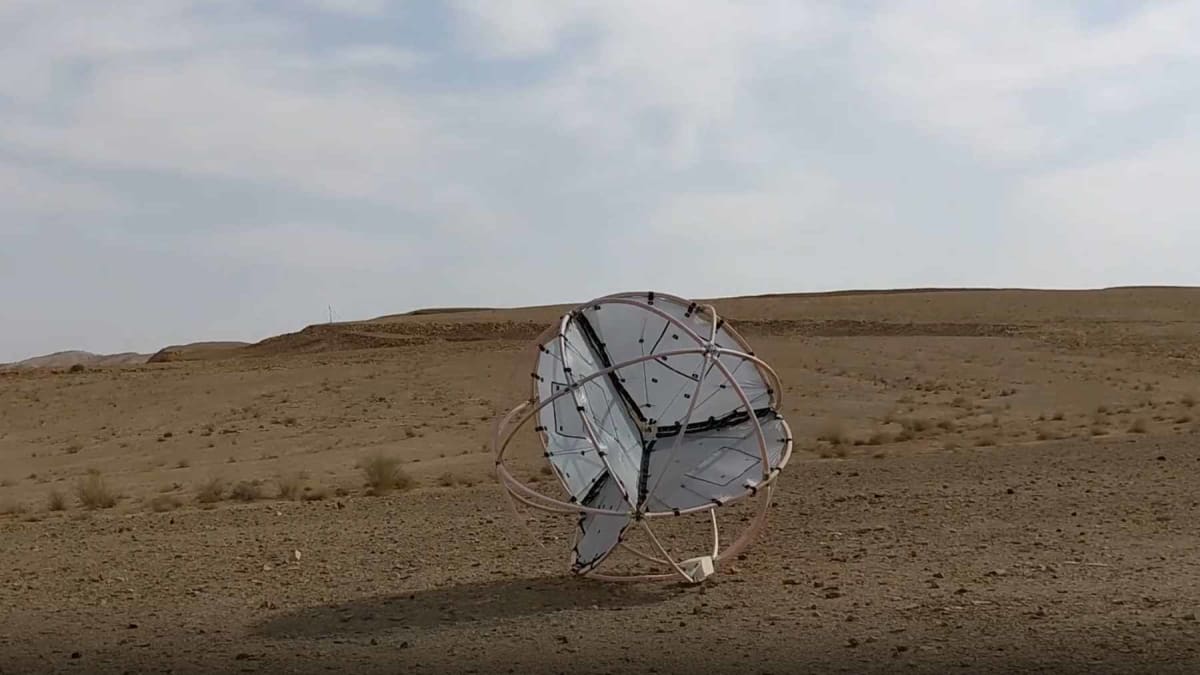
The rover looks nothing like the car-sized machines we usually send to Mars. Instead of wheels and motors, it uses a lightweight carbon fiber frame shaped like an ellipse that catches wind and tumbles forward. At just 7.7 pounds, it can reach speeds up to 35 miles per hour when the desert wind kicks up.
But this isn't just a high-tech tumbleweed rolling aimlessly. Inside its brain box sits a camera, microphone, GPS, and sensors measuring temperature, atmospheric pressure, humidity, wind, and UV radiation. A gamma ray spectrometer and magnetometer collect soil and geological data as it moves.
Team lead James Kingsnorth said the tests proved these rovers "could indeed operate and collect scientific data on Mars." The real innovation isn't one heroic robot, though. It's the possibility of deploying dozens of these light, cheap rovers that spread across a planet's surface like a sensor network.
The Atacama station where they tested has tracked fog and atmospheric conditions for over 20 years. Researchers can now compare the moving rover's readings against those long-term baselines, answering questions about how environments shift across space and time.
The Ripple Effect
Here's why a Mars project matters for Earth. The global space industry is valued at over $500 billion and could hit $1.8 trillion by 2035. Team Tumbleweed aims to make Mars surface access 100 times cheaper by ditching heavy mobility systems for wind power and scale.
Cheaper planetary exploration opens doors for universities, smaller countries, and research teams that can't afford half-billion-dollar missions. More players mean more questions asked and more instruments testing new ideas in extreme environments.
The technology already has Earth applications. A network of autonomous, wind-driven sensor platforms could monitor remote desert regions, track weather patterns in areas too harsh for traditional stations, or gather radiation data where fuel resupply isn't practical.
Physicist Moritz Itzerott emphasized the long-term data collection potential. One snapshot rarely tells the full environmental story, but rovers that keep moving and measuring over months or years could reveal patterns we've been missing.
The practical questions remain: Can it navigate around rocks? Will shifting winds strand it in craters? Can it transmit useful data without constant supervision? Those answers will come from continued testing, but the Atacama campaign proved the basic concept works.
Sometimes the biggest breakthroughs come from asking what we can remove rather than what we can add.
More Images
Based on reporting by Google News - Wind Energy
This story was written by BrightWire based on verified news reports.
Spread the positivity!
Share this good news with someone who needs it