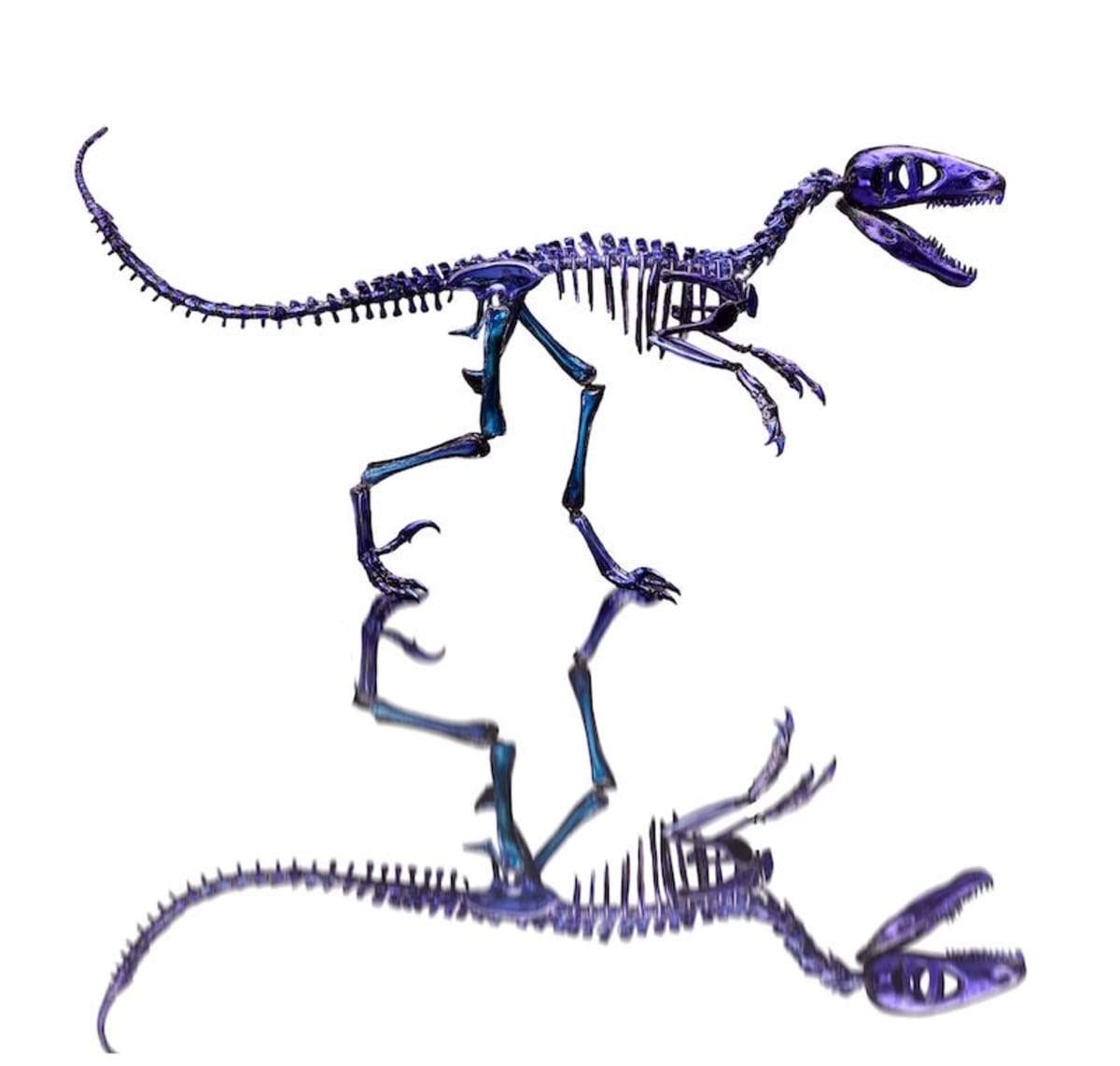
Artist Creates 14-Foot Glass Dinosaur From Fossil Records
Grant Garmezy transformed a 66-million-year-old predator into a stunning 14-foot glass sculpture. The work bridges ancient science and modern art in a medium rarely used for life-sized natural history.
A prehistoric predator that roamed South Dakota 66 million years ago now lives again in one of the most unexpected materials imaginable: glass.
Artist Grant Garmezy spent months crafting a full-scale Dakotaraptor sculpture measuring 14 feet from snout to tail. The transparent artwork recreates every bone and anatomical detail of the fierce raptor that once hunted alongside Triceratops in ancient floodplains.
Dakotaraptor stood out among dinosaurs for its signature weapon: a 9.5-inch curved claw on each foot used to grip and slash prey. The dromaeosaurid predator likely sported feathers, powerful hind legs, and reached lengths up to 18 feet, making it one of North America's largest raptors.
Creating the sculpture required solving challenges that most artists never face. Glass demands precise temperature control and careful engineering to prevent cracking or collapse. Each skeletal component had to interlock perfectly while maintaining both structural integrity and scientific accuracy.
Garmezy based his work on fossil evidence discovered in South Dakota two decades ago. But like paleontologists themselves, he faced gaps in the record. Feather placement, exact posture, and muscle structure required interpretive decisions where hard evidence didn't exist.
The Ripple Effect goes beyond a single stunning sculpture. Garmezy's work shows how art can make ancient science accessible and exciting to people who might never read a paleontology journal. The transparent glass lets light pass through the bones, creating visual effects impossible in traditional bronze or stone sculptures.
The piece represents a growing movement where artists collaborate with scientific discovery to help us see the natural world in new ways. Museums and galleries increasingly recognize that creative interpretation can spark curiosity about fields from astronomy to zoology.
Supported by GRANADA Gallery, the Dakotaraptor project demonstrates what becomes possible when craftsmanship meets fossil records. Glass sculpture typically showcases delicate decorative pieces, but Garmezy proves the medium can handle complex biological forms at monumental scale.
The result invites viewers to stand face to face with a creature that vanished millions of years before humans existed. Through meticulous research and exceptional technical skill, the artist transformed fragmented bones into a complete vision of prehistoric life.
This glass raptor reminds us that science and art ask similar questions about recreating worlds we cannot directly observe.
Based on reporting by Google: scientific discovery
This story was written by BrightWire based on verified news reports.
Spread the positivity!
Share this good news with someone who needs it