Assam Turns Banana Peels Into a Prized Kitchen Ingredient
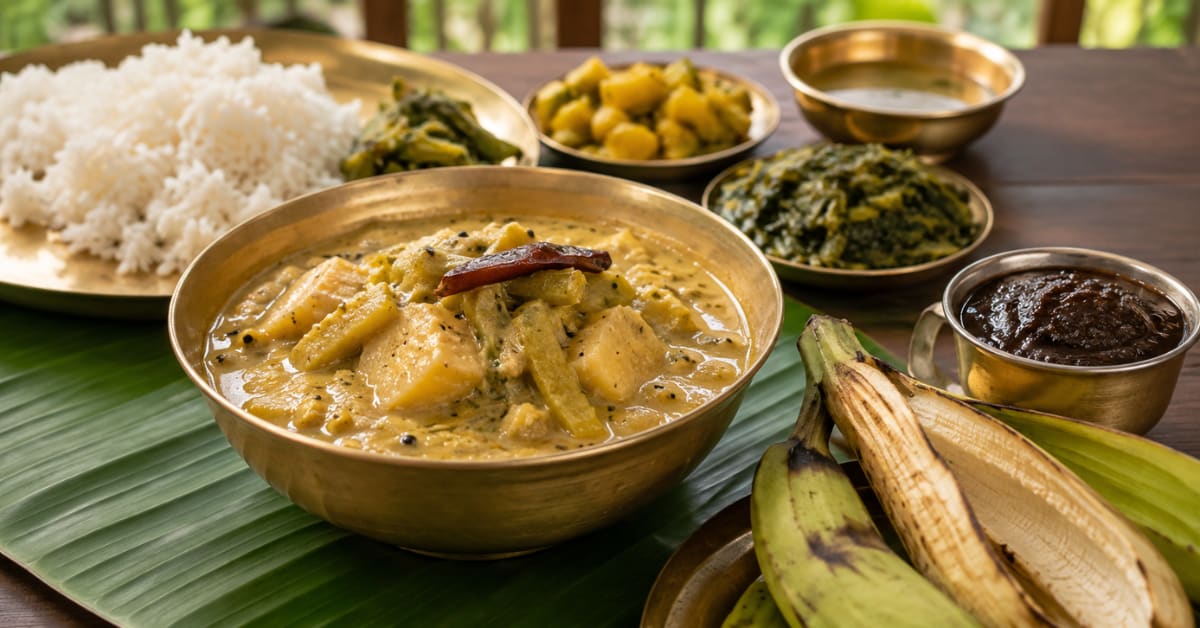
In Assam, banana peels aren't trash—they're transformed into khar, an alkaline extract that's shaped regional cooking for generations. This resourceful tradition turns what most throw away into the opening dish of every traditional meal.
Most of us toss banana peels in the trash without a second thought. In Assam, families have been turning them into one of India's most unique culinary ingredients for centuries.
Khar is an alkaline extract made from the ash of dried banana peels, specifically from bhim kol, a banana variety native to Northeast India. The process is simple but intentional: families sun-dry the peels, burn them into ash, then slowly filter water through to create a dark, mineral-rich liquid that can be stored for months.
This ingredient has defined Assamese cuisine in ways few others have. Unlike many Indian regional foods built on layers of spice, Assamese cooking celebrates simplicity and balance across six traditional tastes. Khar delivers the final note: a distinctive earthy, mildly smoky flavor that enhances rather than overpowers.
In a traditional Assamese meal, khar appears first, not last. It's cooked with raw papaya, bottle gourd, lentils, fish, and seasonal vegetables. The belief is that it prepares the palate and aids digestion before the rest of the meal arrives.
The tradition emerged from necessity. Assam's landlocked geography historically limited access to sea salt, pushing communities to find local alternatives. Banana peel ash became that substitute and eventually evolved into something far more valuable than a replacement—it became an identity.
Khar's uses stretched beyond food. Older generations relied on its high pH as a natural preservative and even used it to clean utensils and fabrics. Folk medicine traditions included it in home remedies, embedding it deeply into daily life across the region.
Why This Inspires
What makes khar special isn't just its taste or versatility. It's what the tradition represents: generations of families looking at what others discard and seeing possibility instead of waste.
Today, restaurants across Assam feature khar prominently on menus, and bottled versions now make it accessible to curious cooks across India. But many families still prepare it the traditional way, ensuring grandchildren learn the same methods their ancestors perfected.
Each household has its own recipe, its own preferred strength, its own small variations passed down through kitchens and stories. This isn't just about cooking—it's about carrying forward wisdom that honors both the land and the ingenuity of those who learned to make something remarkable from something simple.
In Assam, a banana peel has earned its place at the center of the table, and the tradition shows no signs of fading.
More Images
%2Fenglish-betterindia%2Fmedia%2Fmedia_files%2F2026%2F07%2F16%2Fkhar-2026-07-16-18-22-26.png)
%2Ffilters%3Aformat(webp)%2Fenglish-betterindia%2Fmedia%2Fmedia_files%2F2026%2F07%2F16%2Fkhar-2026-07-16-18-23-12.png)
%2Ffilters%3Aformat(webp)%2Fenglish-betterindia%2Fmedia%2Fmedia_files%2F2026%2F07%2F16%2Fkhar-2026-07-16-18-27-30.png)
Based on reporting by The Better India
This story was written by BrightWire based on verified news reports.
Spread the positivity!
Share this good news with someone who needs it
%2Ffile%2Fdailymaverick%2Fwp-content%2Fuploads%2F2024%2F12%2FPhoto4.jpg)
.webp)