Astronauts Livestream HD Video From Moon Like Home Internet
The Artemis II crew beamed crystal-clear footage over 250,000 miles from the moon to Earth in April using laser technology 100 times faster than Apollo-era radios. This breakthrough turns deep space into a high-speed internet zone for future missions.
When Artemis II astronauts orbited the moon this April, millions of people watched stunning high-definition footage livestreamed from space as if the crew were video calling from next door.
The secret behind those crystal-clear views? A laser communications system called O2O, developed by MIT Lincoln Laboratory with NASA, that beamed nearly half a terabyte of data across more than 250,000 miles at speeds matching your home internet connection.
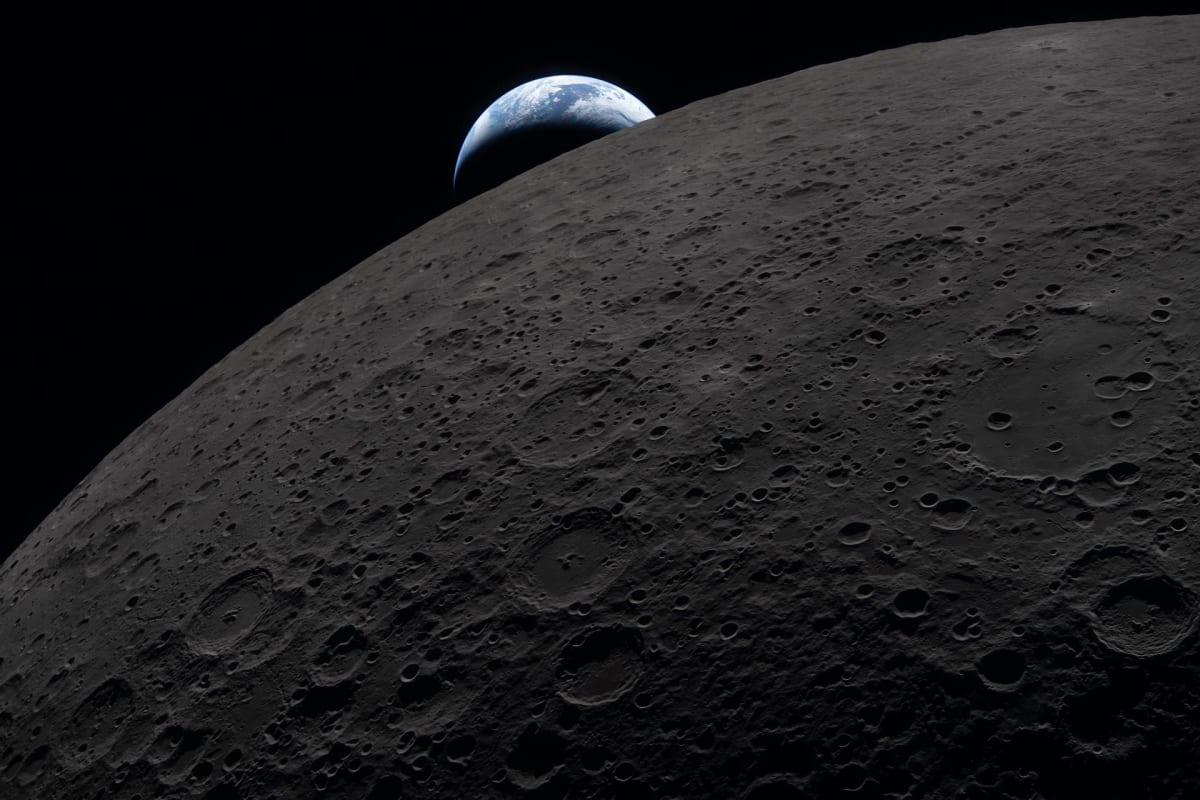
The system transmitted at up to 260 megabits per second, capturing never-before-seen footage of the moon's far side craters, Earth setting behind the lunar horizon, and an hour-long total solar eclipse from space. Compare that to the grainy, stuttering images from the Apollo missions in the 1960s and 70s, when astronauts relied on radio waves with severely limited bandwidth.
"We demonstrated the first use of laser communications on a crewed mission beyond low Earth orbit," says Farzana Khatri, lead systems engineer at MIT Lincoln Laboratory. The technology uses infrared laser light instead of radio waves, transmitting 10 to 100 times more data per second.
The switch from Apollo-era radios to Artemis-era lasers mirrors the jump from dial-up to broadband internet on Earth. Ground stations in New Mexico, California, and Australia caught the laser signals when Orion had a clear line of sight, forming an internet backbone stretching from the spacecraft to Mission Control in Houston.
Why This Inspires
This breakthrough solves a critical problem for future space exploration. Scientists and engineers have always worried about data getting corrupted or destroyed before a spacecraft returns home, sometimes taking months to download after landing. O2O downloaded everything in near-real time, immediately preserving precious observations and allowing mission control to clear camera memory cards for new footage.
The technology also brought space exploration into living rooms worldwide. Astronauts shared their journey as it happened, turning a mission 250,000 miles away into a shared human experience that felt intimate and immediate.
MIT teams provided 24-hour coverage during the 10-day mission, working with NASA colleagues at ground stations and mission control to maintain the connection. What started as a scheduled one-hour daily operational window proved so successful that it opens the door for permanent high-speed internet across deep space.
As NASA plans longer missions farther from Earth, this laser system becomes essential infrastructure for keeping astronauts connected and ensuring their discoveries reach us without delay.
Based on reporting by MIT News
This story was written by BrightWire based on verified news reports.
Spread the positivity!
Share this good news with someone who needs it