Astronomers Catch Rare First Flash of Dying Star Explosion
For the first time, scientists witnessed the initial burst of a massive star's death 500 million light-years away, revealing surprising new details about how stars explode. The rare observation could help explain why some stellar explosions create gamma-ray bursts while others don't.
Astronomers just watched a massive star take its final breath, and what they saw challenges everything we thought we knew about stellar explosions.
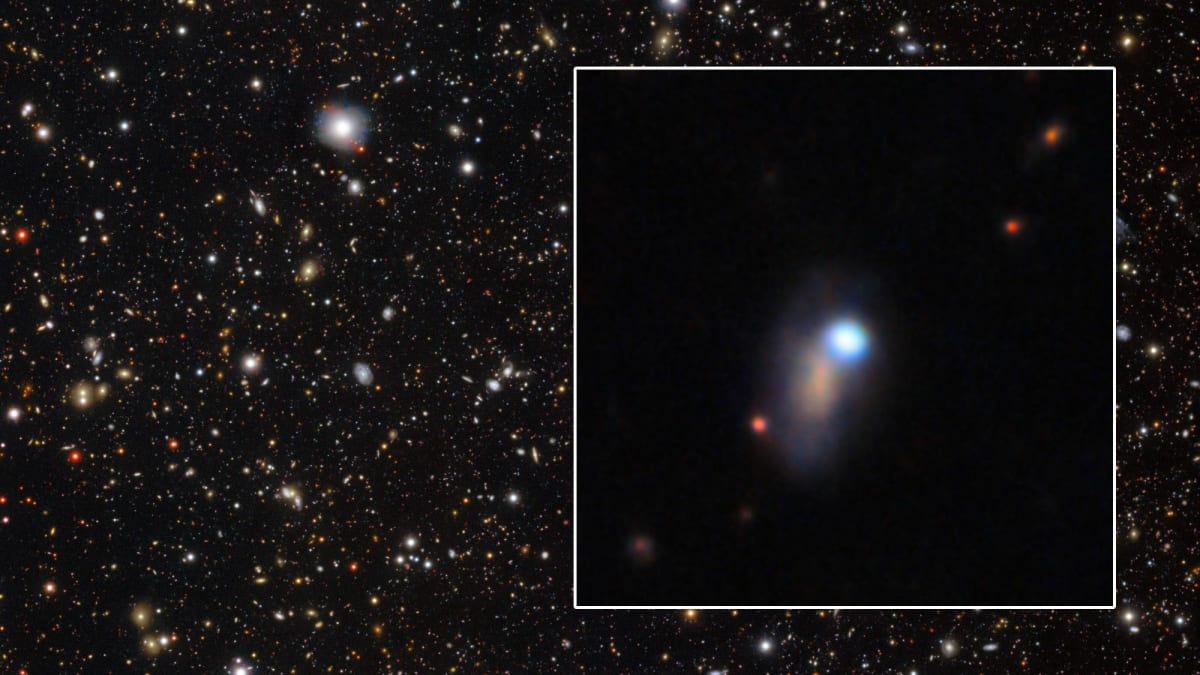
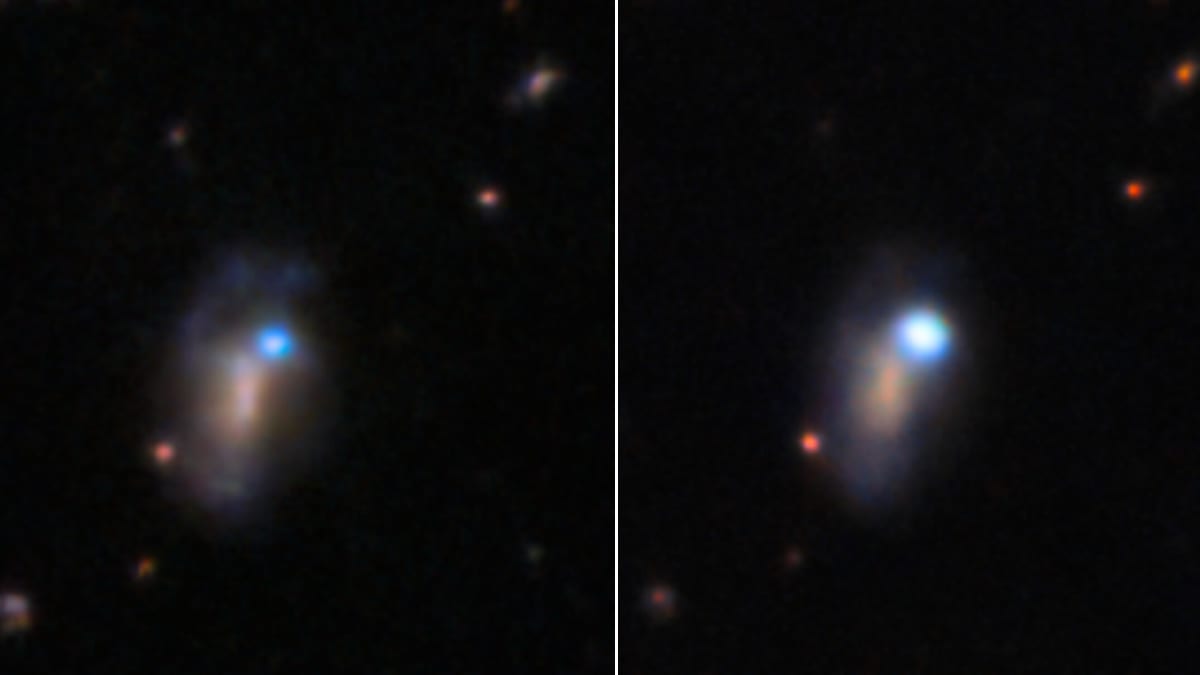
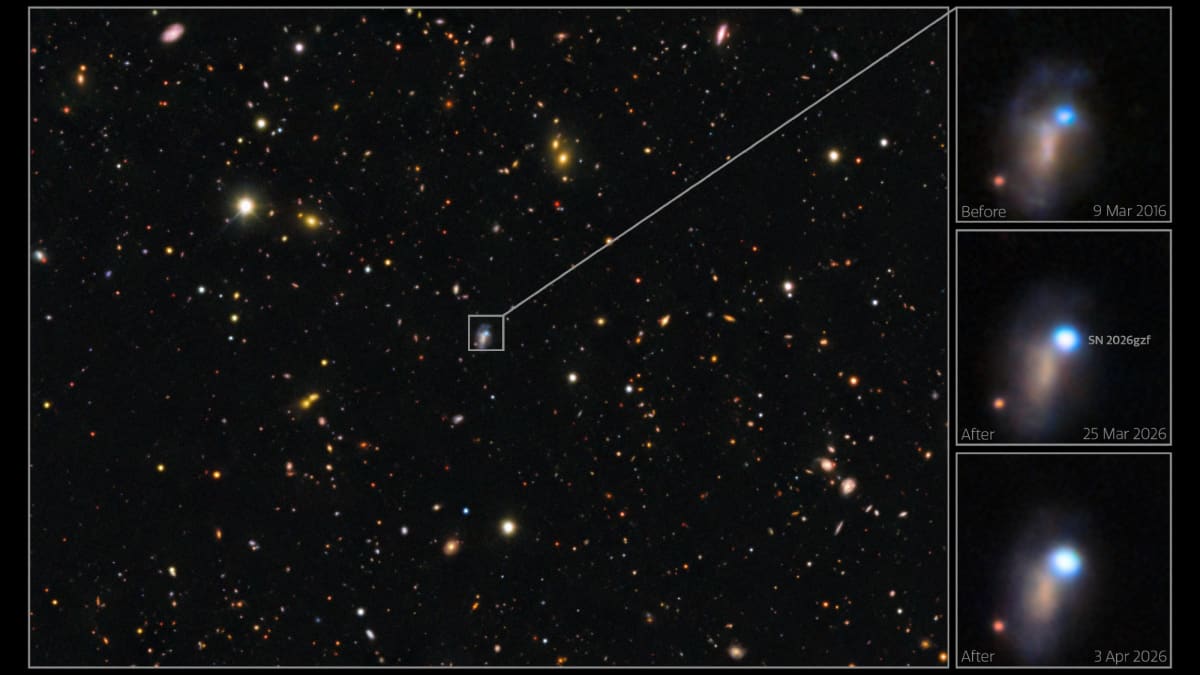
In March 2026, China's Einstein Probe spacecraft caught something incredibly rare: the very first flash of X-rays from a dying star 500 million light-years away. Scientists rarely capture this "shock breakout" moment because it lasts only seconds to hours, making this discovery exceptionally lucky.
The star, designated supernova SN 2026gzf, turned out to be unusual from the start. It was a broad-lined Type Ic supernova, a type of explosion that typically produces powerful jets traveling near light speed and brilliant gamma-ray bursts. But this one did neither.
Instead, the observations revealed something more subtle and fascinating. The initial X-ray flash was the faintest shock breakout ever linked to this type of supernova, giving researchers an unprecedented window into the star's violent final moments.
A global network of telescopes swung into action, tracking the explosion across multiple wavelengths. The rapid response allowed scientists to piece together the star's biography right before death.
The observations showed that the doomed star was a Wolf-Rayet star, born about 20 times more massive than our sun. Before exploding, it had violently shed its outer layers of hydrogen and helium during turbulent final years, leaving behind a core of carbon and oxygen surrounded by multiple shells of expelled material.
Why This Inspires
This discovery opens an exciting new chapter in understanding how stars die. The findings suggest that massive stellar explosions follow more diverse pathways than scientists previously recognized, not all energetic supernovas need to produce gamma-ray bursts or relativistic jets.
"Our observations allowed us to study the physics of three pieces of this explosion," said researcher Jillian Rastinejad. The team mapped out the structure of material surrounding the star and gained insight into its violent lifestyle before collapse.
The breakthrough demonstrates how new technology and international collaboration are revealing cosmic secrets that were hidden just years ago. Scientists can now observe shock breakouts in detail, testing whether all stripped stars behave similarly before their dramatic ends.
As astronomers capture more of these fleeting first flashes, we're building a clearer picture of stellar life cycles and the spectacular fireworks that mark their conclusions.
More Images

Based on reporting by Space.com
This story was written by BrightWire based on verified news reports.
Spread the positivity!
Share this good news with someone who needs it