Astronomers Discover Black Hole Star the Size of Solar System
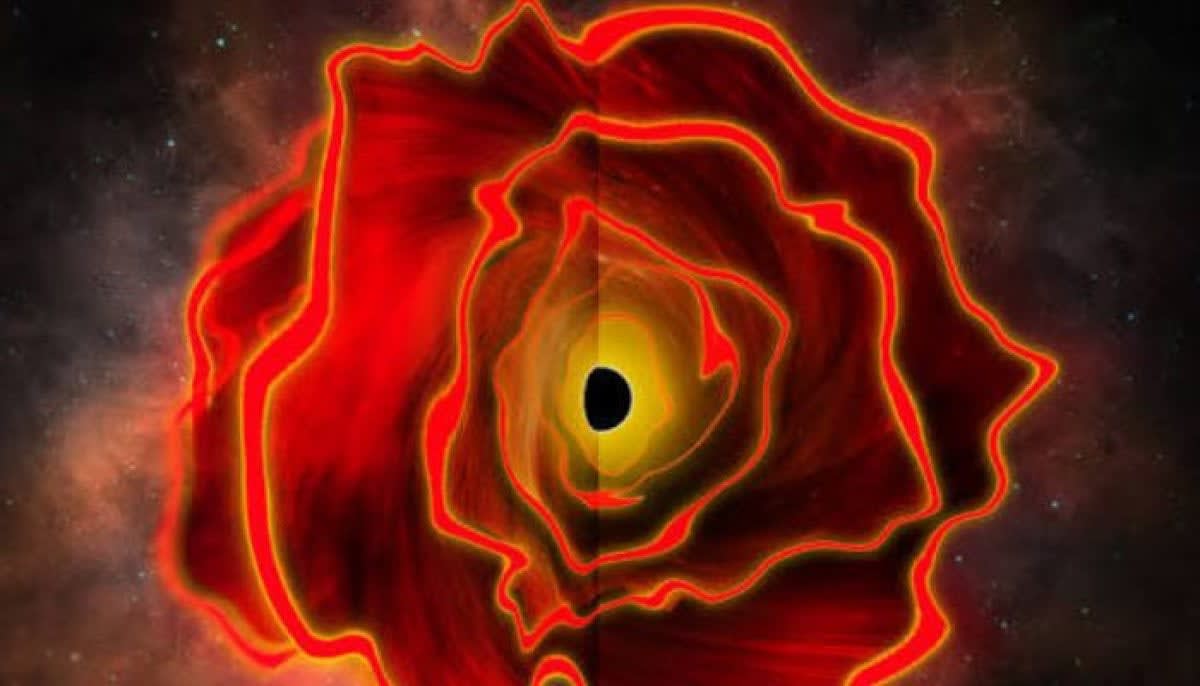
Scientists have identified a stunning new cosmic object that's challenging everything we thought we knew about the universe. This "black hole star" glows brilliant red and formed just 660 million years after the Big Bang.
Astronomers just spotted something that shouldn't exist: a black hole the size of our entire solar system that shines like a star.
The discovery came from NASA's James Webb Space Telescope, which captured images of a mysterious red spot lurking in the constellation Cetus, billions of light years from Earth. What makes this find extraordinary is that the object combines two things scientists thought couldn't coexist: the warm energy signature of a black hole and the glowing properties of a star.
Dr. Rohan Naidu at the Kavli Institute for Astrophysics calls it a "black hole star," a completely new type of astrophysical object. His team was searching for the most distant galaxies in the known universe when they noticed an extremely bright red spot labeled MOM-BH-1, now the reddest object in the telescope's entire image archive.
The object formed roughly 660 million years after the Big Bang, making it one of the earliest cosmic structures ever observed. That timing is crucial because it gives scientists a window into how the universe evolved during its infancy.
Why This Inspires
This discovery isn't just about finding something weird in space. These black hole stars might be the architects of entire galaxies, including our own Milky Way.
Naidu suspects these objects govern when stars can form and when they stop forming, essentially setting the course for everything that follows in a galaxy's life. Understanding them could unlock mysteries about how galaxies like ours came to exist and how they'll evolve in the future.
The James Webb Space Telescope continues proving its worth just years after launch. By capturing light from the universe's earliest moments, it's giving scientists tools to rewrite textbooks and answer questions humanity has asked for centuries.
The breakthrough results were published in Nature, marking a milestone in our understanding of cosmic evolution. The research team is now searching for more of these hybrid objects to understand how common they are and what role they play in shaping the cosmos.
Every new type of cosmic object we discover reminds us how much wonder still waits to be found in the night sky.
Based on reporting by Google News - Breakthrough Discovery
This story was written by BrightWire based on verified news reports.
Spread the positivity!
Share this good news with someone who needs it
%2Fhttps%3A%2F%2Ftf-cmsv2-smithsonianmag-media.s3.amazonaws.com%2Ffiler_public%2F58%2Fd2%2F58d29a3f-b50e-42b8-bb29-5258f3c5ec41%2F55459753868_5f52e4d42b_k.jpg)