Atlanta Launches World's First Robot Transit Network in 2026
South Metro Atlanta is building the world's first fully automated public transit system using driverless electric pods on dedicated guideways. The half-mile pilot could move 10,000 people per hour at bus prices without adding a single road.
Imagine summoning your own personal transit pod that whisks you directly to your destination without a single traffic jam or unplanned stop. That future arrives in Atlanta this December.
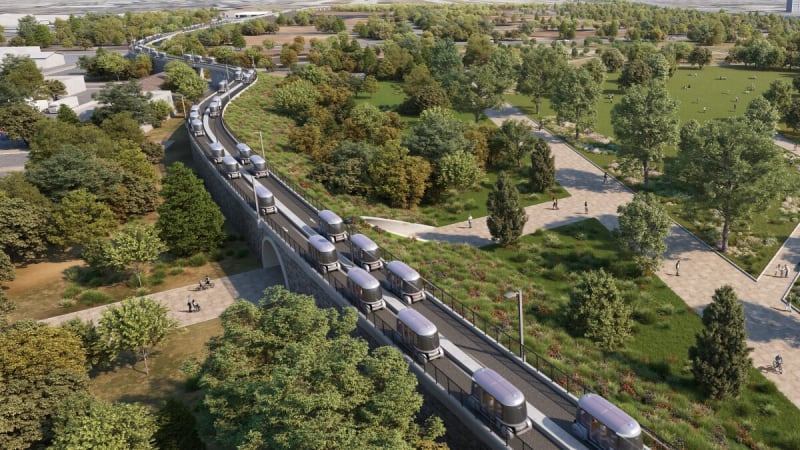
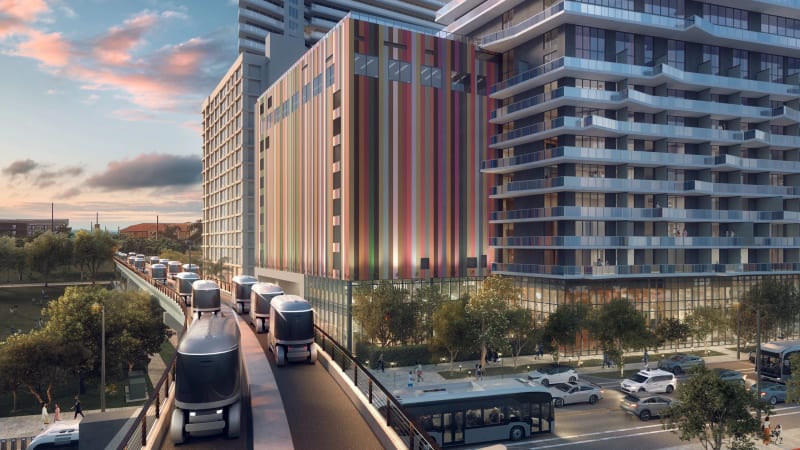
California's Glydways just broke ground on a groundbreaking half-mile automated transit network connecting the Georgia International Convention Center to Gateway Center Arena. Small electric passenger pods will glide along dedicated guideways, coordinated by AI software to run 24/7 on demand.
Here's what makes it special: you request a ride through an app, and a pod arrives just for you or your group. No driver, no intermediate stops, no fighting rush hour traffic with SUVs and delivery trucks.
The company promises rail-like capacity at bus-fare prices. Their system could squeeze 10,000 passengers per hour through a guideway just over six feet wide, matching light rail throughput without the massive infrastructure costs or decade-long construction timelines that traditional rail requires.
The secret is dedicated lanes. Because the autonomous vehicles operate on private guideways instead of mixed traffic, they can run at consistent speeds in tight formations. That's impossible when you're dodging cars and getting stuck behind garbage trucks.
Glydways has already signed deals with Dubai and Abu Dhabi, with discussions underway in Tokyo, Florida, California, and New York. The technology is catching on because cities desperately need what the company calls "net-new capacity," transportation options that don't compete with existing roads.
"Just putting autonomous vehicles on open roads doesn't actually solve congestion," explains Mark Seeger, Glydways' co-founder and CEO. "In many cities, it makes it worse."
The Atlanta pilot serves as the global proving ground. It connects convention center visitors and arena attendees to the existing ATL SkyTrain in a controlled environment with predictable demand patterns, perfect for testing before scaling up.
The Ripple Effect: If this works, the model could extend to airport connections, suburban commuter routes, and other high-traffic corridors where traditional rail is too expensive. Metropolitan Atlanta Rapid Transit Authority will evaluate the pilot's performance to determine whether the system should expand across the broader Atlanta region.
The real magic isn't just the autonomous technology. It's the economics. No drivers, electric propulsion, and minimal maintenance on a controlled system could make unsubsidized operation at bus fares actually viable.
Cities around the world are watching closely because this could solve a puzzle that's stumped urban planners for generations: how to move massive numbers of people quickly and affordably without tearing up entire neighborhoods to build new infrastructure.
What begins as a half-mile loop in South Metro Atlanta could reshape how millions of people get where they're going.
More Images
Based on reporting by New Atlas
This story was written by BrightWire based on verified news reports.
Spread the positivity!
Share this good news with someone who needs it