Atlanta Turns 7,000-Pound Turbine Blade Into First US Bridge
A retired wind turbine blade from Colorado now carries pedestrians across a creek in Atlanta's Beaverbrook Park as America's first bridge of its kind. The 50-foot structure solves both a waste problem and a park access challenge in one brilliant solution.
A massive wind turbine blade that once spun high above a Colorado wind farm now helps families cross a creek in northwest Atlanta.
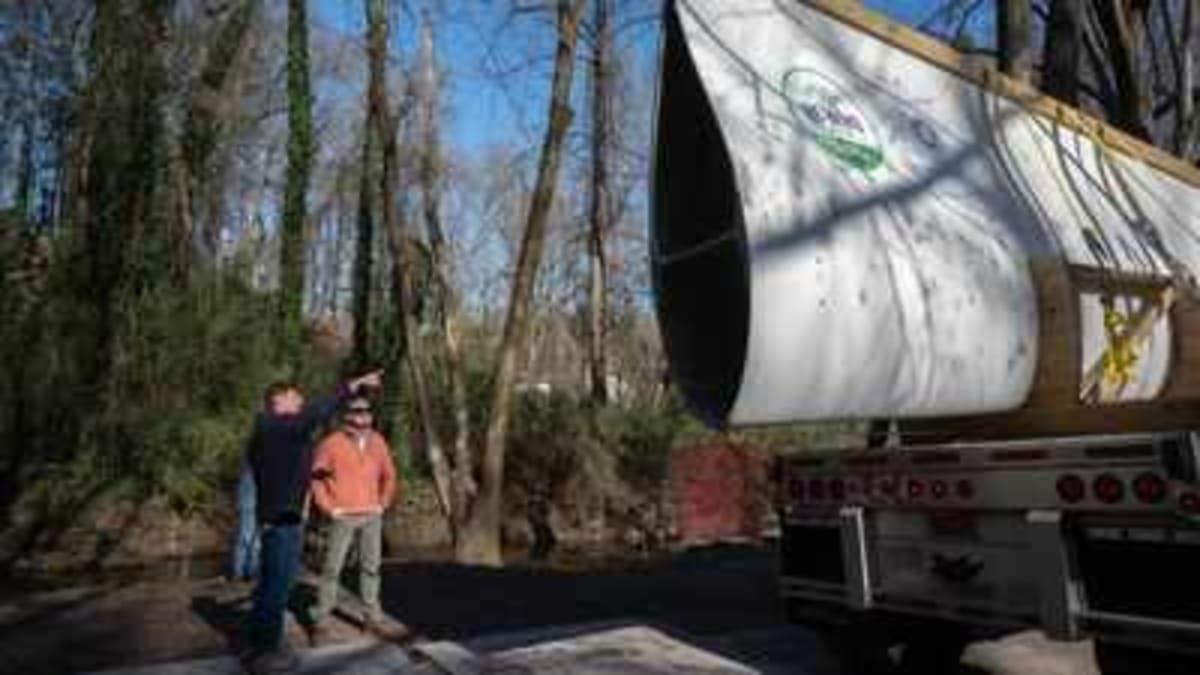
The 50-foot blade, weighing nearly 7,000 pounds, arrived at Beaverbrook Park in March 2025 as the first pedestrian bridge of its kind in the United States. Two similar bridges already exist in Ireland, but this marks the first time Americans have transformed retired wind infrastructure into a working public pathway.
The project began with a simple problem. Visitors to Beaverbrook Park could enjoy playgrounds, ball fields, and an exercise trail, but a creek cutting through the wooded area made walking the full loop impossible. Jud Ready, a principal research engineer at Georgia Tech Research Institute, knew a traditional bridge would cost more than the park's budget allowed.
Ready connected with Russell Gentry, a Georgia Tech architecture professor who studies adaptive reuse of wind turbine blades through the Re-Wind Network. Instead of breaking the blade into raw materials, they kept its structural integrity intact and repurposed the entire piece.
The engineering challenge was enormous. No building codes exist for using turbine blades as bridges, so the team had to design the structural system from scratch. Architecture graduate Cayleigh Nicholson surveyed the park, while Sakshi Kakkad developed custom software to map the blade's unusual geometry and determine proper positioning.
Civil engineering student Gabriel Ackall calculated stresses and deflections to ensure the structure met city safety requirements. The team drew on more than six years of previous turbine blade research and testing to predict how the retired component would perform in its new role.
Funding came from the National Science Foundation, the U.S. Department of Energy, and turbine manufacturer Siemens Gamesa. A 16-person crew including construction workers, ironworkers, and a local tree company installed the bridge in mid-March. The tree company pruned branches so a crane could safely lift the massive blade over the creek.
The Ripple Effect
Wind turbine blades present a growing challenge as renewable energy expands. Most retired blades end up in landfills because their composite materials resist traditional recycling. This bridge proves those same materials can take on completely different structural roles instead.
The Atlanta installation shows how objects engineered to withstand enormous forces hundreds of feet in the air can continue serving communities at ground level. What started as a park budget problem became a demonstration that renewable energy infrastructure can have multiple lives.
Families walking through Beaverbrook Park now cross a bridge that represents both environmental progress and creative problem-solving. The blade that once generated clean electricity in Colorado now connects people to nature in Georgia, proving innovation doesn't always mean building something new.
More Images



Based on reporting by Google News - Wind Energy
This story was written by BrightWire based on verified news reports.
Spread the positivity!
Share this good news with someone who needs it