Australia Near First to Eliminate Cervical Cancer
A generation of Australian women vaccinated against HPV as teens is now seeing cervical cancer nearly vanish. Among women in their late twenties, cases have dropped 95% in just over a decade.
Australia is on track to become the first country in the world to eliminate cervical cancer, and the victory is written in the lives of young women who lined up for a vaccine in high school.
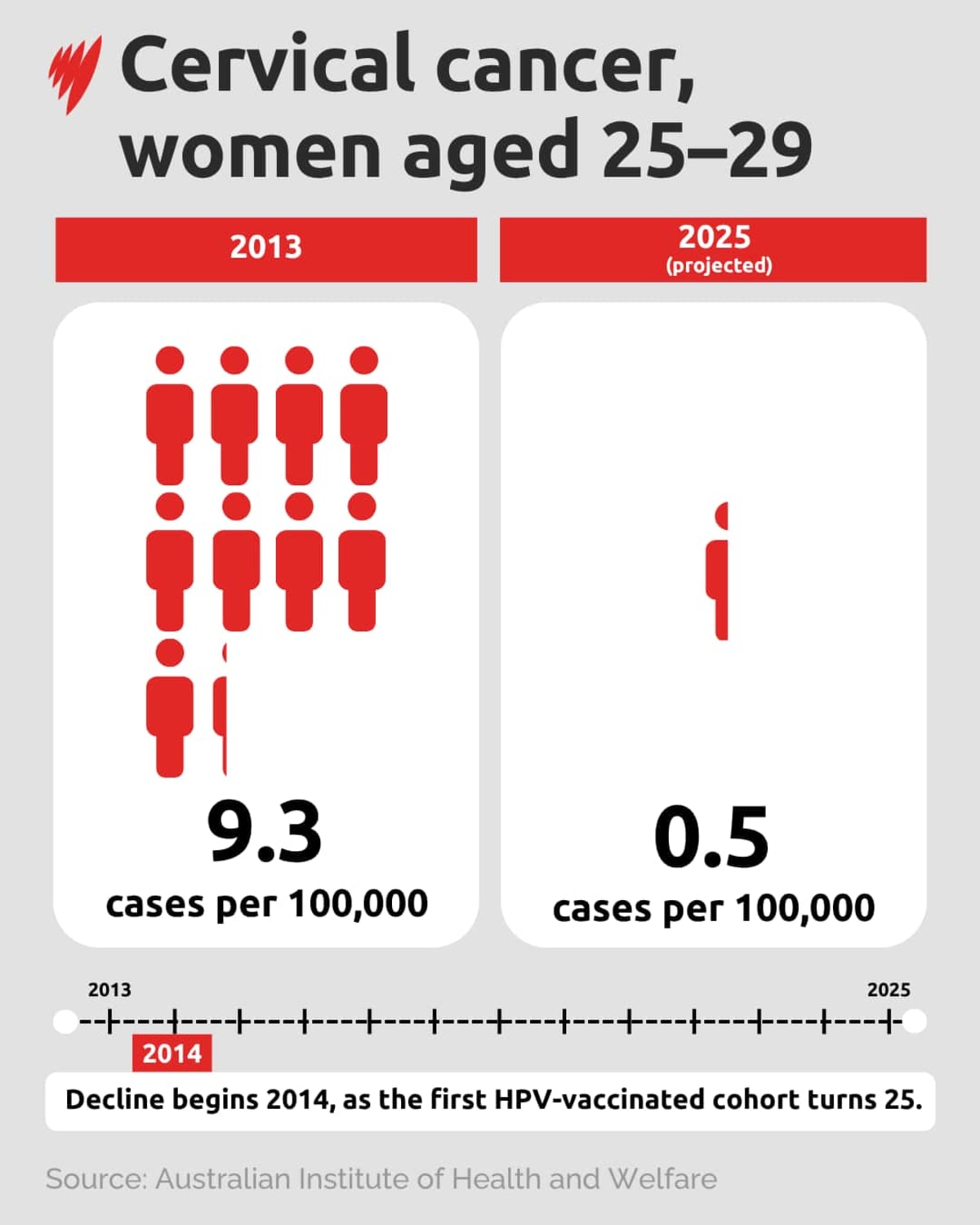
Among Australian women aged 25 to 29, cervical cancer has almost disappeared. Incidence has plummeted from 9.3 cases per 100,000 in 2013 to just 0.5 projected in 2025, a 95% drop, according to new data from the Australian Institute of Health and Welfare.
The triumph traces back to 2007, when Australia became the first country to add HPV vaccination to its national immunization schedule. Girls aged 12 to 13 started receiving Gardasil, a vaccine developed using technology pioneered at the University of Queensland.
The timing of the results is exactly what scientists predicted. Cervical cancer typically takes 15 to 20 years to develop after HPV infection, so women vaccinated as teens in 2007 began showing dramatically lower cancer rates in their mid-twenties around 2014.
Once the second most common cancer among Australian women aged 15 to 29, cervical cancer had fallen to ninth by 2021. Current trends suggest it will drop out of the top 20 cancers for that age group entirely by 2025.
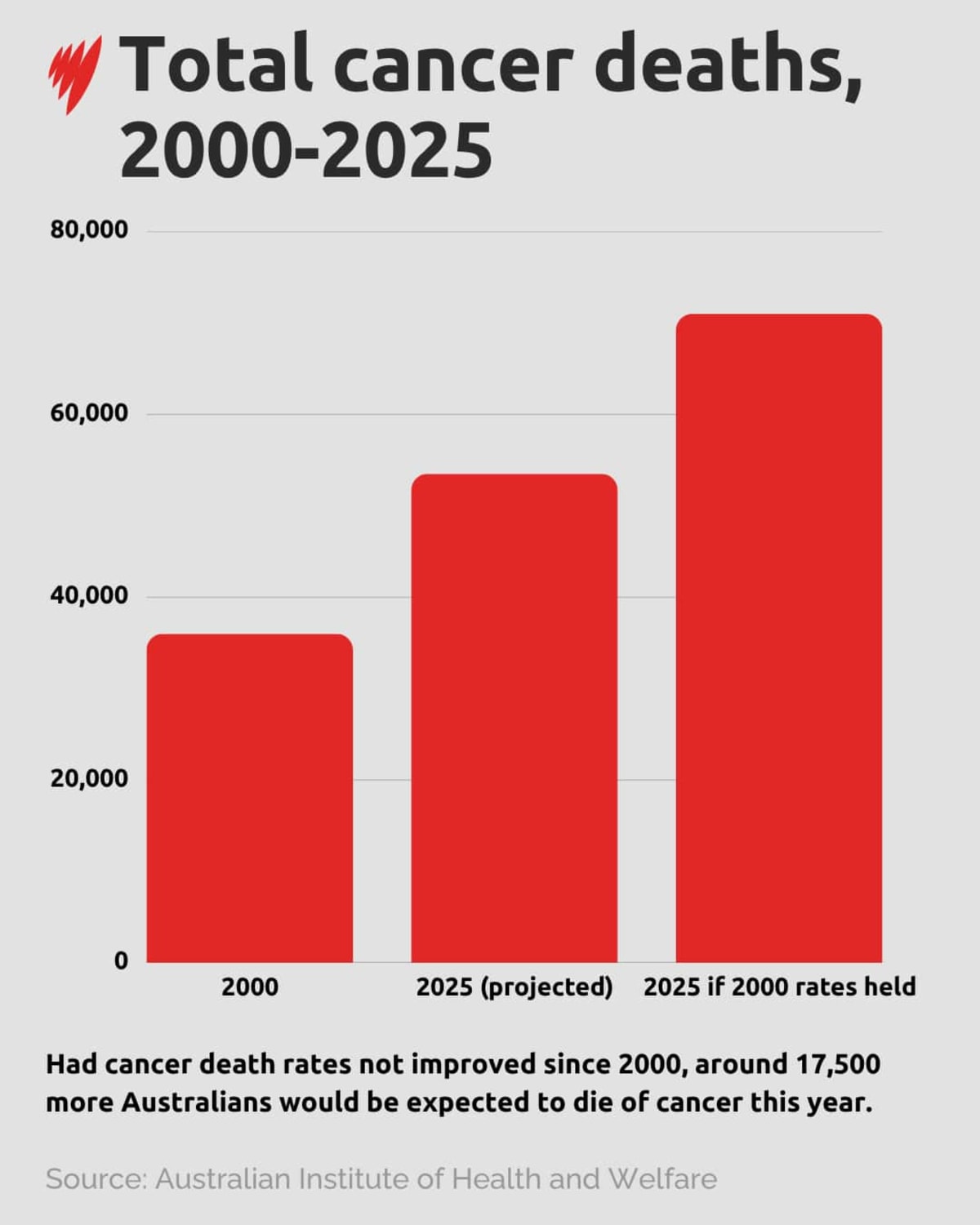
The vaccine arrived on top of an already successful screening program launched in 1991 that had halved incidence rates by catching pre-cancerous changes early. Mortality has dropped from 3.2 deaths per 100,000 women in 2000 to a projected 1.8 in 2025.
Australia's national strategy targets elimination by 2035, defined by the World Health Organization as fewer than four new cases per 100,000 women annually. Some modeling suggests the country could hit that threshold even earlier, potentially as soon as this year in some models.
The school-based vaccination program, which expanded to include boys in 2013, cost $632.9 million over its first four years. That investment is now paying off in lives saved and families spared a devastating diagnosis.
The Ripple Effect
Australia's success is inspiring other countries to accelerate their own HPV vaccination programs. The results prove that a generation can be protected from a cancer that once claimed thousands of lives.
The vaccine generation is now entering their thirties with protection their mothers never had. Their children will grow up in a world where this cancer is a footnote in medical history rather than a common fear.
One vaccine program, launched less than two decades ago, is erasing an entire category of cancer.
More Images

Based on reporting by SBS Australia
This story was written by BrightWire based on verified news reports.
Spread the positivity!
Share this good news with someone who needs it