Australian Team Achieves Solar Panel Breakthrough
Scientists in Australia just cracked a major challenge in making solar energy cheaper and more sustainable. Their new technique could help solar panels work better while using materials that won't run out.
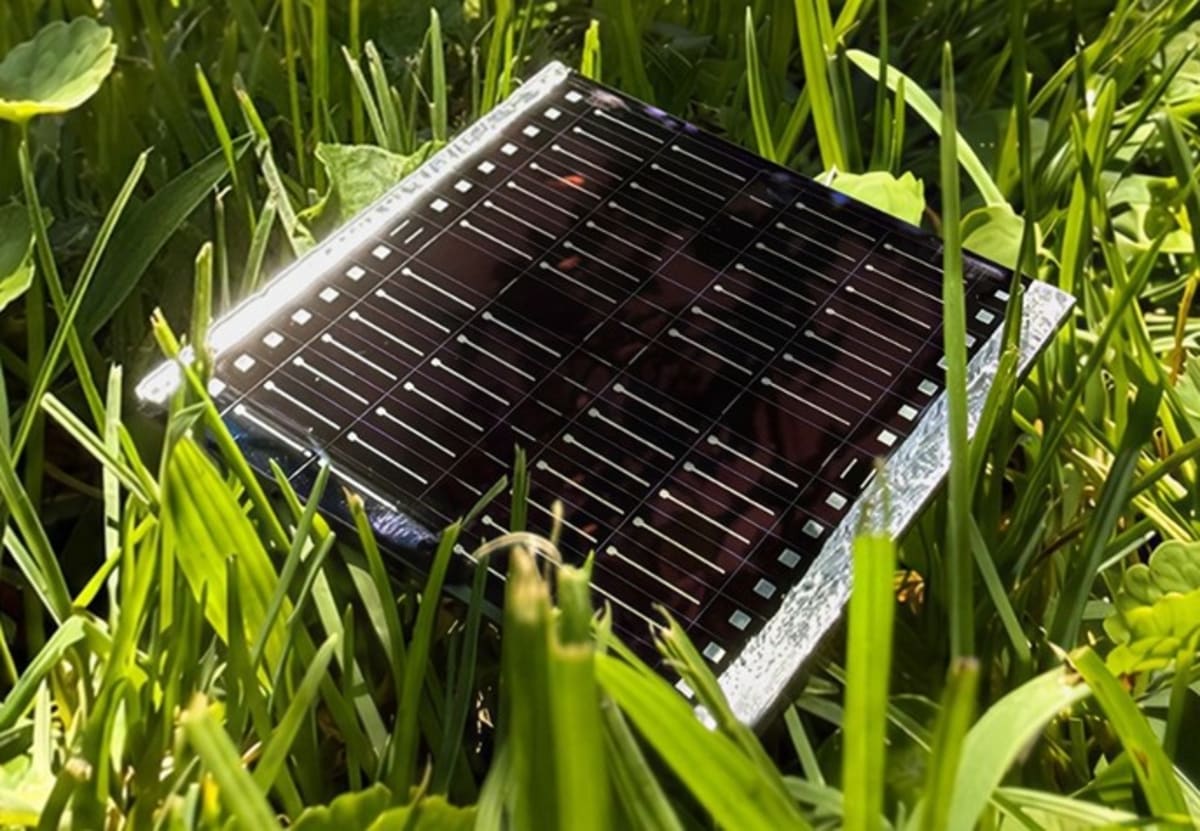
Researchers at the University of New South Wales have built a solar cell that performs better than ever before using earth-abundant materials instead of rare, expensive ones.
The breakthrough tackles a problem that's puzzled scientists for years. Traditional high-efficiency solar panels rely on materials that are scarce and costly. Kesterite solar cells use common elements like copper, zinc, and tin, but they've always lost too much energy during conversion.
The team discovered how to control defects at the molecular level by changing how they mix ingredients during manufacturing. Think of it like baking: the order you add ingredients matters just as much as the recipe itself.
Lead researcher Xiaojing Hao and her team found that adding copper sulfide during the final minutes of production, rather than throughout the entire process, prevented energy losses. This small timing change made a huge difference in the final product's performance.
The result is a solar cell that converts 12.6% of sunlight into electricity with minimal voltage losses. That might not sound revolutionary, but it's the highest efficiency ever achieved for this type of sustainable solar technology.
Even better, the cell stayed stable after more than seven months of storage. Many experimental solar cells degrade quickly, but this one proved durable enough for real-world use.
The Ripple Effect
This discovery extends far beyond one type of solar panel. The design principles the team developed can apply to other emerging solar technologies, especially tandem cells that stack multiple layers to capture more sunlight.
Countries around the world are racing to make solar energy more accessible and affordable. Using common materials instead of rare ones means solar panels could become cheaper to produce and easier to manufacture anywhere.
The technique also reduces dependence on limited resources. As solar energy expands globally, having technologies that don't compete for scarce materials becomes increasingly important for sustainable growth.
Other researchers are already taking notice. The team published their findings in Nature Energy, and Hao hopes scientists working on different semiconductors will adapt their approach to solve similar challenges.
The breakthrough shows how fundamental science can unlock practical solutions that seemed impossible just years ago.
More Images


Based on reporting by PV Magazine
This story was written by BrightWire based on verified news reports.
Spread the positivity!
Share this good news with someone who needs it