Australia's First Wildlife Vet Hospital Training Program
Southern Cross University is partnering with Wildlife Recovery Australia to train veterinary students in wildlife care, creating the only hands-on wildlife hospital program in the country. The initiative tackles Australia's critical shortage of 1,500 veterinarians while ensuring injured native animals get the expert care they deserve.
Too many injured koalas, kangaroos, and native birds arrive at vet clinics in boxes, only to be euthanized because general practitioners lack specialized wildlife training. That's about to change with Australia's first university partnership designed to produce wildlife-ready veterinarians.
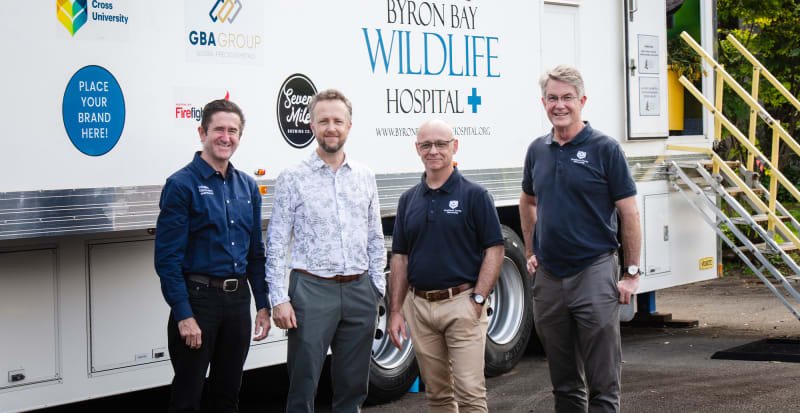
Southern Cross University and Wildlife Recovery Australia announced a groundbreaking collaboration that gives veterinary students hands-on experience treating native animals at three specialized facilities. Students will work alongside expert wildlife vets at the Lennox Head Wildlife Hospital, Byron Bay Raptor Recovery Centre, and a mobile wildlife hospital.
Dr. Stephen Van Mil, founder of Wildlife Recovery Australia, saw the problem firsthand. "Wildlife are presented to general practice vets across Australia every single day," he explained. "Too often the animals arrive in boxes, are triaged late, and don't get the outcome they deserve."
The partnership addresses two urgent problems at once. Australia currently faces a shortage of approximately 1,500 veterinarians, with rural areas hit hardest. Meanwhile, injured wildlife often receive substandard care simply because vets haven't been trained in the unique physiology and anatomy of native species.
Southern Cross veterinary students will now be the only ones in Australia gaining authentic clinical experience in dedicated wildlife facilities. They'll learn everything from emergency triage to surgery to rehabilitation, working directly with animals that arrive needing help.
Professor Rowland Cobbold, Discipline Chair of Veterinary Sciences, emphasized the regional focus. "These skills are increasingly vital to regional practice where vet clinics regularly treat injured native animals alongside domestic patients," he said.
The Ripple Effect
This partnership creates a cascade of positive outcomes reaching far beyond the classroom. Every graduate trained in wildlife care means hundreds of native animals will receive proper treatment instead of being euthanized. Rural communities struggling to find veterinarians will have access to practice-ready graduates comfortable with mixed-animal care.
The model also transforms how veterinary education works in Australia. Southern Cross's approach prioritizes early clinical exposure and real-world learning over purely theoretical training. Veterinary Technology students begin clinical work in their first year, while Veterinary Medicine students dive into animal husbandry early and progress to full clinical rotations by year three.
Dr. Van Mil sees the future clearly: "I want wildlife to have the same privilege, the same care, and the same dedication that our domestic friends get." With this partnership producing Australia's first generation of wildlife-trained veterinarians, that future is becoming reality.
The first students will begin placements at the wildlife facilities this year, marking a new chapter for both veterinary education and wildlife conservation across Australia.
More Images

Based on reporting by Google News - Wildlife Recovery
This story was written by BrightWire based on verified news reports.
Spread the positivity!
Share this good news with someone who needs it