Autism Study: Different Expression, Same Emotions
Scientists discover autistic and non-autistic people express emotions differently through facial movements, like speaking different languages. This breakthrough suggests emotional misunderstandings go both ways, not just one-sided challenges.
Imagine two people feeling the same emotion but showing it so differently that neither recognizes what the other is experiencing. That's what researchers at the University of Birmingham just uncovered about autism and emotional expression.
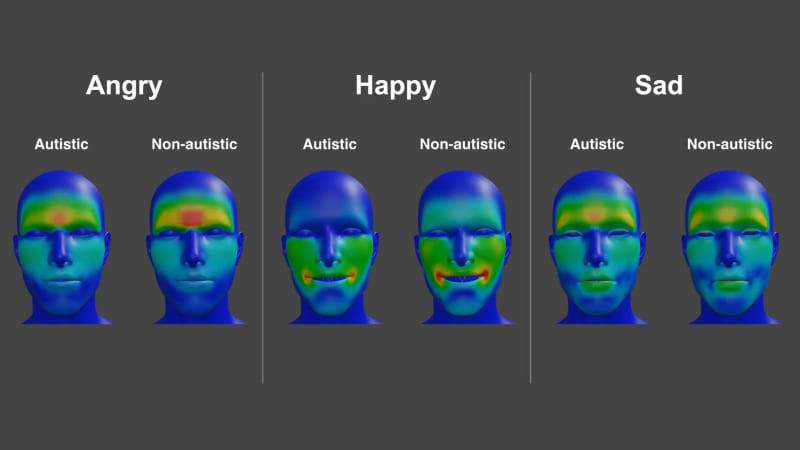
The study tracked facial movements in 51 adults as they expressed anger, happiness, and sadness. Using advanced motion tracking, scientists recorded over 265 million data points to create one of the most detailed maps of emotional expressions ever made.
The results revealed something surprising. Autistic participants weren't expressing less emotion but were using different facial features to show it. For anger, they moved their mouths more and eyebrows less. For happiness, their smiles were more subtle and didn't reach their eyes as much. For sadness, they lifted their upper lips differently.
Dr. Connor Keating, who led the research, found that autistic participants also showed wider variety in their expressions. This means the same emotion might look unfamiliar to non-autistic observers, even though it carries the same meaning.
The team also examined alexithymia, a condition involving difficulty identifying one's own emotions. People with higher alexithymia levels showed less defined expressions for anger and happiness, making those feelings harder for others to read.
Why This Inspires
Professor Jennifer Cook reframed what we thought we knew about autism and emotion. "Autistic and non-autistic people may express emotions in ways that are different but equally meaningful, almost like speaking different languages," she explained.
This changes everything about how we understand social communication challenges in autism. What looked like a deficit turns out to be a two-way misunderstanding. Non-autistic people struggle to read autistic expressions just as much as the reverse.
The research suggests we've been asking the wrong question all along. Instead of wondering why autistic people can't express emotions "correctly," we should recognize that both groups are fluent in different emotional languages.
This discovery opens doors for better mutual understanding. When we stop treating one style of expression as the standard and another as broken, we create space for genuine connection across neurological differences.
The team is continuing their research to explore how both groups can learn to understand each other's emotional languages better.
Based on reporting by Science Daily
This story was written by BrightWire based on verified news reports.
Spread the positivity!
Share this good news with someone who needs it