Azerbaijan and Armenia Initial Historic Peace Agreement
One year ago, Azerbaijan and Armenia took a giant leap toward ending decades of conflict by initialing a peace agreement in Washington. The breakthrough has already opened borders, restored trade, and launched new infrastructure connecting the region.
After years of hostility, two neighboring nations are finally building bridges instead of barriers.
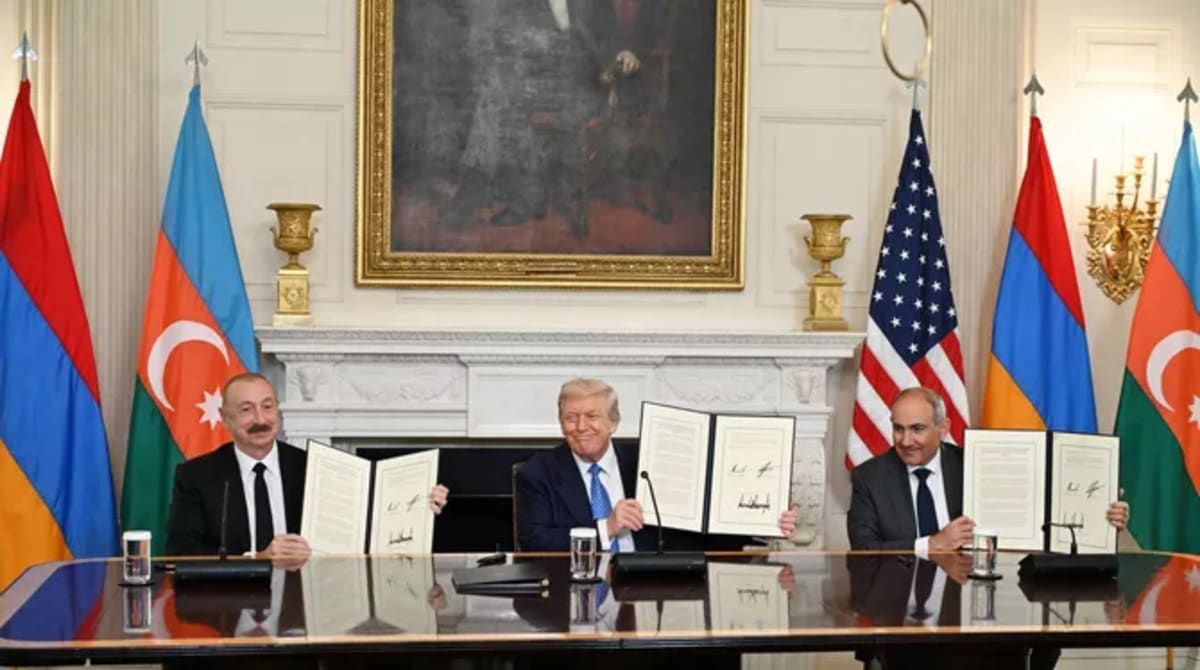
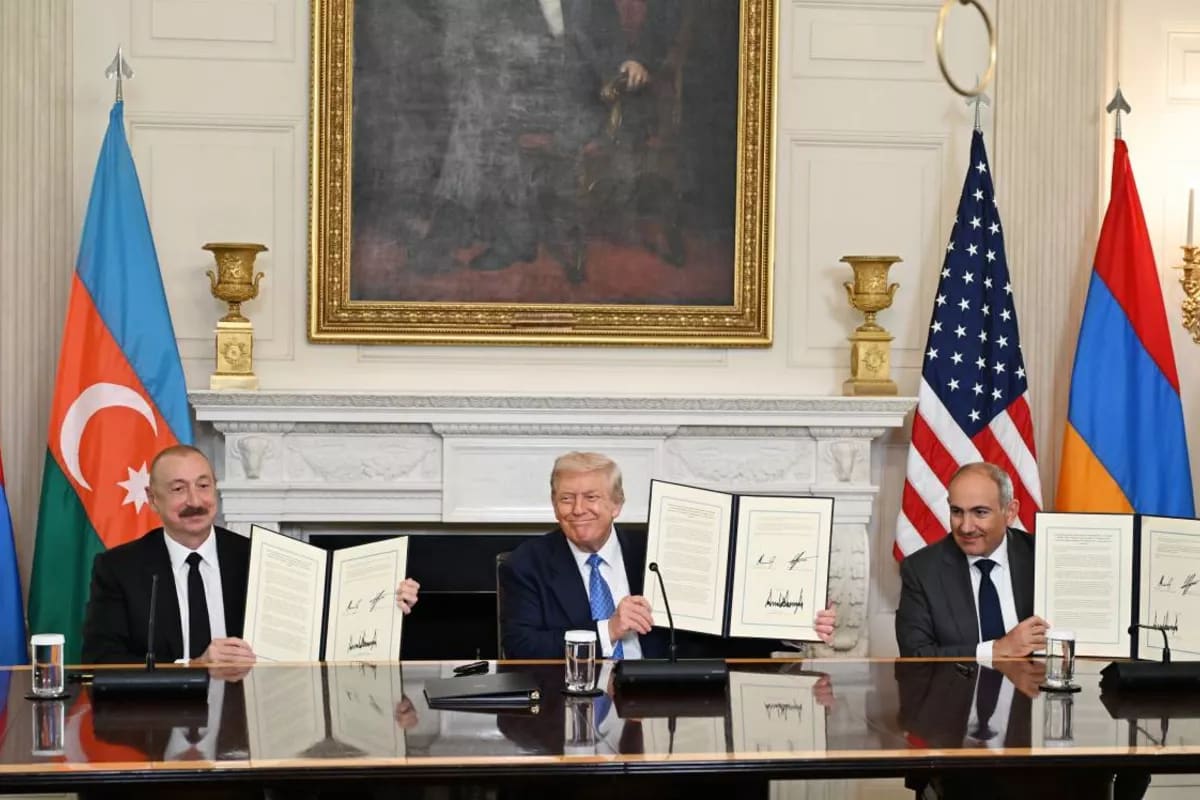
On August 8, 2025, Azerbaijani President Ilham Aliyev and Armenian Prime Minister Nikol Pashinyan met in Washington with US President Donald Trump to initial a peace agreement. The ceremony marked the first time the countries formally committed to ending their long conflict and establishing normal relations.
The Joint Declaration signed that day laid out clear principles: no more threats of force, no tolerance for revenge, and a future built on cooperation and mutual respect. While additional steps are still needed before final ratification, the initialing represented a crucial legal foundation for lasting peace.
The agreement didn't just create good feelings. Within months, Azerbaijan lifted transit restrictions, allowing Russian and Kazakh wheat to flow through its territory to Armenia for the first time in years. Azerbaijan also began supplying oil products to its neighbor, reopening economic ties that had been frozen during the conflict.
The peace process even retired an old diplomatic framework. Both countries requested that the OSCE Minsk Group, which had mediated talks for years without resolution, officially end its activities. The message was clear: direct dialogue was working better than outside mediation.
The Ripple Effect
The Washington summit sparked tangible changes across the South Caucasus region. Azerbaijan accelerated construction on roads and railways that will eventually connect its mainland to the Nakhchivan region through Armenian territory, part of the TRIPP (Trump Route for International Peace and Prosperity) project.
In April 2026, both sides agreed on guidelines for border delimitation, the technical process of marking exactly where one country ends and another begins. An Azerbaijani delegation led by Deputy Prime Minister Shahin Mustafayev visited Armenia to work out details, a visit that would have been unthinkable just two years earlier.
Regional experts note that the agreement has created momentum for broader cooperation across the South Caucasus. New transport routes promise to boost trade not just between Azerbaijan and Armenia, but throughout Central Asia and Europe. The potential for economic growth is drawing international interest and investment to a region once defined by frozen conflicts.
The final peace treaty still requires more work, but the foundation is solid. What started as a handshake in Washington has become roads, trade routes, and the gradual restoration of trust between two peoples who share a border and a future.
More Images
Based on reporting by Google: peace agreement signed
This story was written by BrightWire based on verified news reports.
Spread the positivity!
Share this good news with someone who needs it