Bacteria Inside Tumors Could Revolutionize Cancer Treatment
Scientists discovered that tumors aren't sterile but host entire ecosystems of bacteria and viruses that can either fuel cancer or help fight it. This breakthrough opens the door to using microbes as precision weapons against cancer.
For decades, researchers thought tumors were sterile environments, but a groundbreaking review reveals they're actually teeming with life. Scientists have discovered complex communities of bacteria, fungi, and viruses living inside tumors, actively influencing whether cancer grows or retreats.
These microscopic inhabitants aren't just passengers. They're powerful regulators of the body's immune response, capable of either helping cancer spread or rallying the immune system to destroy it.
The discovery reshapes everything oncologists thought they knew about cancer. Different tumor types host different microbial communities, with diversity varying even within a single patient's tumor based on tissue environment and immune conditions.
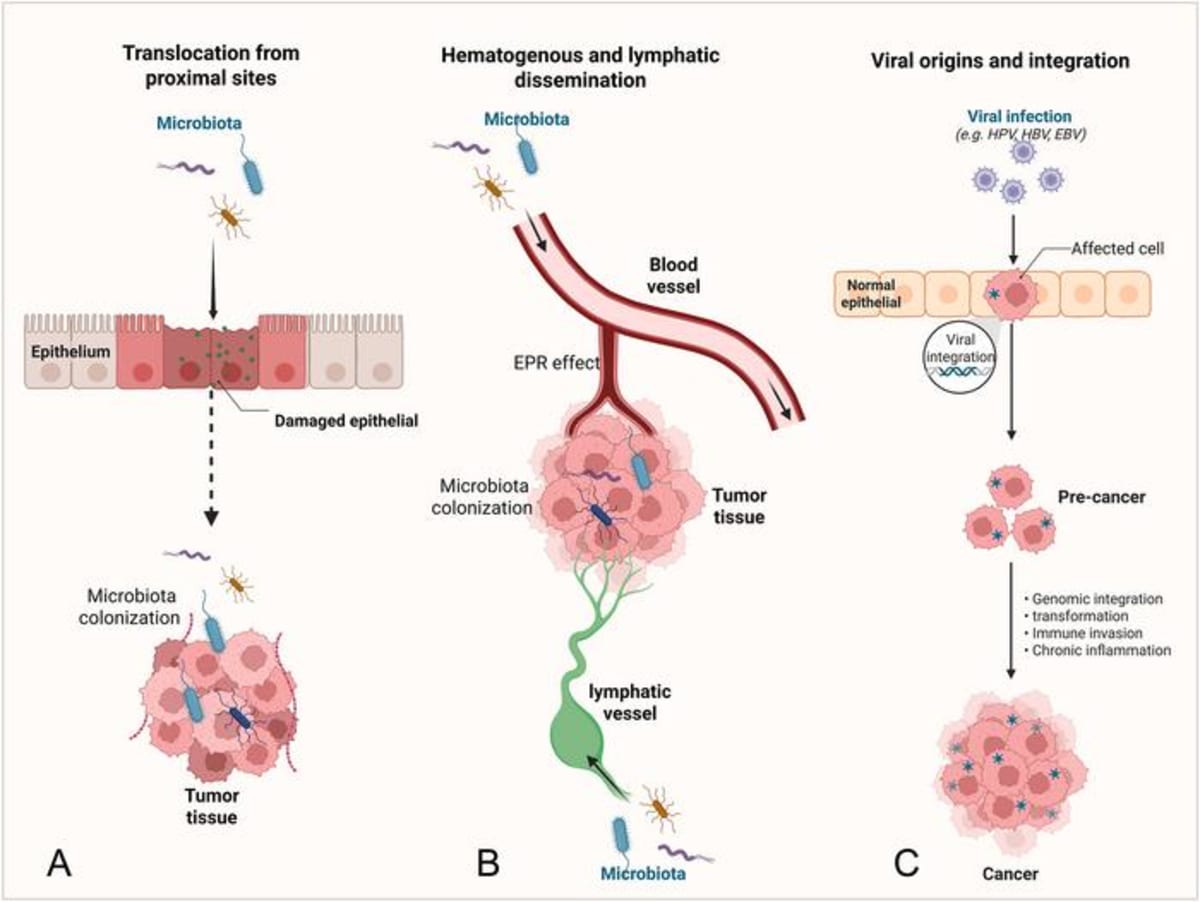
These microbes enter tumors through surrounding tissues, the bloodstream, or viral integration into cells. Once inside, they create dynamic ecosystems that evolve alongside the cancer itself, producing metabolites that can suppress or activate anti-tumor responses.
Researchers at Wuhan University in China led a comprehensive review of how these microbial communities interact with both innate and adaptive immune systems. Their findings reveal that microbes influence immune signaling pathways and modulate how immune cells behave inside tumors.
The therapeutic potential is enormous. Scientists are now developing engineered bacteria, targeted antibiotics, bacteriophages, and oncolytic viruses designed to reshape tumor environments from the inside out.
The Ripple Effect
This research transforms cancer treatment from a one-size-fits-all approach to precision medicine. By understanding each patient's unique tumor microbiome, doctors could personalize treatments based on which microbes are present and how they're behaving.
Early strategies show promise in overcoming treatment resistance, a major obstacle in cancer care. When tumors don't respond to chemotherapy or immunotherapy, the microbial community might be the missing piece of the puzzle.
The approach could enhance existing immunotherapies by using beneficial bacteria to wake up dormant immune responses. Some microbes naturally stimulate protective immune activity, turning the tumor's own ecosystem against itself.
Challenges remain, including ensuring treatments target only cancer cells and managing the complexity of microbial interactions. Safety protocols must account for the variability between patients and cancer types.
Despite hurdles, researchers worldwide are embracing this new frontier. The work positions intra-tumoral microbiota as a cornerstone of next-generation cancer care, where microscopic allies become powerful weapons in the fight against disease.
The review, published in Genes & Diseases, synthesizes cutting-edge research funded by China's National Natural Science Foundation. It marks a turning point in oncology, where understanding life inside tumors could save millions of lives outside them.
More Images
Based on reporting by Google News - New Treatment
This story was written by BrightWire based on verified news reports.
Spread the positivity!
Share this good news with someone who needs it