Bacteria Protein Writes DNA From Scratch, Defying Biology
Scientists discovered a bacterial protein that creates DNA without copying existing genetic material—something biology textbooks say shouldn't be possible. The breakthrough could lead to revolutionary new tools for building custom DNA molecules.
For 4 billion years, every living thing on Earth has followed one unbreakable rule: to make DNA, you need existing DNA to copy from. Until now.
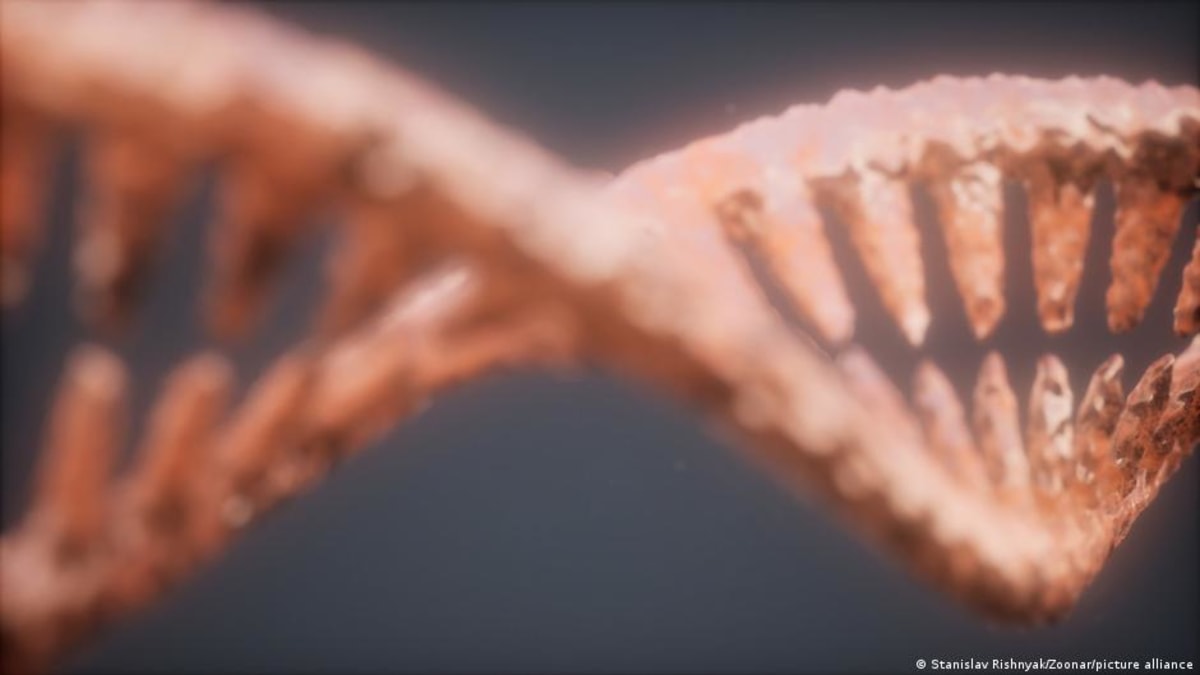
Researchers at Stanford University discovered a bacterial protein called Drt3b that builds DNA completely from scratch. It doesn't need a template or anything to copy—it uses its own shape as a mold to snap the right building blocks into place.
"It was quite a surprise!" says Alex Gao, the biochemist who led the study published in Science this April. His team was studying how bacteria defend themselves from viruses when they stumbled onto something nobody had seen before.
The protein works like a molecular assembly line. While one part of the system builds DNA the normal way, Drt3b constructs the other half by locking onto DNA building blocks one by one until a complete strand emerges. Other proteins have done something similar, but only in tiny fragments—like writing a single sentence. Drt3b writes whole paragraphs.
The discovery came from studying E. coli, the common bacterium found in human intestines. When researchers used cryo-electron microscopy to image the protein at near-atomic resolution, the pieces finally clicked together. They were watching biology break its own rules.
"The research is groundbreaking," says Philip Kranzusch, a Harvard biochemist not involved in the study. Scientists have studied DNA since the 1950s, yet bacteria were quietly doing the impossible all along.
Why This Inspires
This discovery reminds us how much we still have to learn from the tiniest organisms on our planet. Bacteria have been perfecting survival strategies for billions of years, and they're still surprising us.
The practical possibilities are exciting too. If scientists can engineer Drt3b to produce custom DNA sequences, it could become a powerful new tool for building DNA molecules without templates. We're not there yet, but the potential is real.
Some wondered if this breaks the "central dogma of biology"—the rule that information flows from DNA to RNA to protein, never backward. Rafael Pinilla-Redondo, a microbiologist at the University of Copenhagen, says no. The protein isn't rewriting genetic code; it's building a short, specific sequence in a unique context.
"The exciting part is not that the rules of biology have collapsed," Pinilla-Redondo explains. "It is that evolution has found a very unexpected way to build a DNA molecule."
Scientists don't yet know exactly what this bacteria-made DNA does. The leading theory is that it acts like a molecular sponge, soaking up essential components of attacking viruses and neutralizing them. But researchers remain open to other possibilities.
The discovery echoes another bacterial defense system that transformed science: CRISPR. Those molecular scissors, now used to edit genes and treat diseases like sickle cell, were also first discovered as a quirky bacterial trick. The first CRISPR gene therapy was approved just last year.
Nobody knows if Drt3b will follow CRISPR's path from bacterial oddity to medical breakthrough, but one thing is certain: nature still has plenty of secrets left to share.
More Images
Based on reporting by DW News
This story was written by BrightWire based on verified news reports.
Spread the positivity!
Share this good news with someone who needs it