Bacteria Spin Microscopic Pucks Without Touching Them
Scientists discovered E. coli bacteria can rotate tiny discs using only the swirling motion of their bodies and tails, like invisible motors working from a distance. This mind-bending finding could revolutionize how we design microscopic machines.
Scientists just watched bacteria pull off a trick that seems to break the rules: spinning objects without ever making contact.
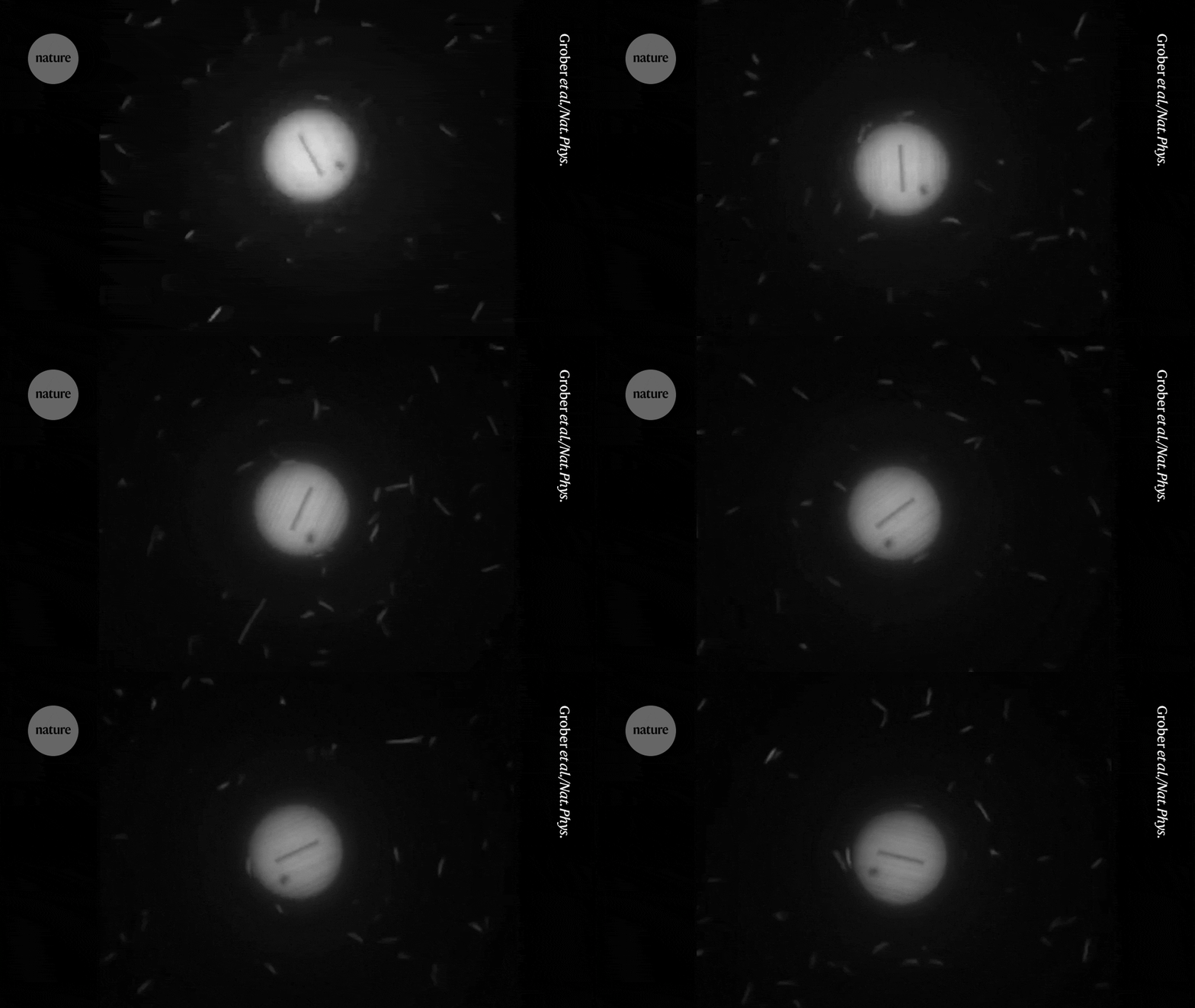
Researchers studying Escherichia coli discovered the swimming bacteria can rotate microscopic pucks using only the currents created by their spinning tails and twisting bodies. No touching required.
The team captured the phenomenon on video, watching as crowds of bacteria swarmed around tiny disc-shaped objects. As the bacteria swam in coordinated patterns, the pucks began to spin, powered entirely by the fluid currents the microbes created.
Think of it like a crowd of synchronized swimmers creating a whirlpool that rotates a beach ball in the center. The bacteria never bumped into the pucks, yet controlled their movement through the water around them.
The discovery reveals how nature has already solved problems engineers are still struggling with. Creating machines at microscopic scales is incredibly difficult because traditional motors and gears don't work when you're smaller than a grain of sand.
But bacteria have been operating tiny biological motors for billions of years. Each E. coli cell spins its tail-like flagella at incredible speeds, rotating its entire body as it swims through liquid environments.
Why This Inspires
This finding opens exciting possibilities for designing microscopic robots and drug delivery systems. If scientists can harness the natural swimming power of bacteria, they could create tiny machines that navigate through the human body or assemble materials at scales invisible to the naked eye.
The research also reminds us that some of nature's smallest creatures are incredibly sophisticated. Bacteria don't have brains, yet they can collectively create organized flows strong enough to move objects many times their size.
Understanding how these microorganisms manipulate their environment could lead to breakthroughs in everything from targeted medicine to cleaning up pollutants. Sometimes the most advanced technology isn't something we need to invent. We just need to learn from what's already swimming all around us.
The invisible motors were there all along, waiting for us to notice.
More Images




Based on reporting by Nature News
This story was written by BrightWire based on verified news reports.
Spread the positivity!
Share this good news with someone who needs it