Scientists Cut Air Drag 44% With Tiny Surface Bumps
Japanese researchers just flipped an 80-year-old aviation rule on its head: rougher surfaces can actually reduce drag better than smooth ones. This breakthrough could revolutionize how we build planes, trains, and cars.
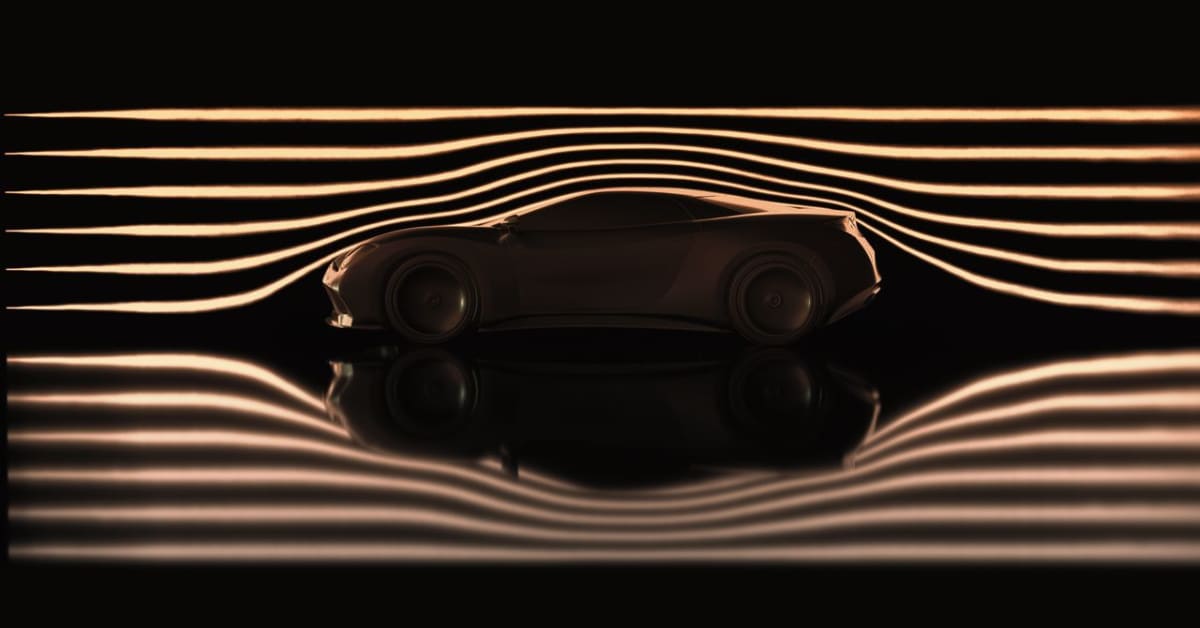
For more than eight decades, aerospace engineers have followed one golden rule: keep surfaces perfectly smooth to cut air resistance. A team at Tohoku University just proved that rule wrong.
Associate Professor Aiko Yakino and her research group discovered that adding microscopic roughness to aircraft surfaces can reduce air drag by up to 43.6 percent. The bumps are so tiny you cannot see them with the naked eye, yet they deliver dramatic fuel savings.
The discovery challenges a principle established in 1940 by aerodynamicist Ichiro Tani, who showed that rough surfaces increased drag. His findings shaped how engineers designed everything from commercial jets to bullet trains for generations.
But Yakino's team proved that not all roughness works the same way. Their distributed micro-roughness (DMR) technique uses random, ultra-fine bumps that delay the moment when smooth airflow turns turbulent. Think of it like speed bumps that actually help traffic flow faster.
The breakthrough required solving a tricky measurement problem. Traditional wind tunnel tests use support rods that interfere with airflow, making it impossible to measure such subtle changes. Tohoku University's magnetic support system levitates test models using electromagnetic force, eliminating any interference.
The team tested surfaces coated with glass beads measuring just 38 to 53 micrometers across. That's about half the width of a human hair. They also tried surfaces roughened by sandblasting, creating tiny divots instead of bumps.
Both approaches worked remarkably well across a wide range of speeds. The rough surfaces consistently outperformed smooth ones, even at the highest test velocities.
Why This Inspires
This discovery matters because air resistance is one of the biggest energy drains in transportation. Every commercial flight burns thousands of gallons of fuel just pushing air out of the way. Trains and cars face the same challenge at high speeds.
A 44 percent reduction in drag could translate to massive fuel savings and fewer emissions. Airlines could fly the same routes using far less jet fuel. High-speed rail could reach destinations faster while consuming less electricity.
The technology differs completely from shark skin-inspired designs that carve tiny grooves into surfaces. Those grooves work by organizing turbulent flow that already exists. DMR prevents turbulence from forming in the first place, addressing the problem earlier in the process.
Even better, the roughness required is so minimal that engineers classify it as "smooth" by traditional standards. The coating measures just one percent of the boundary layer thickness, meaning it could be applied without major design changes to existing vehicles.
The researchers are now working to understand exactly why these microscopic bumps work so well. Early theories suggest they interact with the boundary layer in ways that stabilize smooth airflow for longer periods.
Aviation companies and train manufacturers are already taking notice. What started as a challenge to conventional wisdom could soon become the new standard for cutting-edge transportation design.
Sometimes progress means thinking backward to move forward.
More Images




Based on reporting by Wired
This story was written by BrightWire based on verified news reports.
Spread the positivity!
Share this good news with someone who needs it