Bacteria's Defense System Works Like Military Command Center
Scientists discovered bacteria use CRISPR like a strategic commander, not just a weapon—coordinating multiple defense systems to fight viruses while managing energy costs. This breakthrough reveals how even the tiniest life forms balance protection with survival.
Scientists just cracked the code on how bacteria defend themselves, and it's way more sophisticated than anyone imagined.
For years, researchers knew bacteria use CRISPR as a precision weapon against viruses. But a team led by Prof. LI Ming from the Chinese Academy of Sciences discovered something remarkable: CRISPR doesn't just fight invaders. It acts like a military command center, directing more than twenty different defense systems at once.
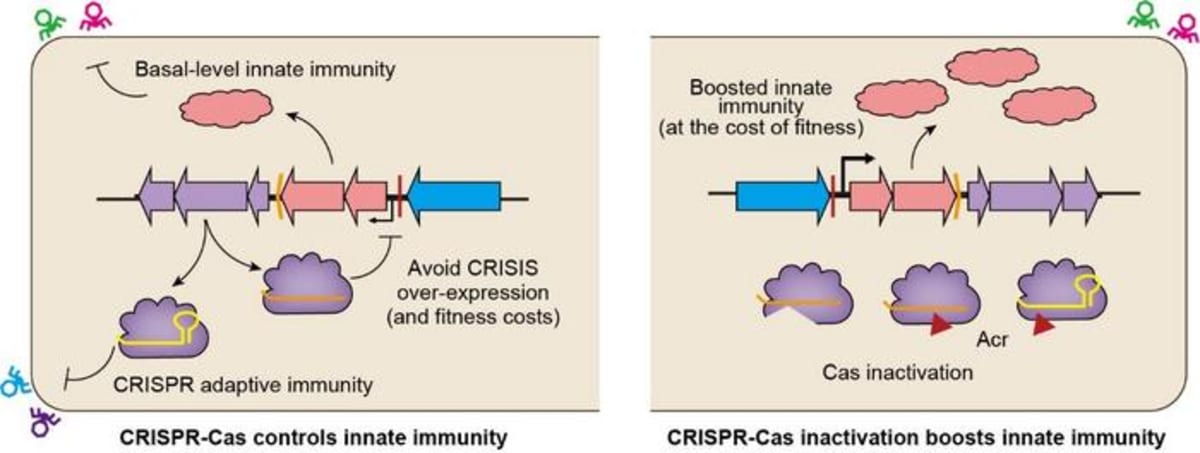
The discovery changes everything we thought we knew about microbial immunity. Think of it like this: CRISPR is the general, and it commands an army of backup defenses the researchers call CRISIS systems.
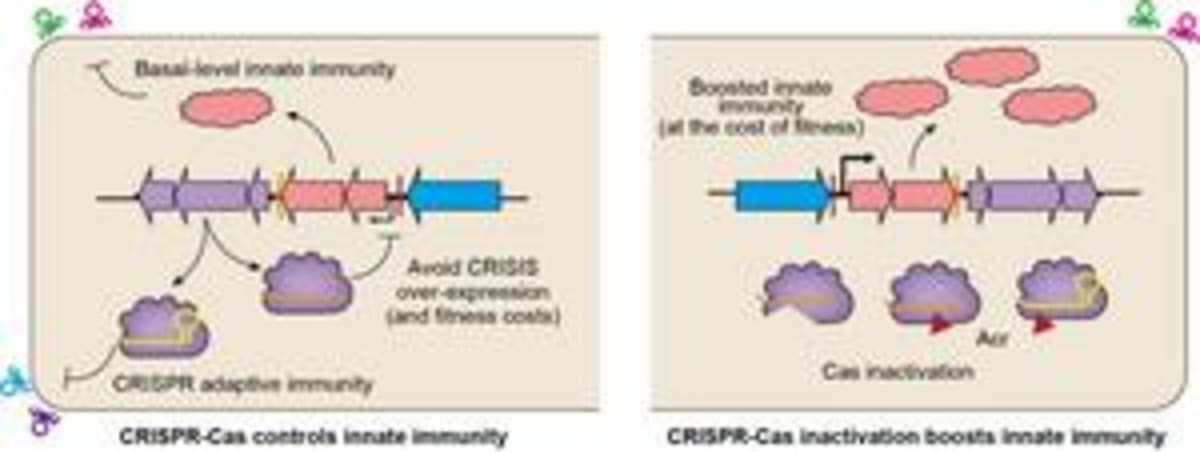
Here's where it gets really clever. Under normal conditions, CRISPR keeps these backup systems on standby using special guide molecules called crlRNAs. This prevents the bacteria from wasting precious energy maintaining full battle readiness when there's no threat.
But when viruses attack with special proteins that shut down CRISPR, the bacteria don't just give up. The command center releases its grip, and all those backup defenses spring into action at once. It's an emergency response system built into the tiniest living things on Earth.
The researchers published their findings in Nature in July 2026. They found these defense modules embedded directly within the genetic code of CRISPR systems, positioned like soldiers waiting for orders.
This layered defense strategy solves a puzzle scientists have wrestled with for years. How do bacteria balance the metabolic cost of staying protected against the risk of viral attack? The answer is smart resource management at the microscopic level.
Why This Inspires
This discovery shows that even single-celled organisms have evolved incredibly sophisticated survival strategies. Bacteria face the same tradeoff all living things do: spend energy on defense or save it for growth.
The research opens exciting possibilities for medical applications. Understanding how bacteria coordinate their defenses could help scientists develop better antibiotics or design new ways to fight drug-resistant infections.
It also reveals something profound about life itself. From humans down to the smallest bacteria, living things have developed layered immunity systems that remember past threats and coordinate complex responses. We're more connected to the microbial world than we realized.
The work was supported by multiple institutions including the Strategic Priority Research Program of the Chinese Academy of Sciences and the National Key Research and Development Program of China.
Even in organisms too small to see, nature has engineered brilliant solutions that balance protection with efficiency—a reminder that innovation exists at every scale of life.
More Images
Based on reporting by Google News - Researchers Find
This story was written by BrightWire based on verified news reports.
Spread the positivity!
Share this good news with someone who needs it