Bald Eagles Return to Louisiana After Near Extinction
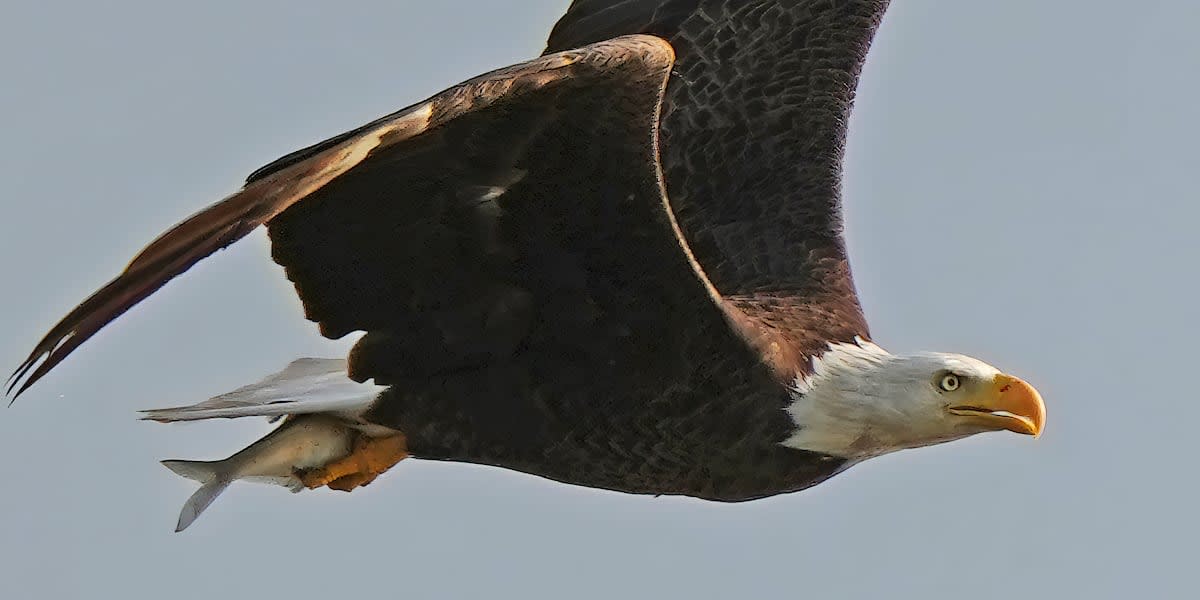
Where only five breeding pairs of bald eagles lived in Louisiana during the 1960s, tour guides now spot up to 60 eagles on a single outing. This remarkable comeback shows how targeted conservation efforts can bring a species back from the brink.
Billy Gaston makes his living showing tourists something that seemed impossible just decades ago: bald eagles soaring above Louisiana's cypress swamps.
His "Cajun Man's Swamp Tour" on Lake Palourde near Morgan City regularly spots up to 60 eagles per trip. Photographer Greg Robichaux, a devoted tour regular, remembers when seeing just one eagle was a showstopping event.
"Got to see one flying over our heads and everyone stopped what they were doing just to go see one," Robichaux recalled. "That's how rare they were."
The numbers tell an astonishing story. In the 1960s, only about 400 breeding pairs existed in the lower 48 states. Louisiana had it even worse, with just five breeding pairs left.
Scientists blamed the pesticide DDT, widely used in agriculture and mosquito control. When eagles ate contaminated fish, the chemical weakened their eggshells so much that parent birds would accidentally crush their eggs while sitting on them.
The solution proved remarkably simple. The government banned DDT and protected eagles under the Endangered Species Act.
"That's a really simple example of what can be done to help restore species," said Seth Blitch, Director of Conservation for the Nature Conservancy in Louisiana. The population recovered so dramatically that eagles were removed from the endangered list in 2007.
Today, the U.S. Fish and Wildlife Service estimates the national population tops 300,000 birds, four times higher than just a decade earlier. Louisiana now hosts several hundred eagle nests, with birds raising their young in the state during winter and spring months.
The Ripple Effect
The eagle's comeback has created unexpected opportunities beyond conservation. Gaston's ecotourism business thrives on what was once unimaginable: reliable eagle sightings that draw nature lovers and photographers from across the country.
The birds have proven adaptable too, nesting not just in remote swamps but also in urban and suburban areas. Still, Blitch warns that habitat loss, especially Louisiana's disappearing coastal forests, poses ongoing challenges for eagles that need large trees and abundant fish populations.
Every eagle sighting reminds us that when we protect nature, nature bounces back stronger than we imagined.
Based on reporting by Google News - Recovery Story
This story was written by BrightWire based on verified news reports.
Spread the positivity!
Share this good news with someone who needs it