Bareilly's Hand Embroidery Beats Machines, Feeds Thousands
In India's "Zari City," artisans are proving that handmade embroidery isn't just surviving—it's thriving in the global market. Their secret weapon is creating beauty that machines simply cannot replicate.
In Bareilly, India, thousands of hands are winning against automation, one bead at a time.
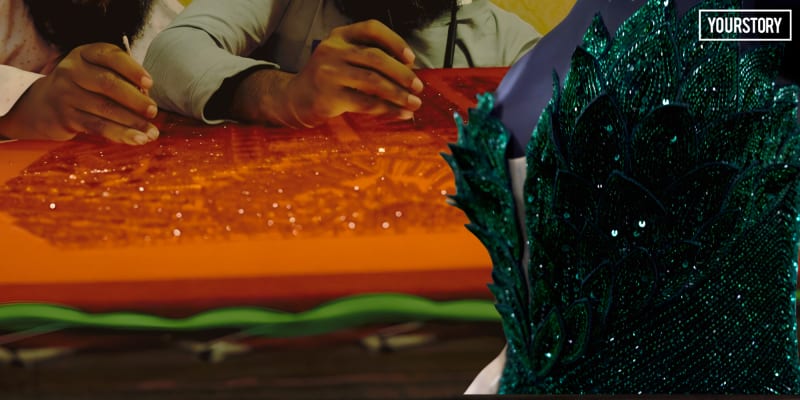
Known as "Zari Nagari" or Zari City, this northern Indian town has built an entire economy around intricate hand embroidery. Metallic threads, beads, and sequins transform into bridal wear and designer pieces that ship worldwide, all crafted by human hands working from small workshops and homes.
Engineer Sudeep Rajgadhia never expected to join this world. After visiting craft exhibitions as a student, he fell in love with the artistry and moved to Bareilly to start a three-person embroidery unit. Today, his company Rajgadhia Exports coordinates a network of artisans across the city, with his wife Shikha leading production from design samples to bulk orders.
The craft sustains entire families, especially women who embroider panels at home while managing households. These components later become parts of larger garments that travel to buyers across India and international markets.
The process starts with pattern masters creating templates across different sizes. After design approval, artisans begin the painstaking work of placing each bead and thread precisely where it belongs. Finished pieces return for quality checks, repairs, and stain removal before shipping.
What keeps Bareilly thriving in an automated world? The answer is something factories cannot manufacture: the visible hand of the maker.
The Ripple Effect
Bareilly's success story extends far beyond beautiful garments. The craft creates flexible work for women who can earn income without leaving home, preserving both tradition and financial independence.
Online platforms and social media have opened doors to international buyers who specifically seek handmade quality. During the pandemic, government support through the ODOP program helped workshops stay afloat when orders dried up.
Rajgadhia says buyers consistently choose Bareilly's work because machines cannot replicate the tactile richness of hand-placed beadwork. The slight variations, the careful stitching, the time invested—these "imperfections" are actually proof of authenticity that customers prize.
The network effect means success lifts everyone. When one workshop gets a large order, the work spreads across multiple families and units, creating income ripples throughout the community.
In an age of mass production, Zari Nagari proves that human craftsmanship still commands premium value in global markets.
More Images

Based on reporting by YourStory India
This story was written by BrightWire based on verified news reports.
Spread the positivity!
Share this good news with someone who needs it
%2Ffile%2Fattachments%2F2992%2F688635092_1403790941795291_6434669868162454614_n_856400.jpg)