Battery Recycling Fix Could Cut Environmental Impact 38%
Scientists discovered the overlooked first step in battery recycling causes up to 38% of the environmental damage. Their findings could help countries build cleaner, more efficient recycling systems as electric vehicles multiply worldwide.
The missing piece in making battery recycling truly green has been hiding in plain sight at the very beginning of the process.
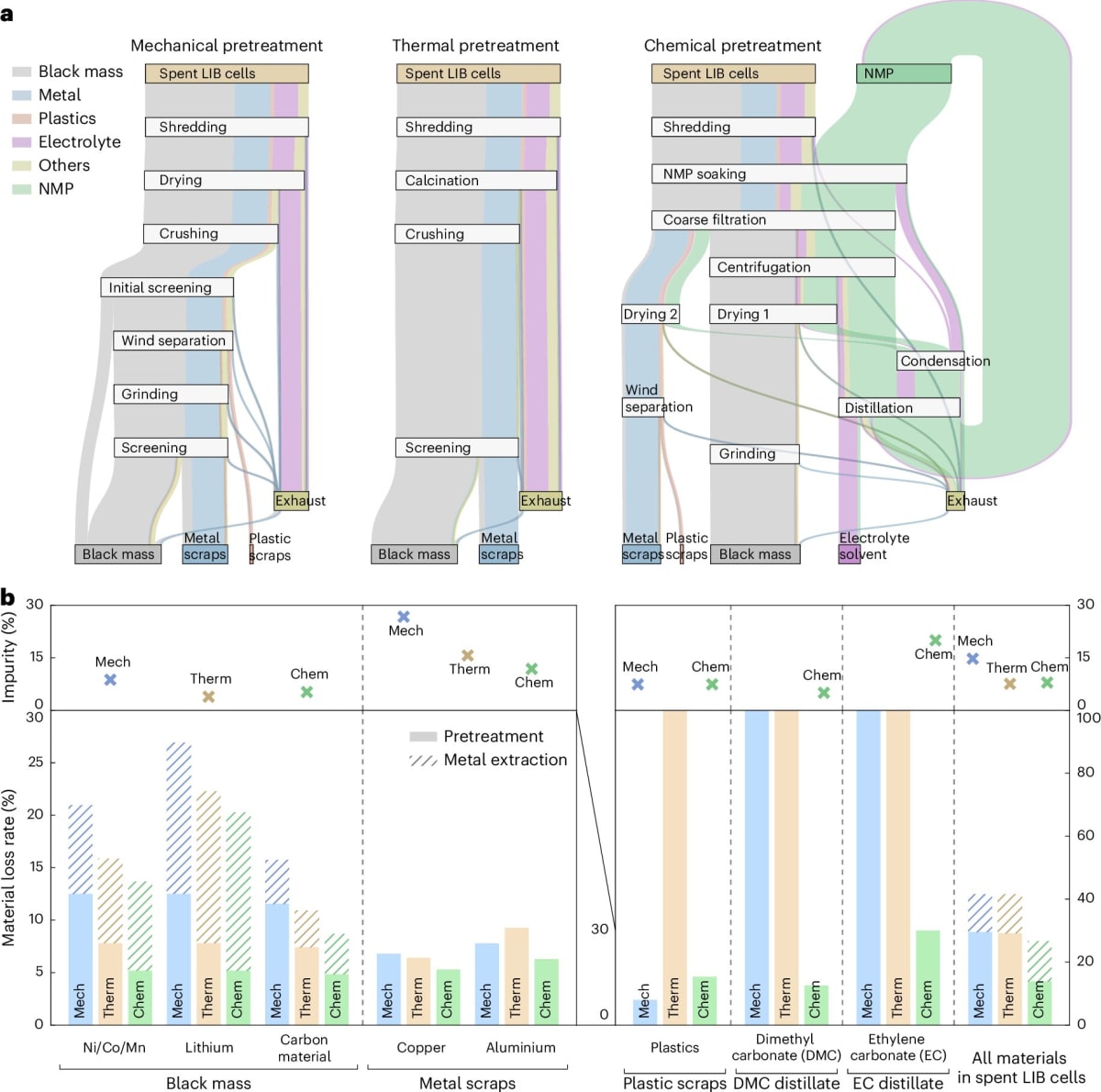
Researchers at Monash University just published groundbreaking findings showing that pre-treatment, the first step in recycling lithium-ion batteries, accounts for up to 38% of the environmental impact of the entire recycling operation. Even more surprising, this crucial stage has been largely ignored in global recycling strategies until now.
Pre-treatment is the process of turning old batteries into "black mass" before valuable metals like lithium, nickel, and cobalt can be extracted and reused. The Monash team compared three main industrial approaches: mechanical, thermal, and chemical pre-treatments, uncovering clear tradeoffs between environmental performance, recovery efficiency, and operational complexity.
The timing couldn't be better. Countries around the world are racing to build battery recycling infrastructure as electric vehicles become mainstream and millions of batteries approach end-of-life. This research, published in Nature Sustainability, gives policymakers and industry leaders the evidence they need to make smarter decisions now.
Professor Victor Chang, Deputy Head of the Department of Civil and Environmental Engineering, emphasized that choices made at the start ripple through the entire system. "Lithium-ion battery recycling is not just a technical challenge, it's a system design challenge," he explained. "Decisions made at this stage will affect system performance for decades, so it's vital that they are guided by robust evidence."
The study revealed that the pre-treatment method chosen significantly affects how much valuable material gets lost and how much pollution the recycling process creates. Getting this step right means recovering more precious metals, reducing waste, and lowering the carbon footprint of the entire recycling operation.
The Bright Side: This discovery arrives at exactly the right moment. As governments invest billions in recycling infrastructure, they now have clear scientific guidance to build systems that are efficient, effective, and truly sustainable from day one. The research shows we don't need to wait for future innovations, we can optimize what we're building right now.
Battery recycling isn't just about managing waste. It's about securing the materials needed for the clean energy transition while protecting the environment. Every improvement in recovery efficiency means less mining, less environmental damage, and more circular use of finite resources.
The path to better battery recycling just got clearer, and that means a cleaner future for everyone.
More Images

Based on reporting by Phys.org - Technology
This story was written by BrightWire based on verified news reports.
Spread the positivity!
Share this good news with someone who needs it