Bay Area's 'Living Levees' Protect Cities and Wildlife
California's Bay Area is building a new kind of flood protection that looks more like a nature preserve than a wall. These "horizontal levees" spread gently across the landscape, filtering pollution while creating homes for endangered species.
Instead of building walls against rising seas, California communities are rolling out the green carpet.
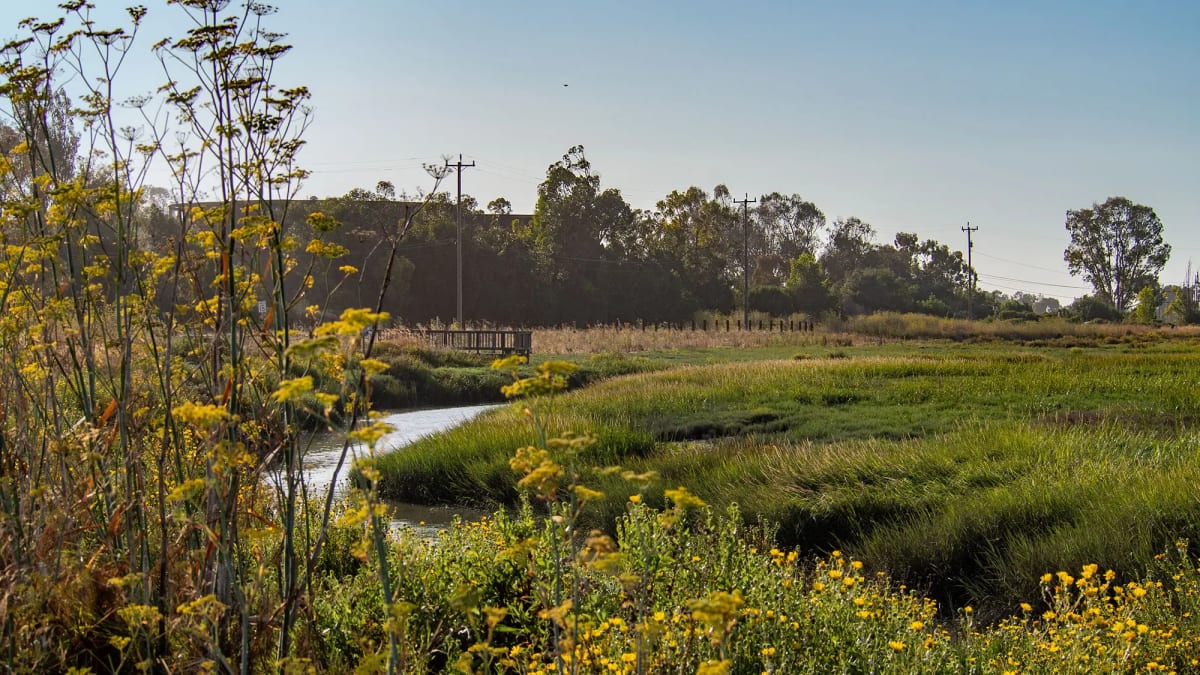
The Bay Area's newest flood protection doesn't look like typical gray concrete barriers. At the Palo Alto Baylands Nature Preserve, visitors walk past what might be the future of coastal defense: a gently sloping landscape packed with 35 species of native plants that doubles as a thriving wetland habitat.
These "horizontal levees" spread their protective height across longer distances rather than stacking it vertically. The result looks and functions like natural marshland, with waves breaking gently across vegetated slopes instead of crashing against rock walls.
The Palo Alto project takes the concept even further by connecting to the local wastewater treatment plant. Treated water flows through the levee's plants and soil, getting an extra cleaning as native vegetation pulls out nitrogen before the water reaches the Bay. The added filtration prevents harmful algal blooms while meeting an environmental need at no extra cost.
For the endangered salt marsh harvest mouse, these projects offer something concrete flood walls never could: a home. The tiny cinnamon-colored rodents, nicknamed "salties," climb marsh plants to escape daily high tides. Development has squeezed their habitat for decades, leaving them vulnerable to storms that could wipe out entire local populations.
Wildlife biologist Katie Smith sees the horizontal levee design as the "optimal potential option" for these palm-sized creatures and other estuary species. The gradual slopes and native plants recreate the exact conditions marsh animals need to survive.
The current Palo Alto pilot stretches just 500 feet along the shore. But it's the first horizontal levee directly connected to Bay waters, making it a living laboratory. Over the next five years, researchers from the US Geological Survey, universities and local nonprofits will track everything from wildlife use to water quality improvements.
The concept is catching on fast. The Oro Loma Horizontal Levee near Hayward, completed in 2017, proved the model works. Now around a dozen similar projects are in various stages of design and development around the Bay.
The Ripple Effect
These green barriers show how climate adaptation can heal rather than just defend. Every horizontal levee restores wetland habitat that California has lost to development while protecting the cities and infrastructure behind it. They clean water, support endangered species, and give communities recreational green spaces to enjoy.
Lead engineer Mark Lindley explains the elegance: instead of fighting nature with rocks and steep walls, horizontal levees work with it, letting waves break naturally across vegetated slopes just like they do on beaches.
What started as one experimental project is becoming the Bay Area's blueprint for living with rising seas while bringing nature back.
More Images

Based on reporting by Reasons to be Cheerful
This story was written by BrightWire based on verified news reports.
Spread the positivity!
Share this good news with someone who needs it