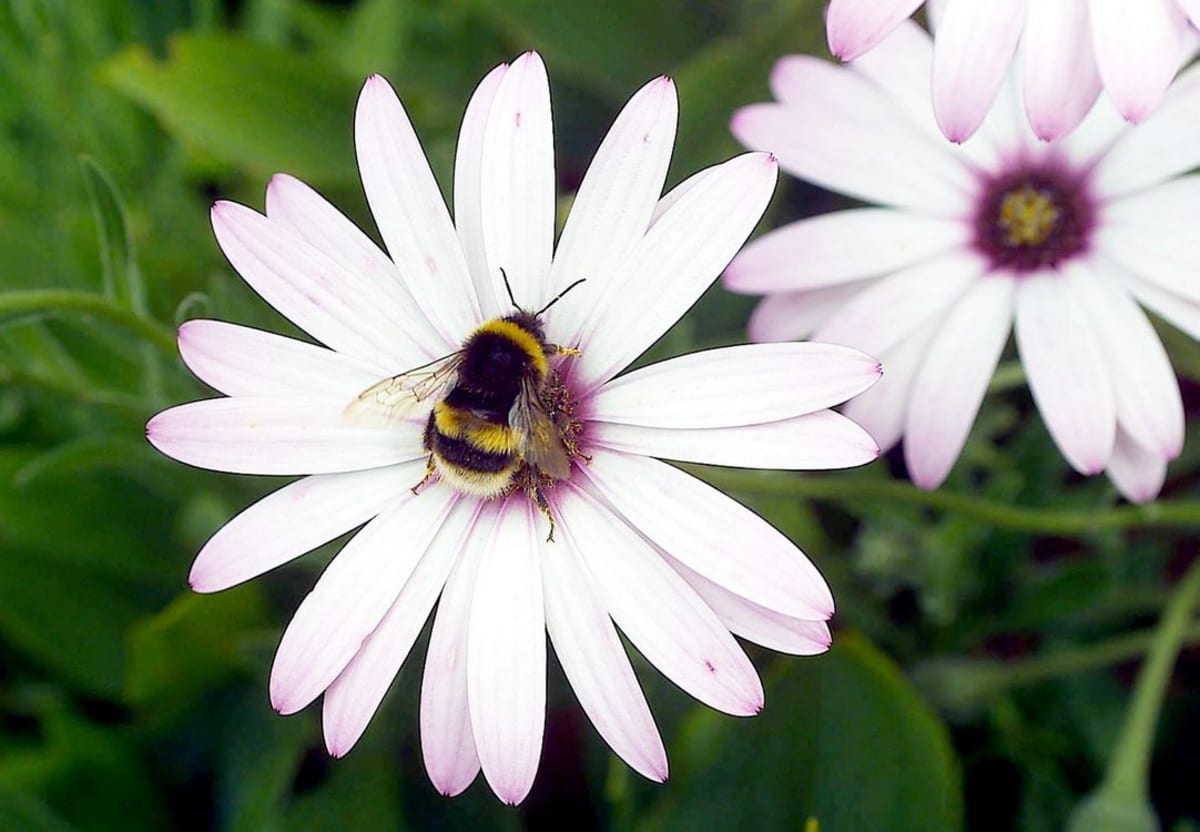
Bee Expert Debunks Sugar Water Myth During Droughts
That viral tip about leaving sugar water for bees? A leading bee scientist says it doesn't actually help and shares what really works. Here's how to truly support struggling bees during hot, dry weather.
If you've ever left out a little dish of sugar water to help "tired" bees, a British bee expert has some news that might surprise you.
Dr. Richard Comont, science manager at Bee Conservation Trust, recently explained that those well-intentioned sugar water stations don't actually revive struggling bees. Bumblebees get nearly all their fluids directly from flower nectar, not from makeshift water dishes.
The bigger issue during droughts isn't that bees need hydration stations. It's that dehydrated plants stop producing the nectar bees depend on for survival.
"Although the sugar component of nectar is important, real nectar also contains lots of other substances like sterols and amino acids which are essential for nutrition," Dr. Comont said. Simple sugar water just can't replicate what flowers naturally provide.
So what actually helps? A shady patch of well-watered flowers makes all the difference.
Plants near ponds or regularly watered gardens keep producing nectar even during drought conditions. Shade also allows bumblebees to visit flowers longer, since they struggle to fly when temperatures climb above 86 degrees Fahrenheit.
Deep-rooted plants work especially well because they can access water deeper in the soil during dry spells. This keeps them producing the nectar and pollen that bees genuinely need to survive.
While honeybees do collect water to cool their hives, they're just one semi-domesticated species among the UK's 280 wild bee varieties. The vast majority of bees visiting your garden need flowers, not sugar solutions.
The Ripple Effect
This simple shift from sugar water to flowering plants does more than help individual bees. When gardens and yards maintain healthy flower patches during droughts, entire bee populations can survive heat waves that would otherwise devastate them.
Those surviving bees then pollinate crops and wild plants, supporting food systems and ecosystems far beyond a single backyard. One watered garden patch can create a lifeline for countless pollinators struggling through difficult conditions.
The science is clear: the single biggest thing people can do for bees is provide actual food sources that produce real nectar and pollen.
Your watering can does more good pointed at your flowers than mixed with sugar in a dish, and those blooms will keep working long after the sugar water evaporates.
More Images


Based on reporting by Good News Network
This story was written by BrightWire based on verified news reports.
Spread the positivity!
Share this good news with someone who needs it