Beluga Whales Pass Mirror Test, Join Elite Self-Aware Club
Two beluga whales at a New York aquarium recognized themselves in mirrors, joining an exclusive group of self-aware species. The discovery adds belugas to a list that includes only great apes, dolphins, elephants, and a few other remarkable animals.
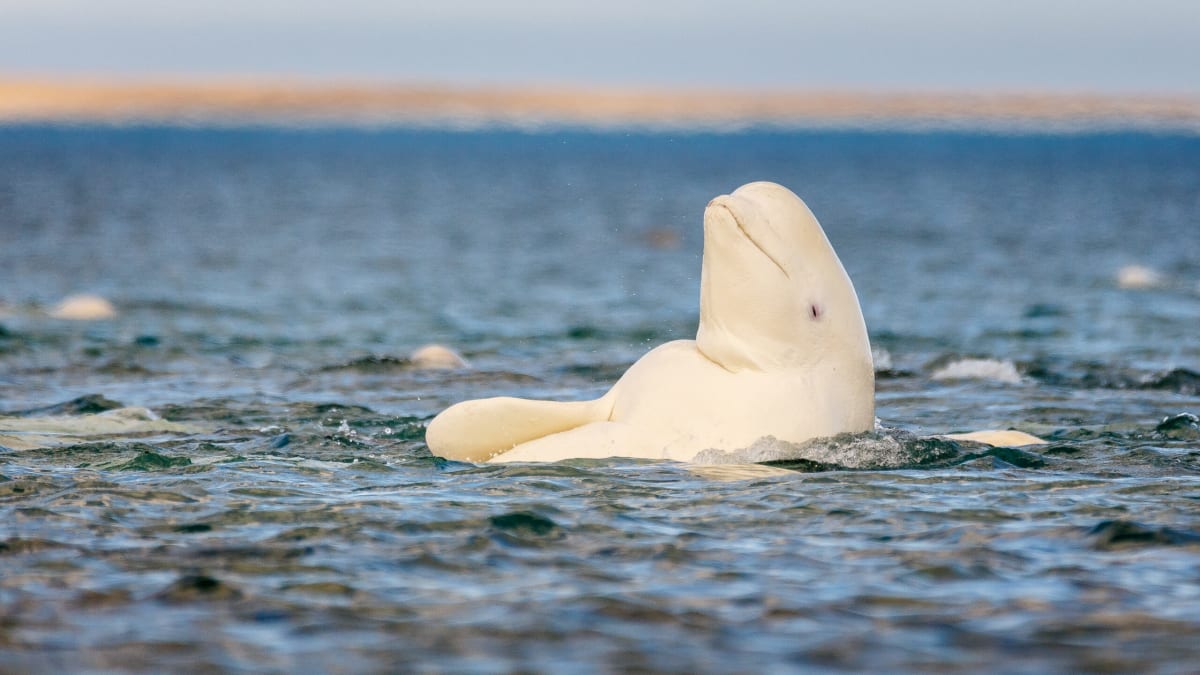
A beluga whale named Natasha stretched her neck, spun around, and carefully examined herself in a mirror at a New York aquarium, proving something scientists had never documented before: belugas can recognize their own reflection.
Natasha and her daughter Maris both passed the famous mirror test, a simple but powerful experiment that reveals self-awareness. Researchers placed waterproof lipstick marks on spots the whales could only see in their reflection, then watched what happened.
The whales didn't react during control tests without marks. But when actually marked, they pressed those exact spots against the mirror and showed behaviors consistent with self-recognition.
This matters because almost no animals pass this test. The entire list includes humans (starting around age two), some great apes, Asian elephants, bottlenose dolphins, probably magpies, possibly orcas, and one species of fish. That's it. No dogs, no cats, no monkeys.
The footage is actually over 20 years old, but researchers recently digitized and rigorously analyzed the original videotapes. Senior author Diana Reiss explained they were inspired by recent studies on beluga cognition to revisit this groundbreaking data.
Without arms or hands, Natasha couldn't point to her mark like a chimp or elephant would. Instead, she repeatedly pressed the marked area behind her right ear directly against the mirror. For a whale, that's about as clear as it gets.
Why This Inspires
The discovery reminds us that intelligence and self-awareness take many forms across the animal kingdom. What looks like consciousness in a primate might look completely different in a whale navigating an ocean environment.
Neuroscientist Anil Seth points out that failing the mirror test doesn't mean an animal lacks consciousness. Many species may simply not care about mirrors or find the whole exercise irrelevant to their world. Dogs and cats might be perfectly self-aware but just express it differently.
The broader lesson is hopeful: consciousness likely exists in degrees and forms across many more species than we once thought. Each new discovery expands our understanding of the rich inner lives animals experience.
As scientists continue studying animal cognition, they're designing tests that respect how different species actually perceive and interact with their world. The future of this research isn't about ranking intelligence but celebrating its diversity.
If belugas can recognize themselves, what other cognitive abilities are we only beginning to discover in the ocean's depths?
More Images

Based on reporting by Ars Technica Science
This story was written by BrightWire based on verified news reports.
Spread the positivity!
Share this good news with someone who needs it