Beluga Whales Recognize Themselves in Mirrors
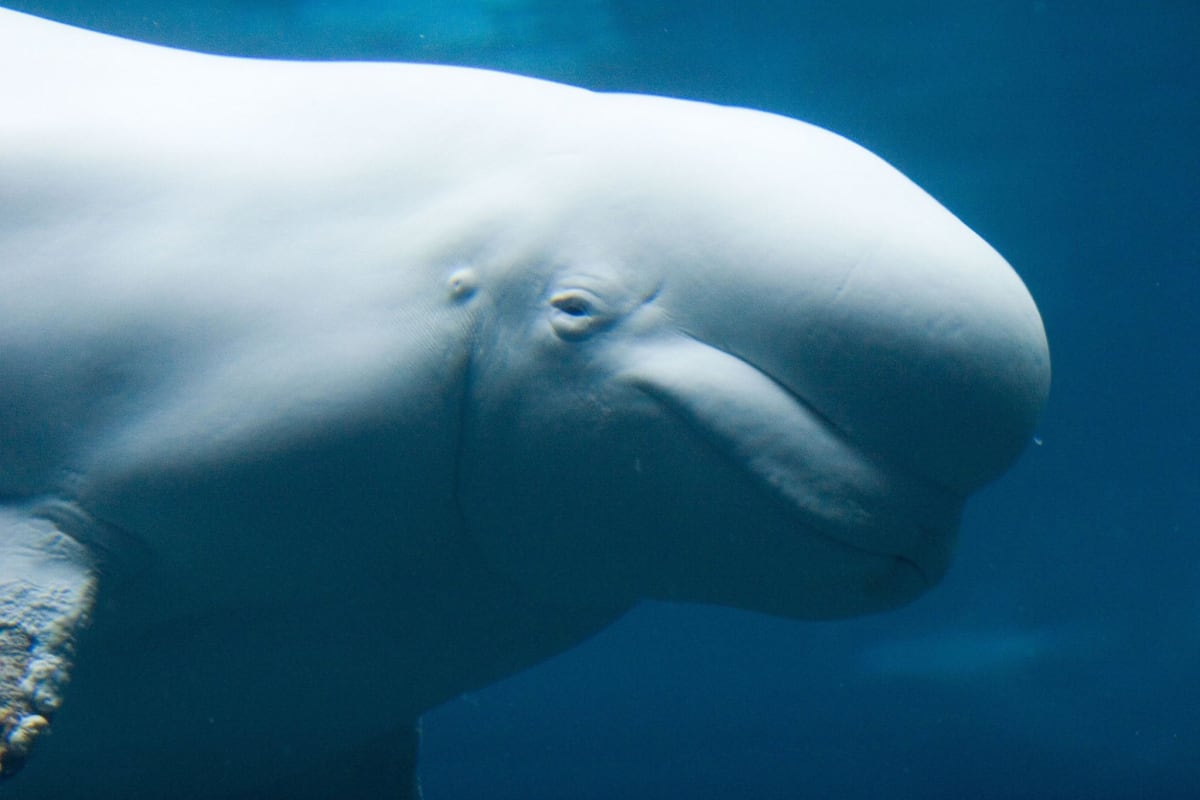
Two beluga whales at the New York Aquarium passed the mirror test, joining an exclusive group of animals who recognize their own reflections. The discovery, filmed in 2001 but just published, challenges what we thought we knew about animal consciousness.
Imagine looking in a mirror and realizing that's you staring back. Most animals never make that connection, but two beluga whales just proved they can.
Natasha and Maris, belugas at the New York Aquarium, did something remarkable when scientists placed a mirror in their pool in 2001. They figured out they were looking at themselves.
Marine scientist Diana Reiss set up the test with four belugas, placing a mirror against their pool window for two-hour sessions. She also used clear plexiglass as a control to see how the whales would react differently.
At first, both Natasha and Maris clapped their jaws at their reflections, treating the mirror like another whale. Then something shifted.
They started testing whether the image responded to them. Natasha nodded at the mirror while Maris waggled her head in different directions, like someone checking if they're really on a security camera.
By their second session, both whales were using the mirror to watch themselves barrel-roll and look inside their own mouths. Maris even performed what researchers called a "pec shimmy," rearing up and flapping her pectoral fins.
Natasha went further, passing what scientists call the mark test. When researchers drew a mark on her body that she couldn't see without a mirror, she used her reflection to examine it.
The footage sat unwatched for nearly 20 years. Then in 2020, graduate student Alexander Mildener needed a thesis project during pandemic lockdowns and discovered the old tapes.
The whales in those videos were the same ones that had mesmerized him as a child at the aquarium. "The very whales that inspired me to be in this field in the first place," he says.
The Ripple Effect
Only a handful of species have passed the mirror test: chimpanzees, bottlenose dolphins, Asian elephants, some magpies, and surprisingly, a tiny reef fish called the cleaner wrasse. Each addition challenges assumptions about what makes an animal self-aware.
The cleaner wrasse discovery in 2023 was especially eye-opening because it proved you don't need a massive brain to recognize yourself. What these animals do share is being highly social and good at recognizing others of their own kind.
This research matters beyond science. When humpback whale studies expanded in the 1970s, they helped build public support for the Endangered Species Act and Marine Mammal Protection Act.
Reiss believes understanding shared consciousness across species creates empathy. "Finding these shared capabilities and shared levels of consciousness and self-awareness in other species seem to engender more empathy for them," she says.
Mildener and Reiss now hope to test other beluga populations, continuing to unlock the mysteries of how animals see themselves and their world.
Based on reporting by Optimist Daily
This story was written by BrightWire based on verified news reports.
Spread the positivity!
Share this good news with someone who needs it