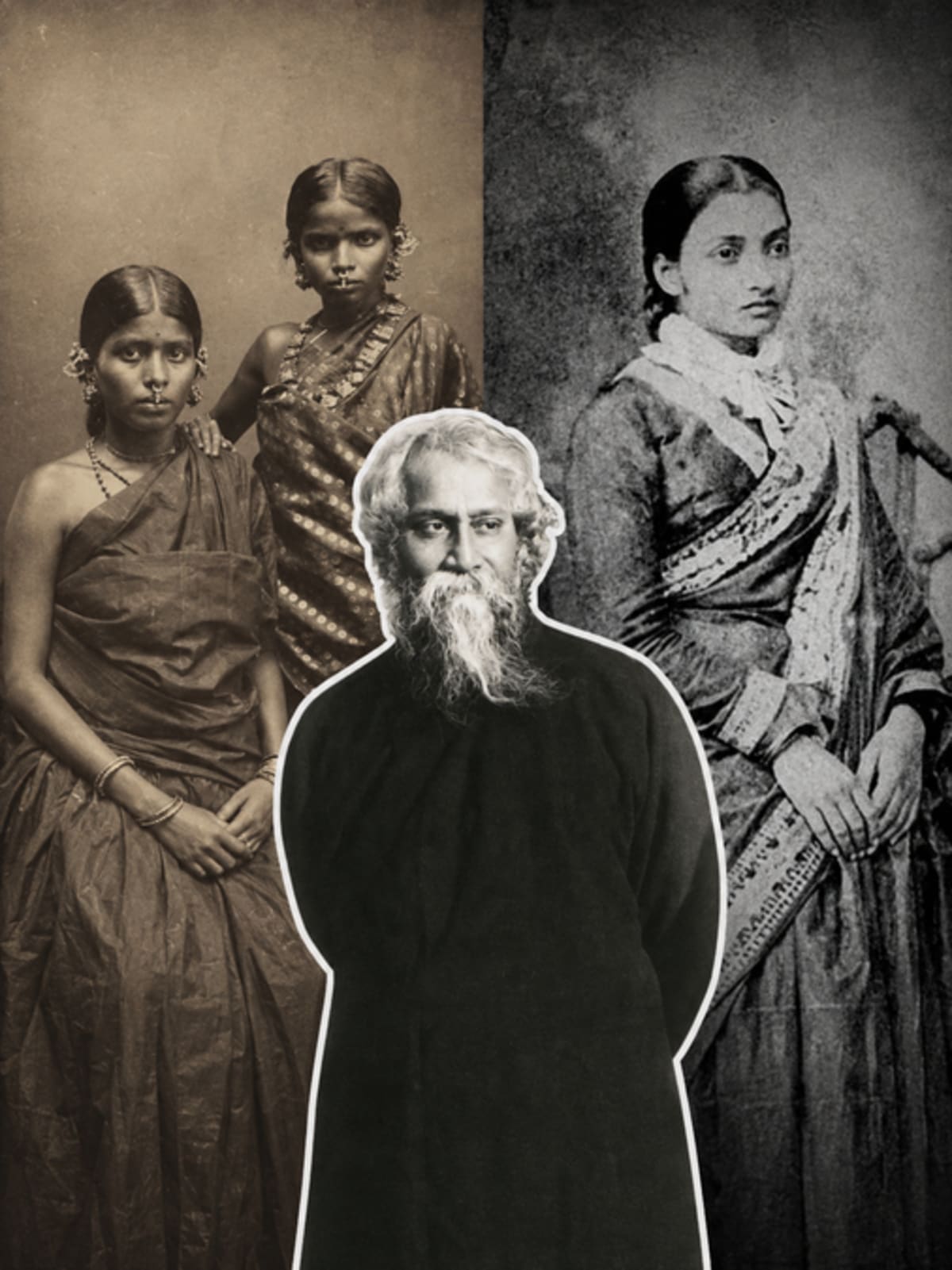
Bengali Woman Reimagined the Saree 150 Years Ago
When Jnanadanandini Devi was denied entry to a British club for her saree, she didn't give up the garment. She transformed it into the modern style millions wear today.
What we think of as the "traditional" saree look is actually a brilliant innovation from just 150 years ago, created by one woman who refused to let colonial rules erase her culture.
Jnanadanandini Devi, sister-in-law of Nobel laureate Rabindranath Tagore, faced a humiliating moment in colonial India when a British club turned her away. Her saree, worn without a stitched blouse or petticoat, wasn't considered "proper" by Victorian standards.
Rather than abandon her heritage, she found a creative solution. Inspired by Parsi women in Bombay who draped their sarees with tailored blouses and petticoats, she adapted the style for Bengali women.
The result became known as the Brahmika Saree. It featured a stitched blouse, petticoat underneath, and a shoulder-pinned pallu that stayed in place.
The practical benefits were immediate. Women could now travel, work, study and move through public spaces without constantly adjusting their drapes.
Why This Inspires
Jnanadanandini turned an act of exclusion into an innovation that empowered millions. What started as her personal response to discrimination spread across India, giving women more freedom of movement while honoring their cultural identity.
Ancient sculptures show that unstitched drapes were the norm for centuries. Climate and regional traditions shaped how women dressed, not a single code.
But Jnanadanandini's adaptation proved so practical and elegant that it became the standard. Within a generation, her innovation was mistaken for ancient tradition.
Today, the saree blouse tells an entirely different story than its Victorian origins. It has become a canvas for creativity, from handwoven heirlooms to bold contemporary designs that celebrate individual expression.
One woman's refusal to choose between dignity and heritage changed how millions dress today.
Based on reporting by The Better India
This story was written by BrightWire based on verified news reports.
Spread the positivity!
Share this good news with someone who needs it