Bengaluru Balcony Catches 120 Litres of Rain for Under $25
A Bengaluru scientist hasn't paid a water bill since 1995 by catching rainwater at home, and he says apartment dwellers can do the same. Even a small balcony can harvest thousands of litres per year for less than the cost of two water tankers. #
The city that floods in July and runs dry by March finally has a solution that costs less than ₹2,000 and fits on your balcony.
A R Shivakumar, a scientist at Karnataka State Council for Science and Technology, stopped paying water bills 31 years ago. His Bengaluru home runs entirely on rainwater he catches and stores, and he insists the same math works for anyone with even a tiny balcony.
The numbers are almost too good to ignore. A standard 2-by-3-metre apartment balcony can catch 60 litres from a light shower and 120 litres from a moderate rain. Across Bengaluru's 60 rainy days each year, that's thousands of litres you'd otherwise watch disappear down the drain while paying thousands of rupees for tanker deliveries in summer.
Bengaluru doesn't lack rain. The city gets about 1,000 mm annually, enough to meet its needs. The problem is timing: all that water arrives in just 60 days, then the city spends the next ten months wishing it had saved some.
Shivakumar studied a century of rainfall records and found even drought years brought enough water. The longest gap between good rains rarely exceeds 100 days, so he built rooftop tanks holding 45,000 litres. Gravity does the pumping work for free.
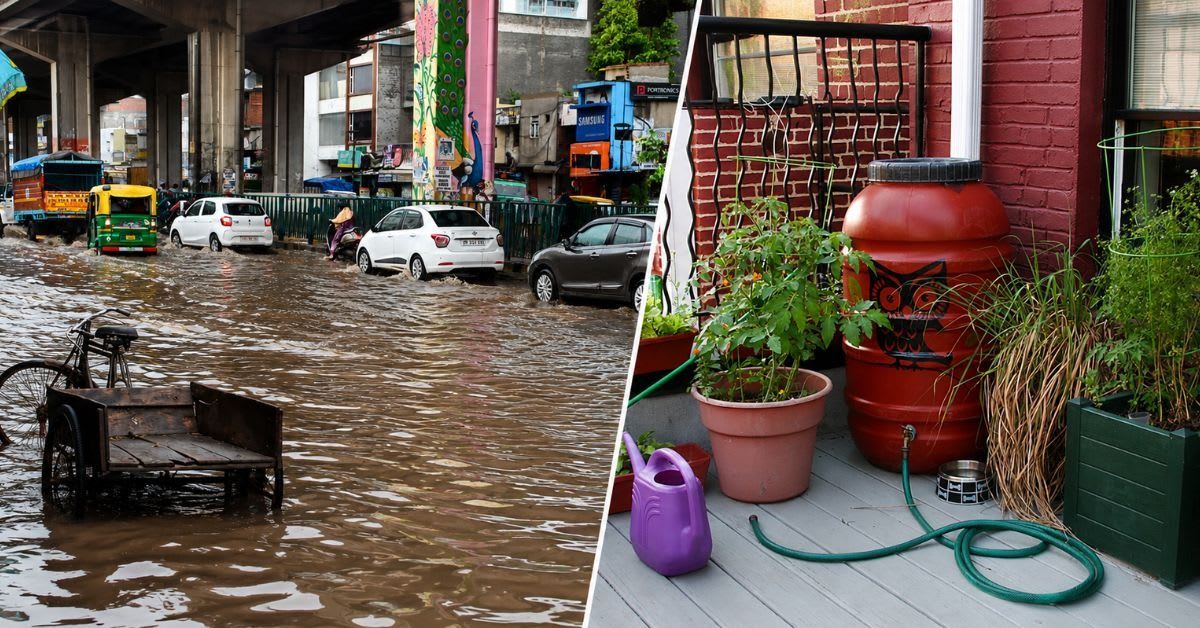
His conclusion changed how Bengaluru thinks about water: if even half the city's homes caught rain, scarcity would become history. Instead, the city wastes an estimated 23 thousand million cubic feet of rainwater annually, letting it flood low-lying areas before racing to the drains.
Water conservationist Subhajit Mukherjee, who has guided over 200 households through his RWH India Helpline, puts it simply: rain falling on your roof shouldn't end up on the road. Every rooftop should become a water source, not a drain feeder.
The setup for balcony harvesting is surprisingly basic. A simple collection system with gutters, a filter, and storage drums costs under ₹2,000. The calculation is straightforward: 1 mm of rain on 1 square metre equals 1 litre of water.
Even accounting for splash and evaporation, a single monsoon shower delivers 60 to 120 litres to a modest balcony. That's drinking water, cooking water, and garden water sitting free in the sky while Bengaluru pays premium prices to truck in what it threw away months earlier.
The Ripple Effect
If half of Bengaluru's apartment balconies started catching rain, the city's water board estimates it would add 10 to 15 thousand million cubic feet to annual supply. That's several times what the city currently begs for each summer, arriving free with every shower.
The same flooded streets that ruin monsoon commutes hold the solution to summer water cuts. Shivakumar's three decades of data prove the rain was always enough; the city just needed better aim.
One balcony, one ₹2,000 investment, and thousands of litres captured instead of wasted.
#
More Images
%2Fenglish-betterindia%2Fmedia%2Fmedia_files%2F2026%2F07%2F31%2Frwh-bengaluru-2026-07-31-14-22-30.jpg)
%2Ffilters%3Aformat(webp)%2Fenglish-betterindia%2Fmedia%2Fmedia_files%2F2026%2F07%2F31%2Frain-water-harvesting-2026-07-31-14-24-29.webp)

%2Ffilters%3Aformat(webp)%2Fenglish-betterindia%2Fmedia%2Fmedia_files%2F2026%2F07%2F31%2Frwh-bengaluru-2026-07-31-15-04-50.jpg)
Based on reporting by The Better India
This story was written by BrightWire based on verified news reports.
Spread the positivity!
Share this good news with someone who needs it