Bengaluru Drone Flies, Swims, and Dives in One Machine
A Bengaluru startup has built India's first drone that can fly through the air, land on water, and dive below the surface, all in one mission. The technology could transform how India monitors its 7,500-kilometer coastline.
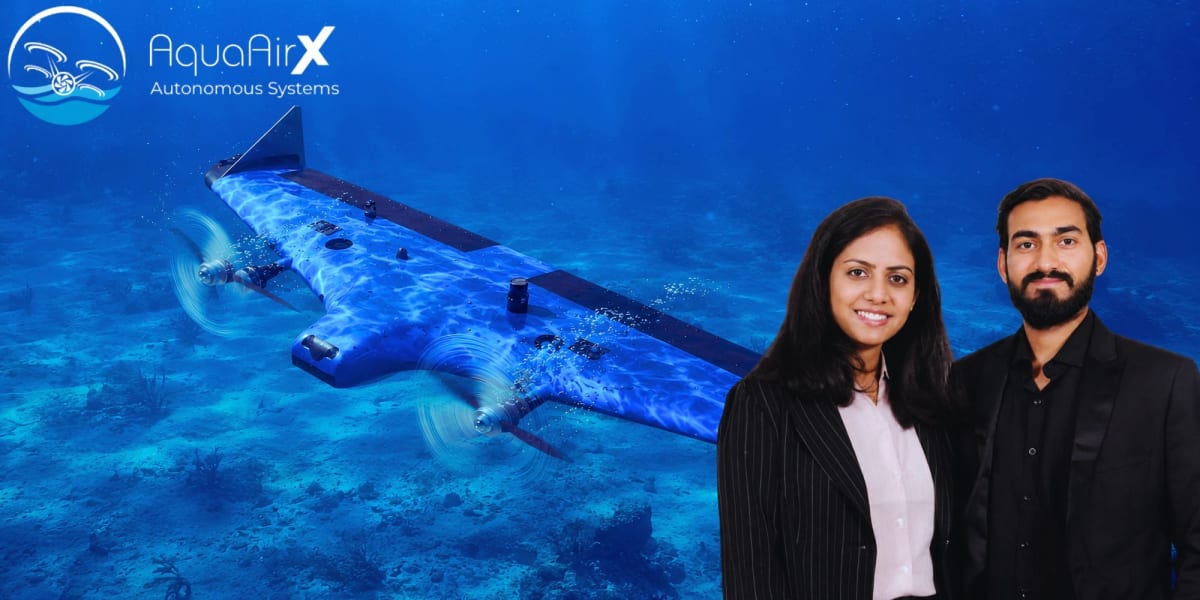
Watching a coastline usually requires two completely different systems: aerial drones for the surface and underwater robots for below. AquaAirX, a deeptech startup founded in Bengaluru, just collapsed that into a single machine.
Their flagship drone, AVATAAR, flies like a standard quadcopter until it reaches its destination. Then it lands on water, dives to complete underwater tasks, resurfaces, and flies on to the next location.
The hardest engineering challenge was the transition itself. Air and water behave nothing alike, so keeping the machine stable and in control as it crosses between environments required entirely new control systems.
Founders Gouthami T S and Jitendra Kumar Purnmal Saini, both aeronautical engineers, started the company in 2024 after their research project on amphibious machines showed real defense applications. India's long coastline faces illegal fishing, smuggling, and underwater intrusions that often go undetected until too late.
AVATAAR can scan a suspicious area from the air, then immediately dive to investigate with sonar and acoustic sensors. It hunts for small submarines and combat swimmers that hide in shallow coastal waters where large naval vessels struggle to operate quickly.
The company pairs AVATAAR with NEXOR, a standalone underwater vehicle, and software called DeepNimbus that turns all the camera feeds, sonar data, and telemetry into actionable intelligence reports. A single ground control station manages the entire operation across air, surface, and underwater zones.
The Ripple Effect
Beyond defense, the technology solves expensive problems for oil and gas companies and port authorities. Underwater inspections currently require divers or support ships, but AquaAirX's system can check rigs, hulls, and cables without either.
The startup just raised 12.5 crore rupees (roughly $1.5 million) in seed funding led by Rainmatter, the investment arm of trading platform Zerodha. The investment marks a notable shift for Rainmatter, which typically backs climate and fintech ventures rather than defense hardware.
The funding will improve the air-to-water transition technology, upgrade sensing and communication systems, and expand the team with robotics and autonomy specialists. The company has reached technology readiness level six, meaning it has been tested in realistic operational conditions and is nearing actual deployment.
The bet is simple: one system that covers both air and water will cost less to operate and monitor more territory than running two separate fleets. For a country with thousands of kilometers of coastline to protect, that efficiency could change everything about maritime security.
More Images



Based on reporting by YourStory India
This story was written by BrightWire based on verified news reports.
Spread the positivity!
Share this good news with someone who needs it