Bengaluru Startup Builds India's Most Advanced Rocket Engine
A Bengaluru company is developing one of the world's most difficult rocket engines, aiming to make space launches faster and cheaper for India. With government backing and successful early tests, Astrobase could help India meet rising demand for satellite launches by 2029.
India launches satellites reliably but can't keep up with demand, and a Bengaluru startup is building breakthrough technology to change that.
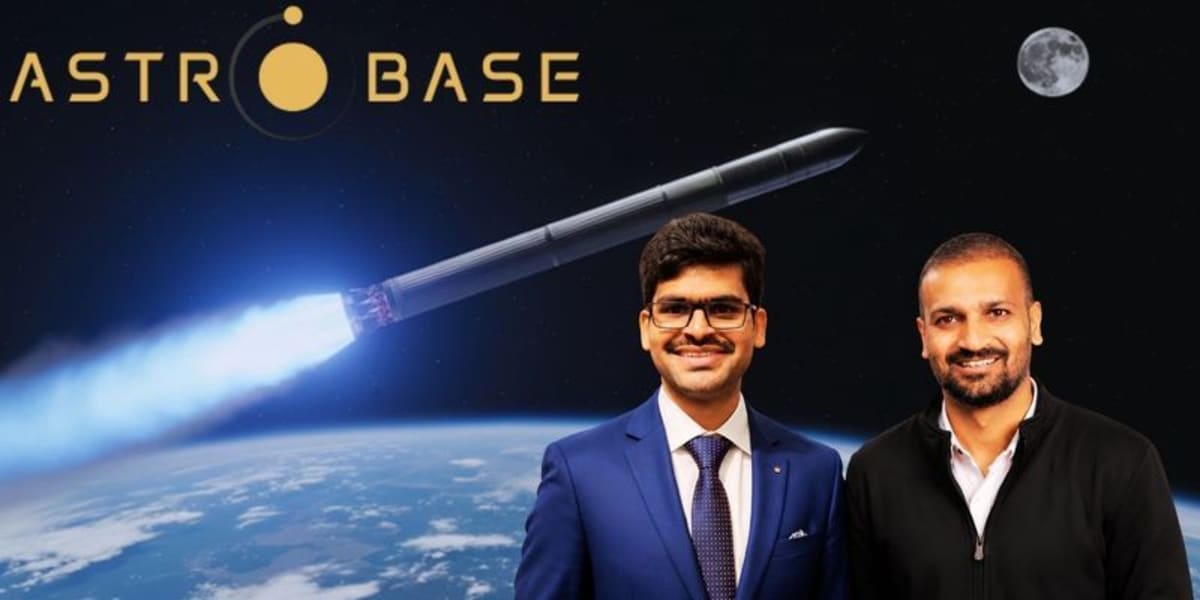
Astrobase Space Technologies is developing a reusable rocket engine using one of the most challenging designs ever attempted. The company, founded in 2024 by cryptocurrency entrepreneur Neeraj Khandelwal and former ISRO scientist Devakumar Thammisetty, is tackling full-flow staged combustion technology that only SpaceX has successfully flown.
The choice of methane fuel matters. Unlike traditional rocket fuel, methane burns cleanly and leaves little residue, making rockets easier to reuse quickly. That's crucial for bringing down launch costs and increasing how often India can send satellites to orbit.
Early results look promising. In September 2025, the company successfully test-fired a smaller version of the engine on the first attempt. Follow-up tests of critical turbopump components in January 2026 performed better than engineers predicted, all at a 21.5-acre test facility the company built in Andhra Pradesh.
The Indian government is betting on Astrobase's vision. In June 2026, IN-SPACe selected the company as one of three recipients of its new Technology Adoption Fund, offering up to 25 crore rupees to support the project. Out of 43 applicants, Astrobase stood out with its ambitious plan to build an 800 kilonewton engine from scratch rather than adapting existing designs.
Private investors share that confidence. The company raised roughly $10 million in its first funding round and has invested over 100 crore rupees into propulsion systems and manufacturing facilities. It's even expanding internationally, partnering with Italy's Impulso Space to support European satellite operators.
The Ripple Effect
Astrobase positions itself as complementing ISRO rather than competing, focusing on mid-sized launches that fill a gap in India's space capabilities. As demand for orbital slots grows faster than the country's launch capacity, private companies like Astrobase could multiply India's access to space while creating high-tech jobs and expertise.
The company plans to cluster seven engines under a reusable medium-lift rocket capable of carrying three to ten tonnes. A full-scale engine test is expected later in 2026, followed by hop tests in 2027 and a first orbital launch targeted for 2029.
Building the hardest rocket engine cycle ever attempted won't be easy, and every company that's tried has taken longer than planned. But if Astrobase succeeds, India could join an elite group of nations with advanced reusable launch technology.
India's space ambitions are getting a homegrown boost that could reshape how the country reaches orbit.
More Images




Based on reporting by YourStory India
This story was written by BrightWire based on verified news reports.
Spread the positivity!
Share this good news with someone who needs it