BepiColombo Spacecraft Begin Historic Mercury Arrival
After nearly seven years of journeying through space, two spacecraft are finally arriving at Mercury, our solar system's most mysterious inner planet. Europe and Japan's joint mission will unlock secrets of the least explored world close to home.
Two spacecraft are about to reach one of the hardest destinations in our solar system, and it's a moment worth celebrating.
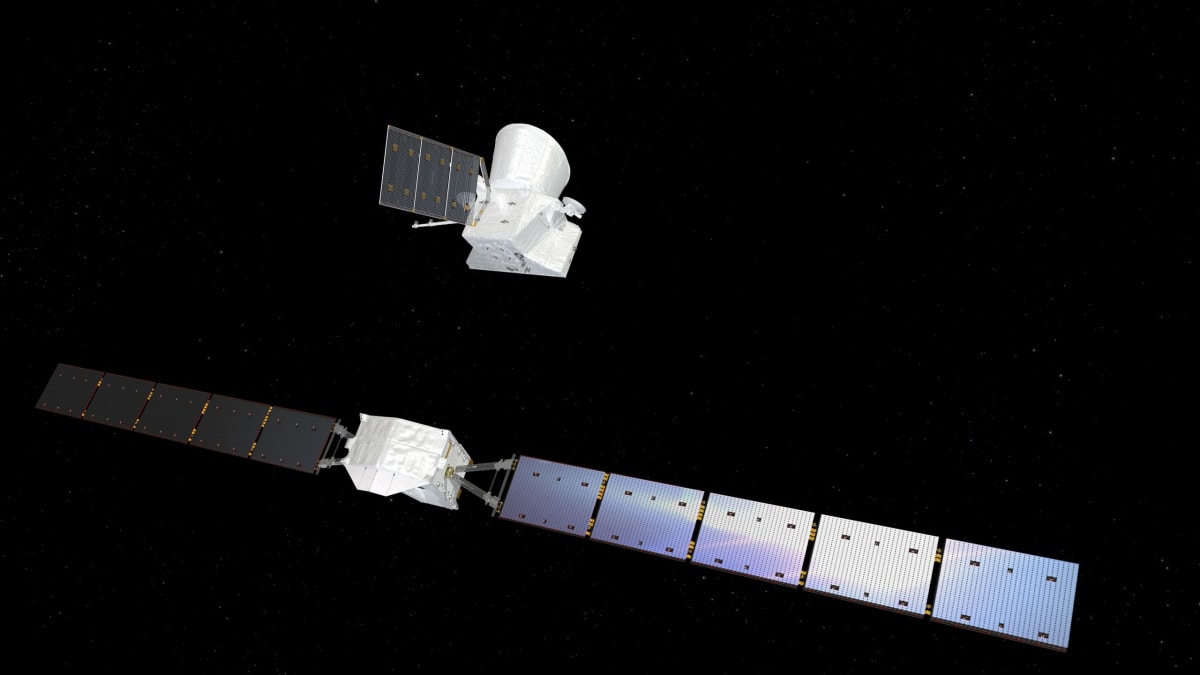
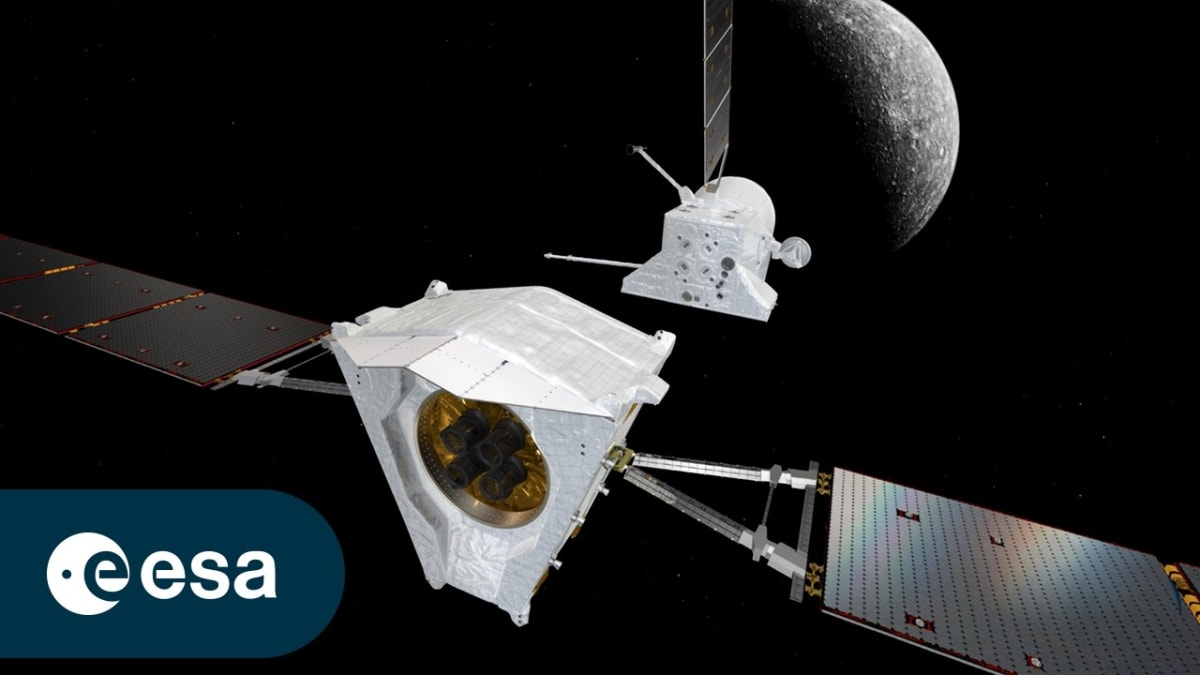
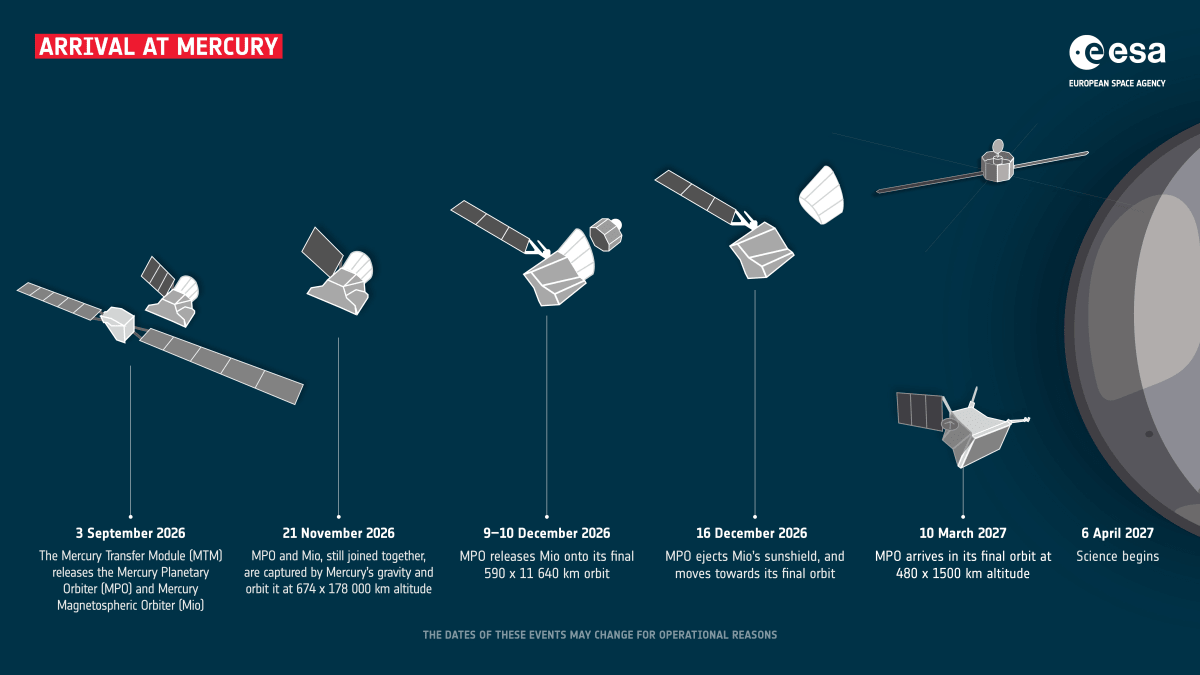
The BepiColombo mission launched in October 2018 on a winding, six-year journey to Mercury. On September 3, the mission reached its first major milestone when two science orbiters separated from their power module to begin their final approach to the innermost planet.
The European Space Agency and Japan Aerospace Exploration Agency each contributed one orbiter to this ambitious mission. The separation happened at 8 a.m. EDT, with mission control establishing contact with both free-flying spacecraft about two hours later.
This marks just the beginning of a carefully choreographed arrival sequence. The two orbiters won't actually be captured by Mercury's gravity until November 21, still traveling together as a pair.
In December, they'll finally split up to take their individual positions. Japan's Mio orbiter will settle into a wide orbit ranging from 367 to 7,233 miles above Mercury's surface, perfectly positioned to study the planet's magnetic field.
The European orbiter will reach its final orbit in March 2027, circling closer to Mercury between 298 and 932 miles up. From there, it will map the planet's surface and study its composition in unprecedented detail.
The actual science mission begins in April 2027 and will last at least one Earth year. Together, the two spacecraft will answer questions scientists have wondered about for decades.
Why This Inspires
Mercury remains the least explored planet in our inner solar system, a tiny world that holds big mysteries. Scientists want to know if its interior is molten, how its magnetic field formed, and what minerals make up its scorched surface.
Getting to Mercury is harder than reaching Mars or even the outer planets. Spacecraft must fight the sun's enormous gravitational pull the entire way, requiring years of careful navigation and planetary flybys.
This mission represents collaboration at its finest. Two space agencies from different continents worked together for over a decade to design, build, and fly these orbiters to one of the most challenging destinations imaginable.
The mission honors Giuseppe "Bepi" Colombo, an Italian mathematician and engineer whose calculations made Mercury exploration possible. His work in the 1970s laid the groundwork for every Mercury mission since.
When BepiColombo completes its maps and measurements, we'll understand our cosmic neighborhood better than ever before.
More Images

Based on reporting by Space.com
This story was written by BrightWire based on verified news reports.
Spread the positivity!
Share this good news with someone who needs it
%2Fhttps%3A%2F%2Ftf-cmsv2-smithsonianmag-media.s3.amazonaws.com%2Ffiler_public%2F58%2F0a%2F580a77b9-7590-43c5-b70d-e3a590810348%2Fsmithmag-rockwell-edit.jpg)