Betelgeuse May Actually Be Two Stars, New Images Reveal
Astronomers have captured the clearest image yet of a companion star orbiting Betelgeuse, one of the night sky's brightest and most beloved stars. The discovery could change everything we know about this red supergiant's dramatic future.
For thousands of years, the bright red star Betelgeuse has marked the shoulder of the Orion constellation, a familiar friend to anyone who's ever looked up at the winter sky. Now scientists say it may have had a friend of its own all along.
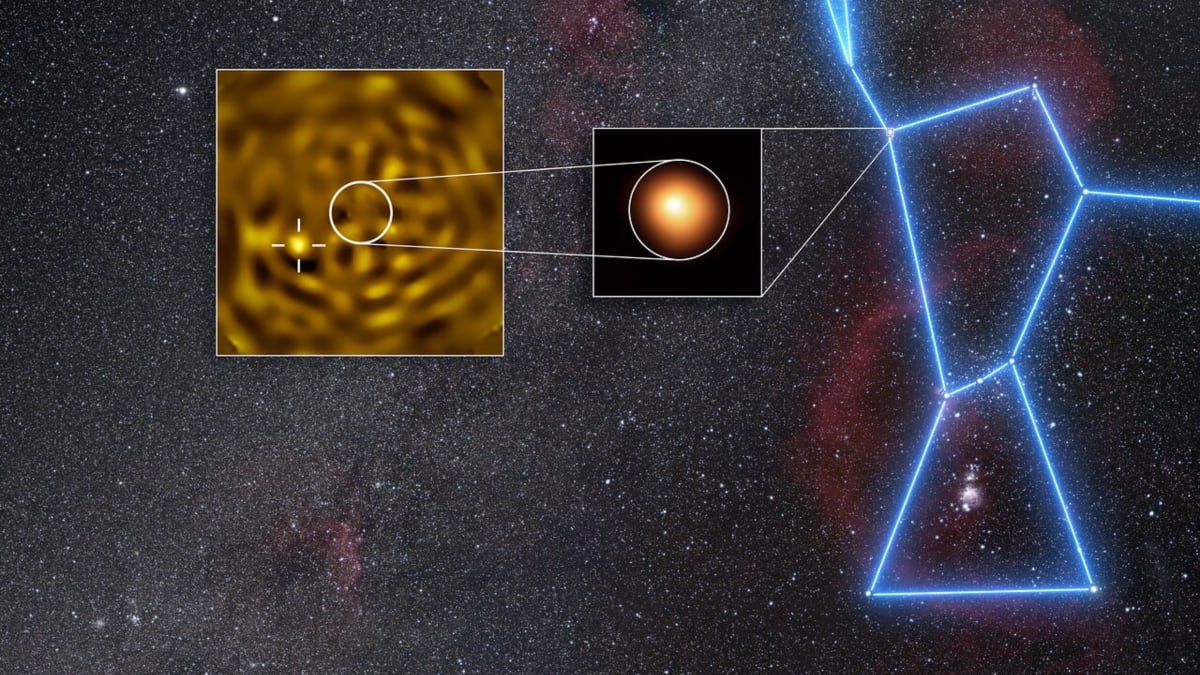
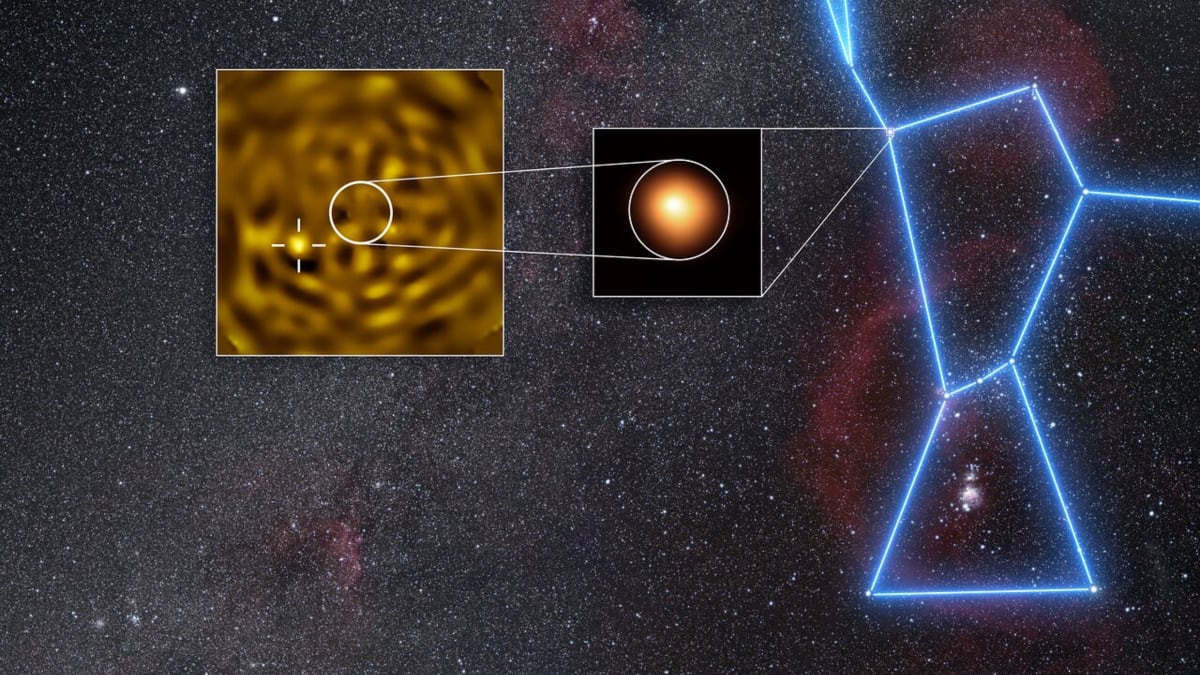
Astronomers using the European Southern Observatory's Very Large Telescope in Chile have photographed what appears to be a companion star orbiting tightly around Betelgeuse. The discovery, announced in July and detailed in the journal Astronomy & Astrophysics, offers the strongest evidence yet that this famous star isn't flying solo through space.
The hunt for this companion started with a mystery. Betelgeuse naturally pulses brighter and dimmer every 400 days, but for decades scientists noticed an extra pattern: a slower cycle of dimming and brightening that repeats roughly every six years.
Two independent research teams, one led by Harvard astrophysicist Morgan MacLeod and another by Jared Goldberg of the City University of New York, each analyzed decades of brightness and velocity data. They came to the same conclusion: a hidden companion star was causing that wobble, orbiting so close to Betelgeuse's enormous surface that it remained nearly impossible to see.
Their calculations revealed something exciting. There would be a brief window in December 2024 when the companion might swing far enough away to photograph.
Paris Observatory astronomer Miguel Montargès and his team seized the opportunity. They pointed their telescope at Betelgeuse that December and spent months analyzing the data.
They found it. The companion star, now nicknamed Betelgeuse B, appeared in their images.
"The fact that we can still discover a nearby companion, more massive and brighter than the Sun, around such a well-studied star is remarkable," Montargès said. "These are among the best moments in science: seeing something new, unexpected."
The companion turned out bigger than predicted. Scientists had guessed it would be roughly as massive as our sun, but the new images suggest it's actually two to three times heavier, making it brighter and easier to spot than expected.
Why This Inspires
This discovery reminds us that even the most familiar sights can still surprise us. Betelgeuse has been watched, studied, and admired for millennia, appearing in star charts and ancient myths across cultures. Yet it still had secrets to reveal.
The finding represents the best kind of scientific collaboration. Two independent teams reached the same conclusion using different methods, then another team confirmed their predictions with direct observation. That's science working exactly as it should, building knowledge piece by piece.
If confirmed with one more observation showing the companion on the opposite side of its orbit, this discovery could reshape our understanding of how Betelgeuse will eventually end its life in a spectacular supernova explosion. Sometimes the universe saves its best plot twists for stars we thought we knew by heart.
More Images

Based on reporting by Live Science
This story was written by BrightWire based on verified news reports.
Spread the positivity!
Share this good news with someone who needs it