Biochar Turns Drained Peatlands Into Carbon Removal Machines
Scientists discovered how to transform drained agricultural peatlands from major greenhouse gas emitters into powerful carbon sinks using a combination of rewetting and biochar. The breakthrough could help protect ecosystems that store more carbon than all the world's forests combined.
Researchers just solved a major climate puzzle that's been frustrating scientists for years. By combining water management with biochar, they've found a way to turn drained peatlands from carbon villains into climate heroes.
Peatlands are nature's hidden carbon vaults, storing thousands of years of accumulated carbon beneath their surface. When farmers drain them for agriculture, these soils start releasing massive amounts of greenhouse gases into the atmosphere. Scientists have tried rewetting them to stop the emissions, but that created a new problem: methane.
A team of researchers spent a year testing different approaches on peat soil cores under controlled conditions. They tried everything from plant residues to paper waste, adjusting water levels and measuring what happened to the greenhouse gases.
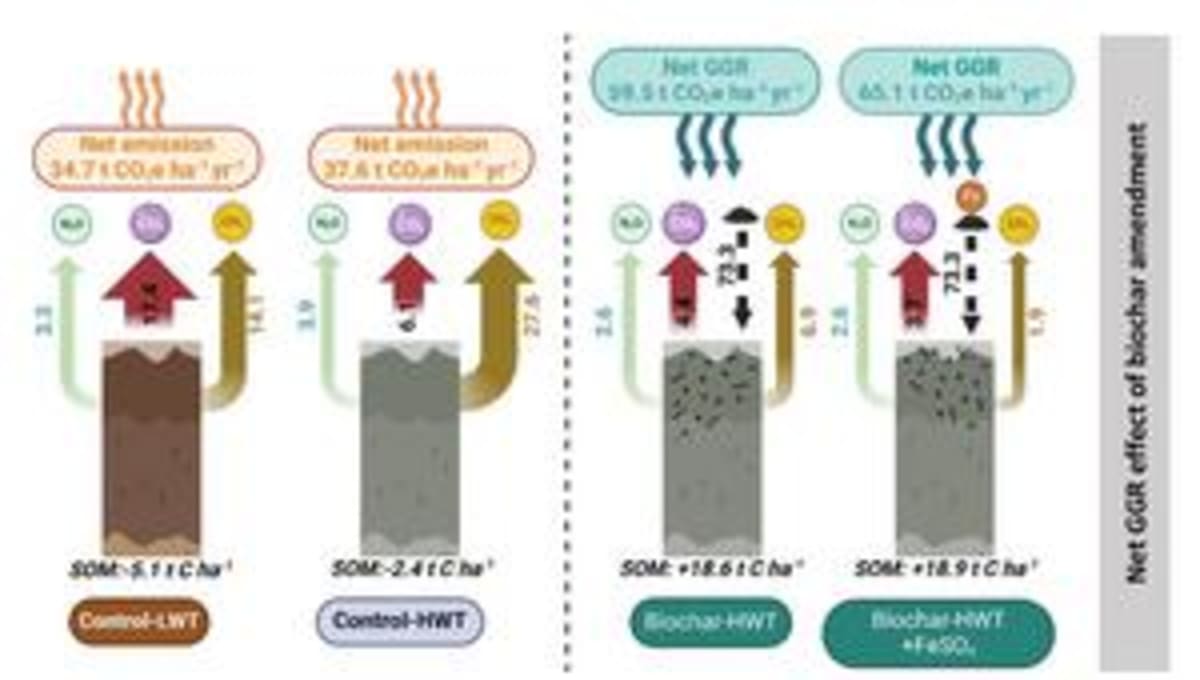
The winning combination was surprisingly simple. Biochar, a stable charcoal-like material made from plant biomass, changed everything when added to rewetted peatlands. It slashed methane emissions by up to four times compared to untreated soils and dramatically reduced carbon dioxide losses.
The results went beyond just stopping emissions. Biochar-amended soils actually started pulling carbon out of the atmosphere, turning former polluters into climate solutions. Other organic materials like straw and biosolids made things worse, feeding microbes that accelerated decomposition and released even more greenhouse gases.
Adding iron sulfate to the biochar mix made the results even better. This combination gave soil microbes alternative pathways for processing carbon, further limiting methane production in waterlogged conditions.
The Bright Side
This discovery couldn't come at a better time. Peatlands cover just a tiny fraction of Earth's surface but pack an outsized climate punch, storing more carbon than every forest on the planet combined. Protecting and restoring them has become essential for reaching net zero emissions goals.
The researchers emphasize that not all soil amendments are created equal. The stability of what you add matters enormously. Quick-decomposing materials like food waste might seem eco-friendly, but they actually fuel emissions rather than prevent them.
The most effective treatment combining biochar, raised water levels, and iron sulfate delivered climate benefits far beyond rewetting alone. It performed competitively with other major land-based carbon removal strategies, offering a scalable option for agricultural landscapes worldwide.
The findings prove that the old trade-off between carbon storage and methane emissions isn't inevitable. With the right approach, degraded peatlands can serve both climate and agriculture, storing carbon while remaining productive.
This research opens a realistic pathway for turning millions of acres of drained peatlands into active climate solutions.
Based on reporting by Google News - Climate Solution
This story was written by BrightWire based on verified news reports.
Spread the positivity!
Share this good news with someone who needs it