Brazil, India, Indonesia Can Cut Emissions Without Diet Change
Three major countries just mapped a path to slash greenhouse gas emissions by 2050 without asking people to change what they eat. The secret? Protecting forests and improving how we farm.
Scientists have discovered that Brazil, India, and Indonesia can dramatically cut their carbon emissions over the next 25 years by focusing on their forests and farmland, not on changing people's diets.
An international research team spent years creating detailed computer models to map out realistic climate solutions for these three countries. They discovered something surprising: the biggest emission cuts won't come from asking people to eat less meat or change their food choices.
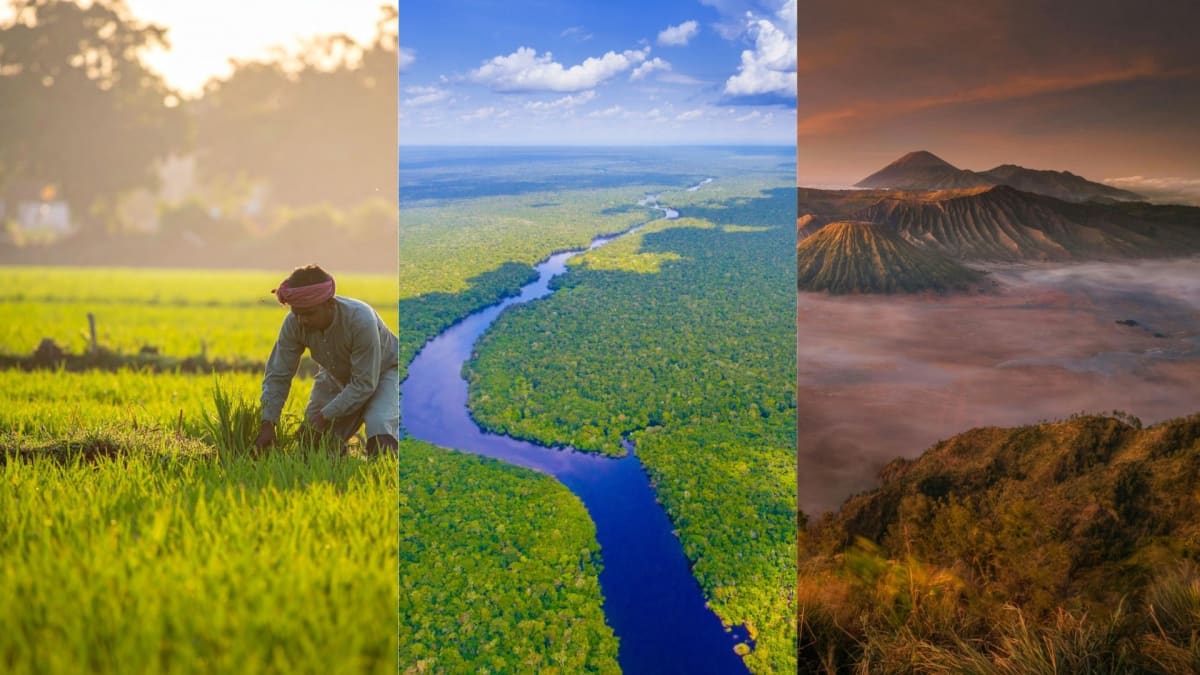
Instead, the breakthrough lies in how these nations manage their land. In Brazil, stopping deforestation and planting new forests will do the heavy lifting. Indonesia's path focuses on protecting its carbon-rich peatlands and preventing forest fires. India will capture millions of tonnes of carbon by improving agricultural soil and planting more trees on farmland.
The research involved scientists from seven institutions across six countries, including experts from Indian Institute of Management Ahmedabad, Bogor Agricultural University in Indonesia, and Federal University of Rio de Janeiro in Brazil. Local teams fed real economic, farming, and dietary data into sophisticated software that simulated how different policy choices would affect everything from crop yields to energy needs through 2050.
The models showed that asking people to drastically change their diets or cut food production could threaten food security and hurt rural families who depend on farming. That's especially critical in developing nations where millions still rely on agriculture for their livelihoods.
The Ripple Effect
This research matters because it gives governments a realistic roadmap. Policymakers now have proof they can fight climate change while feeding growing populations and supporting rural communities.
The three countries studied are among the world's biggest emitters in agriculture and land use, which means they also hold the greatest potential for positive change. When Brazil protects its forests, Indonesia saves its peatlands, and India improves its soil, the benefits spread far beyond their borders.
The study does have limitations. The models couldn't fully predict how future droughts, heat waves, and unpredictable rainfall might damage crops. They also couldn't calculate exact impacts on local biodiversity or specific farming jobs gained or lost.
But by linking farm and forest data with nationwide economic simulations, researchers ensured these solutions work in the real world. The pathway shows that environmental protection and economic development don't have to compete.
The research proves something hopeful: countries can grow, feed their people, support farmers, and heal the planet at the same time.
Based on reporting by Google News - Climate Solution
This story was written by BrightWire based on verified news reports.
Spread the positivity!
Share this good news with someone who needs it