
Birds and Whales Share Hidden Language Pattern With Humans
Scientists discovered that birdsong follows the same fundamental pattern as human language, a finding that challenges what makes human communication unique. The breakthrough could reveal how animals learn their complex songs.
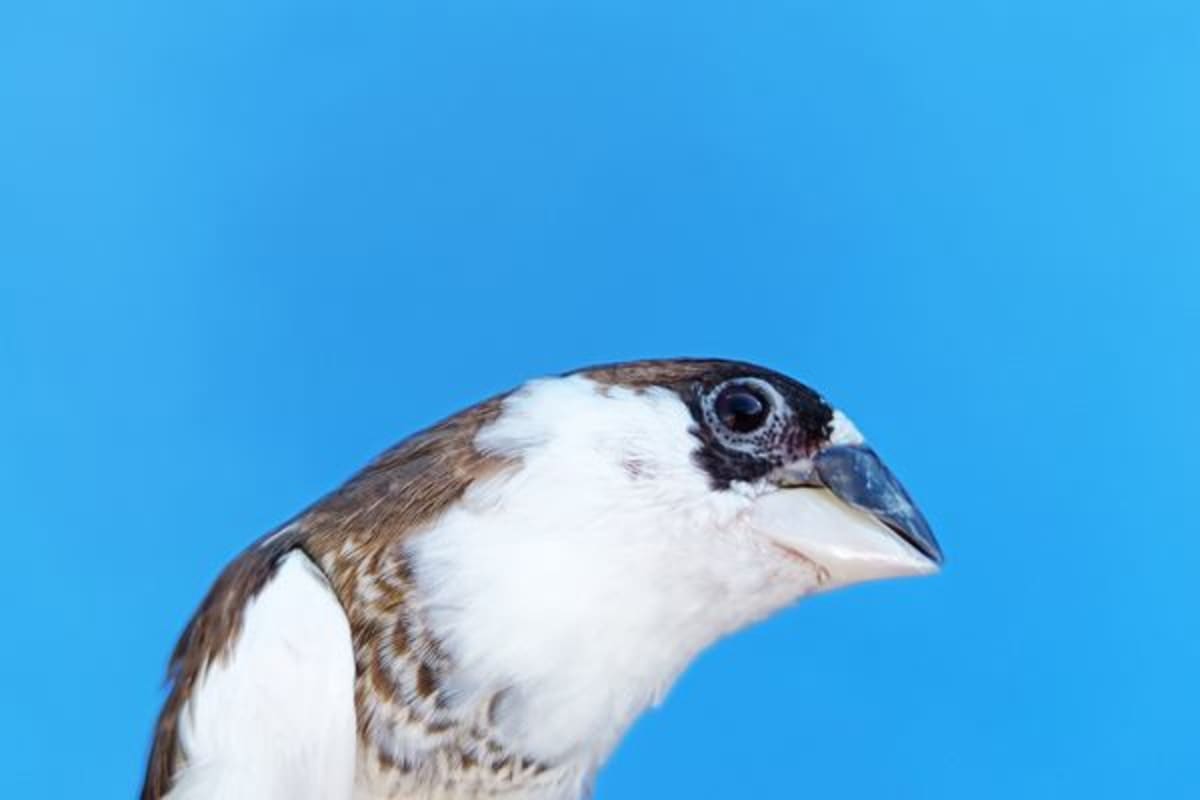
Bengalese finches are teaching scientists something remarkable about the nature of communication itself.
Researchers found that these small songbirds follow Zipf's law, a mathematical pattern that shows up in every human language. The law is simple but striking: a few words appear all the time, while most are rare. In English, "the" appears twice as often as "of," three times as often as "and," and so on down the line.
The finches do the exact same thing with their chirps, whistles, and trills. Even more exciting, humpback whales were found to follow this pattern last year too.
Three totally different species, separated by millions of years of evolution, all organizing their sounds the same way. That's not just interesting. It's a window into how communication works.
Simon Kirby, a cognitive scientist at the University of Edinburgh who worked on both studies, sees a clear dividing line emerging. Species that learn their calls culturally follow Zipf's law. Species born with hardwired calls don't.
The discovery makes sense when you think about babies learning to talk. Those few common words act like anchor points in a stream of sound. Once a baby recognizes "the," they can start figuring out where other words begin and end.
Young birds and whales might be doing something similar. They hear their parents' songs as one long sound at first. But those frequently repeated chirps or whale calls give them something to grab onto, helping them carve up the rest.
The research team faced their own version of this challenge. How do you identify individual units in birdsong when you don't speak finch?
They used a clever algorithm inspired by how babies learn. Listen for unusual sound transitions, which more likely happen between units than inside them. Cut the song there. Count how often each piece appears.
When they analyzed hundreds of finch recordings this way, the pattern matched Zipf's law perfectly. The results appeared in Science Advances today.
Why This Inspires
This research does something beautiful. It shows that human language isn't quite as special as we thought, but that makes the natural world more wondrous, not less.
Whales singing in the ocean depths and finches calling from tree branches are following the same mathematical rules that shape human conversation. They're solving the same problem we solved: how to help the next generation learn.
Not every scientist agrees the pattern proves cultural learning causes Zipfian distribution. Richard Futrell, a computational linguist not involved in the study, points out that Zipf's law appears in earthquake magnitudes and city populations too. But he agrees the team is building a compelling case.
The researchers plan to look for more parallels between animal and human communication next. Each discovery brings us closer to understanding how learning works across species.
These tiny finches are revealing that the boundaries between human and animal communication are blurrier than we imagined, and that shared thread connects us all.
More Images



Based on reporting by Scientific American
This story was written by BrightWire based on verified news reports.
Spread the positivity!
Share this good news with someone who needs it