Black Hole's Jet Is Stirring a 'Red Potato' Galaxy
Scientists discovered a supermassive black hole jet is "cooking" gas around a distant galaxy nicknamed the red potato, solving a cosmic mystery about why it isn't forming stars. The find reveals how neighboring galaxies can dramatically influence each other's evolution.
Scientists just solved a cosmic cooking mystery involving a galaxy shaped like a red potato.
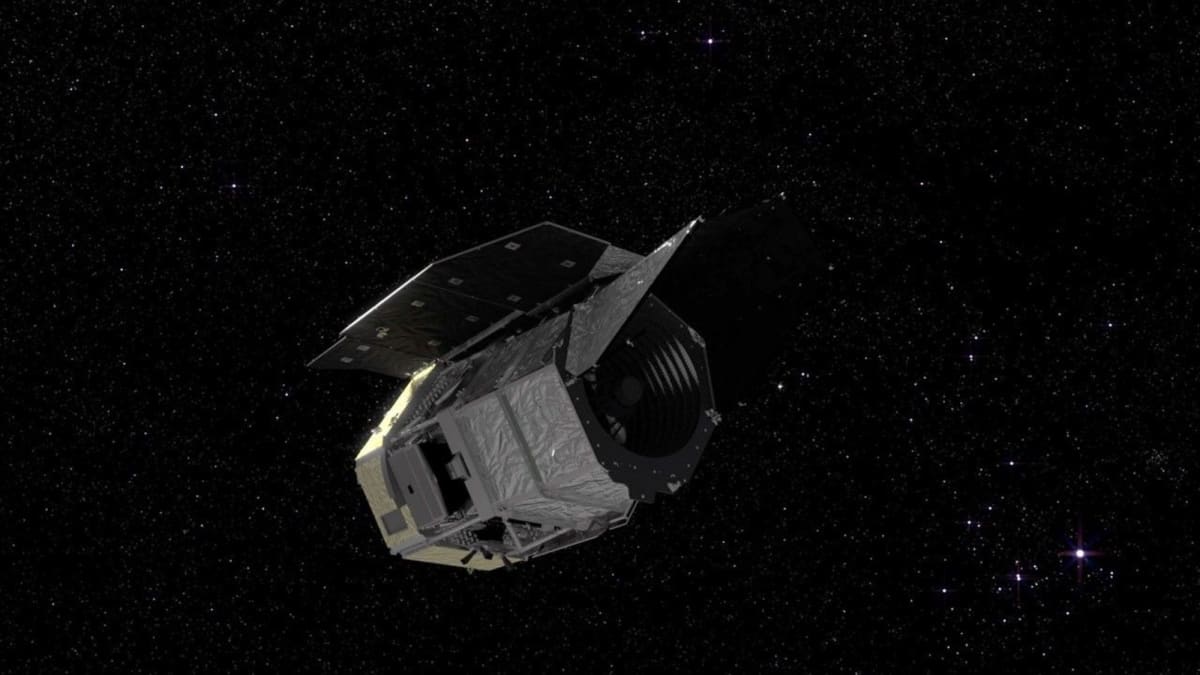
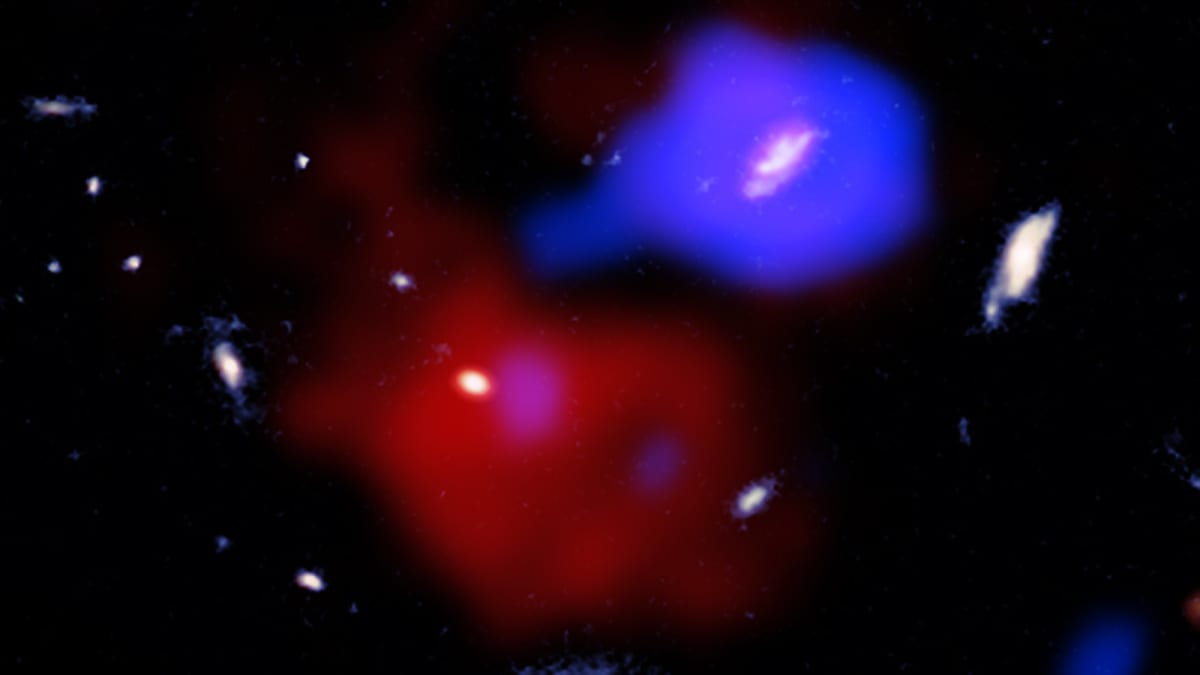
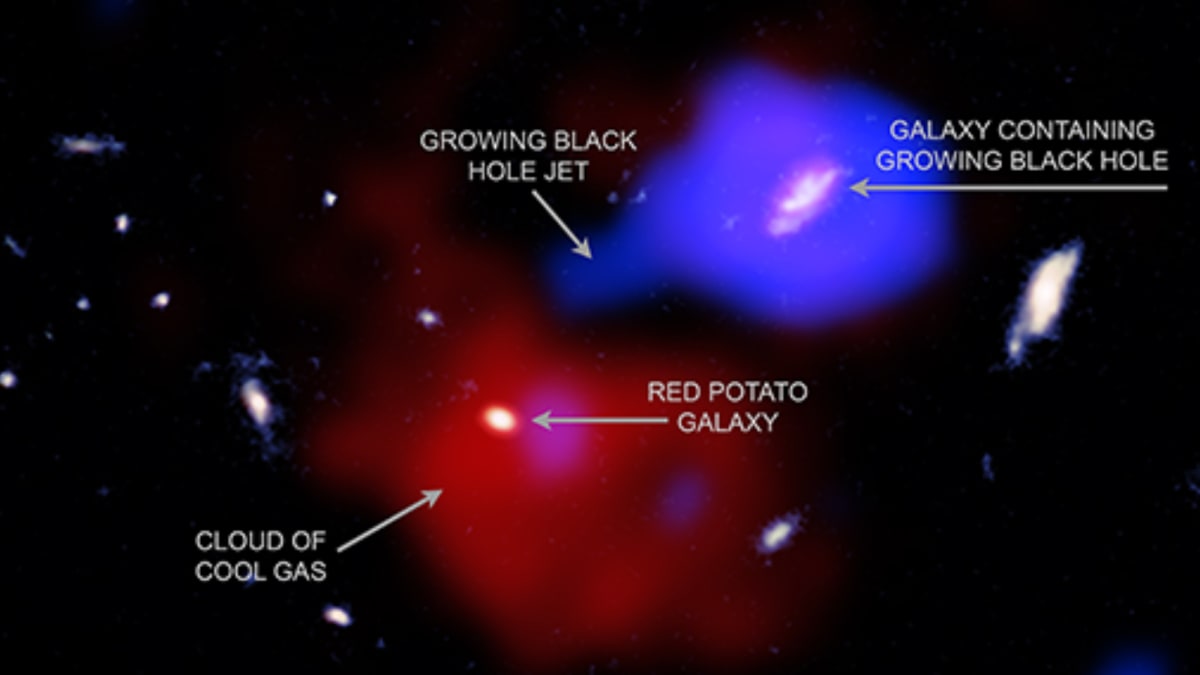
Using NASA's Chandra X-ray spacecraft, astronomers discovered why a peculiar blob-shaped galaxy 11.7 billion light-years away isn't forming stars like it should. The galaxy, officially named MQN01 J004131.9-493704 but nicknamed the "red potato" because of its odd appearance, sits in a pool of cold, dense gas that should be perfect for creating new stars. Instead, it's oddly quiet.
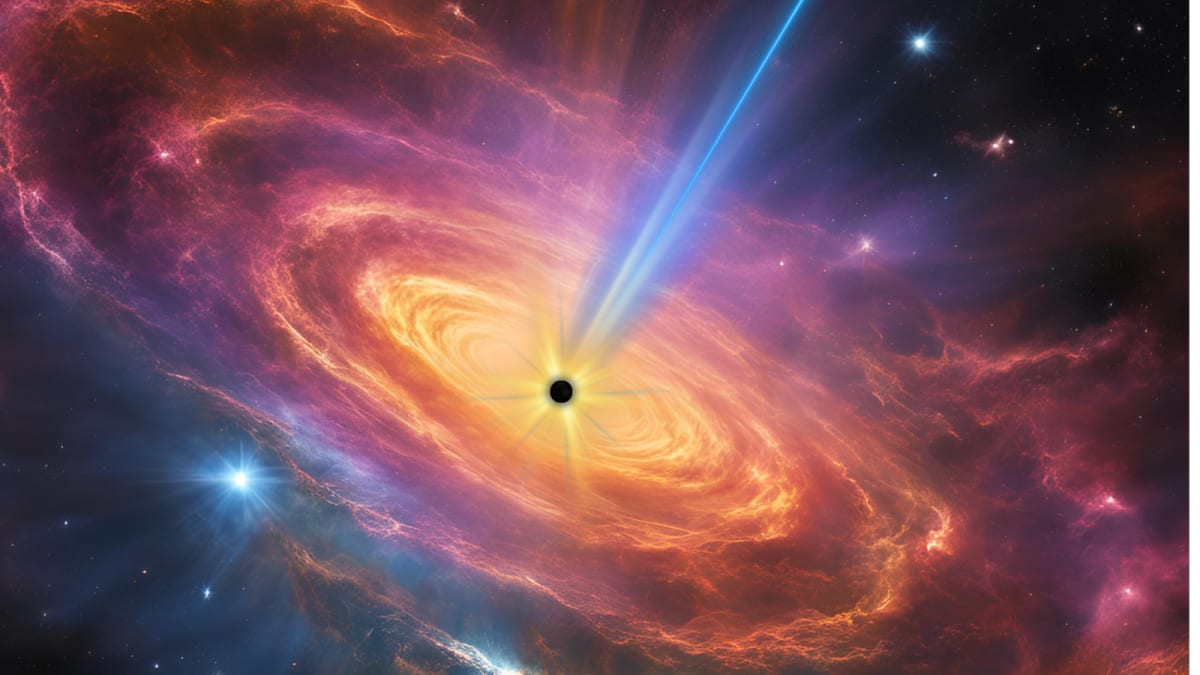
The culprit turned out to be an unexpected cosmic chef. A supermassive black hole in a neighboring galaxy 200,000 light-years away is shooting a powerful jet directly at the red potato. This jet is churning up and heating the surrounding gas like a cosmic spoon stirring a pot.
"Stars are not forming like we thought they would, so we went searching for the reason why," said team leader Weichen Wang of the University of Milan-Bicocca in Italy. "We found there may be a cook in this cosmic kitchen."
The discovery came after astronomers noticed something strange. The gas around the red potato was unusually turbulent compared to similar galaxies. When they looked closer with Chandra, they spotted the black hole jet pointed right at it.
This cosmic interference is actually starving the galaxy. The energy from the stirring prevents the gas from cooling down and collapsing to form new stars. Meanwhile, the neighboring galaxy hosting the meddling black hole is actively creating stars, as are other nearby galaxies.
Why This Inspires
This discovery represents some of the first research examining how non-star-forming galaxies behave in the early universe. Scientists are learning that galaxies don't evolve in isolation. They interact, influence each other, and sometimes even sabotage their neighbors' growth in ways we're just beginning to understand.
The finding helps answer fundamental questions about how the universe developed during its first few billion years. By studying this ancient galaxy as it appeared when the cosmos was only 2 billion years old, astronomers are piecing together the story of how celestial neighborhoods shaped each other.
The James Webb Space Telescope originally spotted this peculiar potato-shaped galaxy, and now Chandra has revealed its secret. Together, these cutting-edge instruments are giving us unprecedented views into cosmic history and the invisible forces that sculpt galaxies.
"The red potato is leaving crumbs of information that may help us track down the answers to some really big questions," said team member Andrea Travascio. Quite an important job for a galactic spud.
More Images

Based on reporting by Space.com
This story was written by BrightWire based on verified news reports.
Spread the positivity!
Share this good news with someone who needs it