Blind Creator Shows How She 'Hears' Trees Without Sight
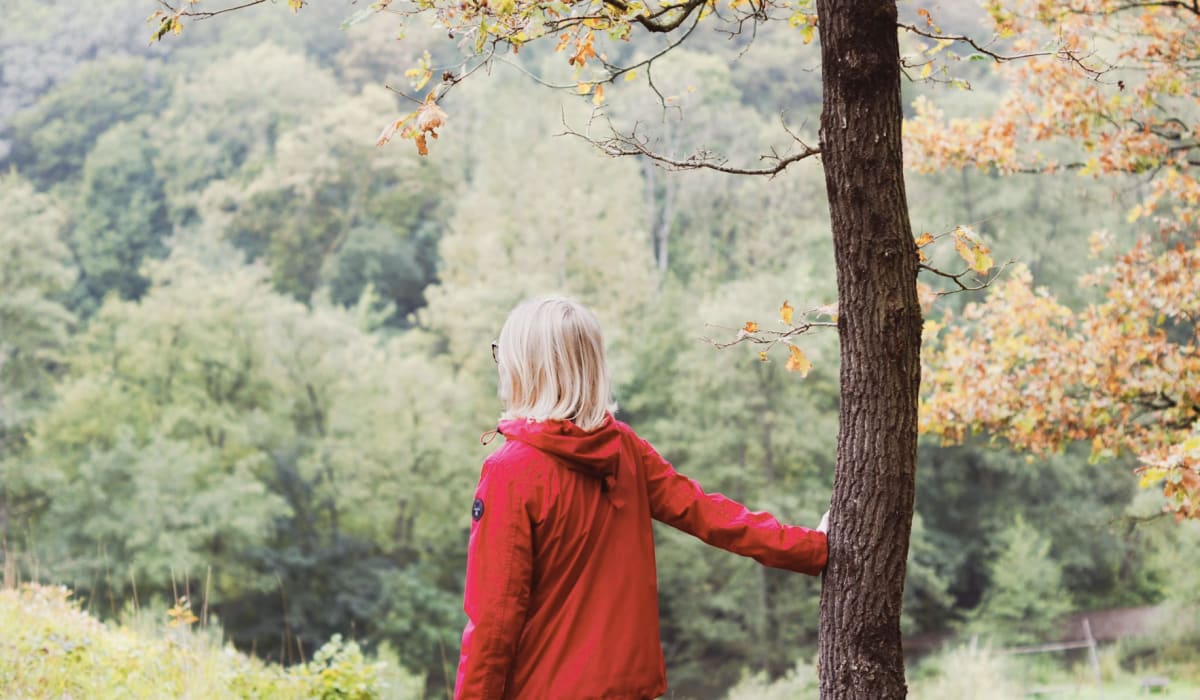
Molly Burke reached out and touched a tree in a park without a cane or guide dog, stunning her boyfriend who was filming. She was using passive echolocation, a real skill she learned as a child to navigate by detecting "sound shadows."
Molly Burke stopped mid-walk in a park, reached out her hand, and touched a tree she couldn't see. Her boyfriend, who was recording, was completely baffled because the tree wasn't making any noise.
Burke, who is blind, had detected the tree using passive echolocation. "This tree was so loud, it freaked me out," she explained in the moment, though the tree itself was silent.
The blind advocate and content creator shared the video on TikTok, where it's been viewed hundreds of thousands of times. Her goal was simple: show people that echolocation isn't a superpower or party trick but a learnable navigation skill.
The secret lies in what Burke calls "sound shadows." She's not hearing the tree make noise but rather how the tree changes the sound around it by blocking, absorbing, and reflecting ambient noise in the environment.
A solid object creates a kind of hole in the soundscape. To a trained ear, that absence is as detectable as any sound.
Burke, who has retinitis pigmentosa and lost her sight gradually, learned passive echolocation from her orientation and mobility instructor as a child. The training was surprisingly intense: she'd walk down streets blindfolded and count trees using only changes in sound.
The skill became automatic over time. As a teenager in a shopping mall, she suddenly stopped and reached out to touch thick pillars in front of her, confusing her parents who hadn't seen any obstacles.
Her brain had detected the sound shadows before she consciously understood why. "Echolocation is a technique used by some blind people to help us navigate," Burke told Newsweek.
Why This Inspires
Burke's video reminds us that adaptation takes countless forms. Passive echolocation, which relies on interpreting ambient sounds already present, differs from the active version popularized by Daniel Kish, who uses sharp tongue clicks like bats or dolphins.
Both methods are legitimate, teachable, and backed by research. Studies show blind practitioners tend to be markedly better at echolocation than sighted people, simply because they've had more practice.
Burke wanted people to know this is a concrete skill with a name and a training method. It's one of many quiet adaptations that make up navigating the world without sight, and it deserves to be recognized as such.
"It's not just a cool party trick," she wrote in her caption. "It's a useful skill that I'm grateful my O&M instructor taught me as a child."
Her message landed: sometimes the most powerful abilities are the ones we can't see.
More Images


Based on reporting by Upworthy
This story was written by BrightWire based on verified news reports.
Spread the positivity!
Share this good news with someone who needs it