Blue Whales' Songs Hide Them From Killer Whales
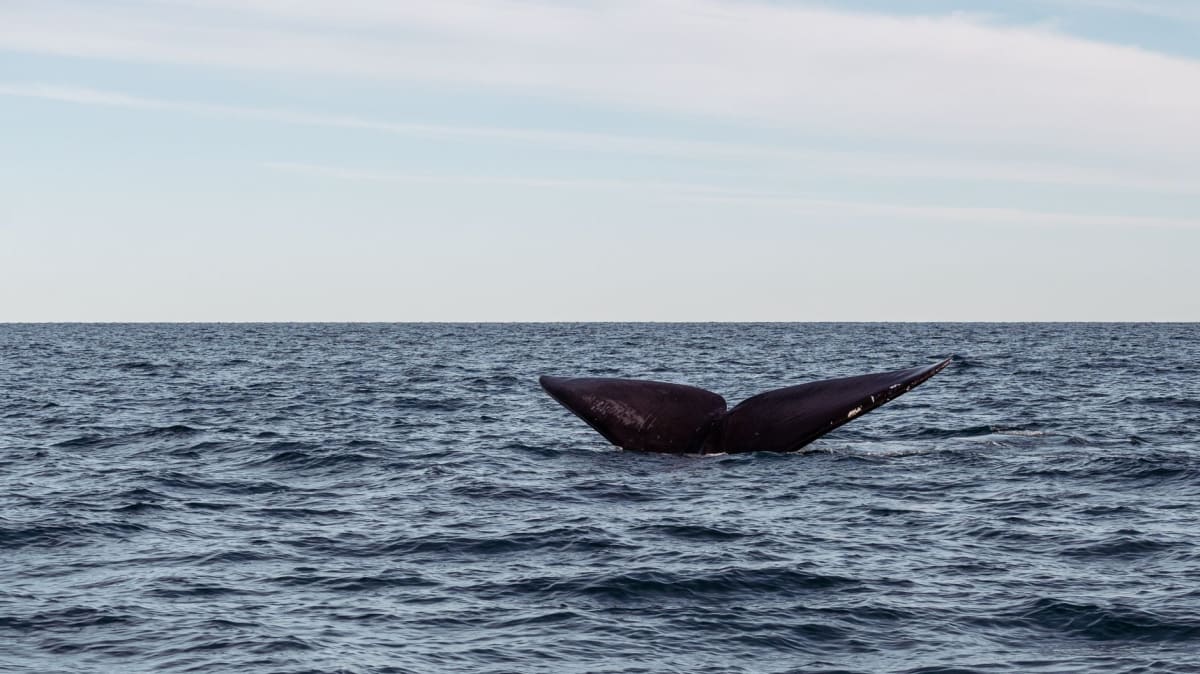
Blue whales sing at frequencies so low that killer whales can't hear them beyond a kilometer, effectively making the ocean's loudest animal acoustically invisible to its only predator. This discovery reveals how nature's largest creatures use sound as a survival tool.
The ocean's loudest voice might also be one of its best-kept secrets. Scientists at the University of Washington discovered in 2025 that blue whales sing at frequencies so deep that killer whales, their only natural predator, can barely hear them beyond about a kilometer away.
Blue whales don't just make noise. They broadcast calls at incredibly low frequencies, often between 10 to 40 hertz, which sits at the very edge of human hearing and travels enormous distances through seawater.
Killer whales, by contrast, live in a completely different acoustic world. As toothed whales in the dolphin family, orcas use higher-frequency clicks and whistles for echolocation and communication, making their ears poorly suited to detect the rumbling bass notes blue whales produce.
Researcher Trevor Branch and his colleagues didn't set out to discover a hiding strategy. They were studying pygmy blue whale songs to map different populations when the acoustic mismatch became clear.
The physics tell the story: a blue whale call that carries information to another blue whale hundreds of kilometers away can fade into background ocean noise for an orca just a kilometer distant. The sound isn't necessarily quieter, it's simply invisible to ears tuned to the wrong frequency.
This matters because blue whales face real danger from killer whales. Orcas have been documented attacking blue whale calves and even adults, using coordinated pod hunting to overwhelm prey that can weigh up to 200 tons.
Blue whales can't outrun orcas easily, and they often travel alone or in small groups without the protection of a herd. But they can, it seems, out-sing them by speaking in a frequency their predators struggle to hear.
Why This Inspires
This discovery shows how evolution creates elegant solutions to brutal problems. Blue whales didn't develop armor or speed or venom. They developed a voice that functions as both megaphone and whisper, depending on who's listening.
The finding also highlights why ocean noise pollution matters so much. Ships, seismic surveys, and industrial activity pump low-frequency sound into the same acoustic channel blue whales depend on for both communication and stealth.
When we fill the ocean with noise in the exact frequencies blue whales use, we don't just interrupt their conversations. We potentially strip away a survival advantage millions of years in the making.
Understanding how blue whales use sound gives us a roadmap for protecting them better. Quiet shipping lanes, seasonal restrictions in key habitats, and noise-reduction technology become more than nice ideas when we realize we're drowning out nature's most sophisticated acoustic defense system.
The loudest animal on Earth has been hiding in plain sound all along.
Based on reporting by Google News - Science
This story was written by BrightWire based on verified news reports.
Spread the positivity!
Share this good news with someone who needs it
%2Fhttps%3A%2F%2Ftf-cmsv2-smithsonianmag-media.s3.amazonaws.com%2Ffiler_public%2F41%2F6e%2F416e4112-c164-43fb-bfb2-aee28f44da1f%2Foctopus_2.jpg)