BMW's Hydrogen Car Refuels in 5 Minutes, Drives 466 Miles
BMW just unveiled a hydrogen fuel cell car that refuels as fast as a gas vehicle and travels up to 466 miles on a single tank. While the world races toward electric vehicles, hydrogen tech is quietly catching up with a solution that could work for drivers who can't wait hours to charge.
BMW just proved that the future of clean cars might not require you to plug in overnight.
The German automaker unveiled its iX5 Hydrogen model with a breakthrough tank system that refuels in under five minutes and delivers up to 466 miles of range. That's faster than stopping for coffee and farther than most road trips require between breaks.
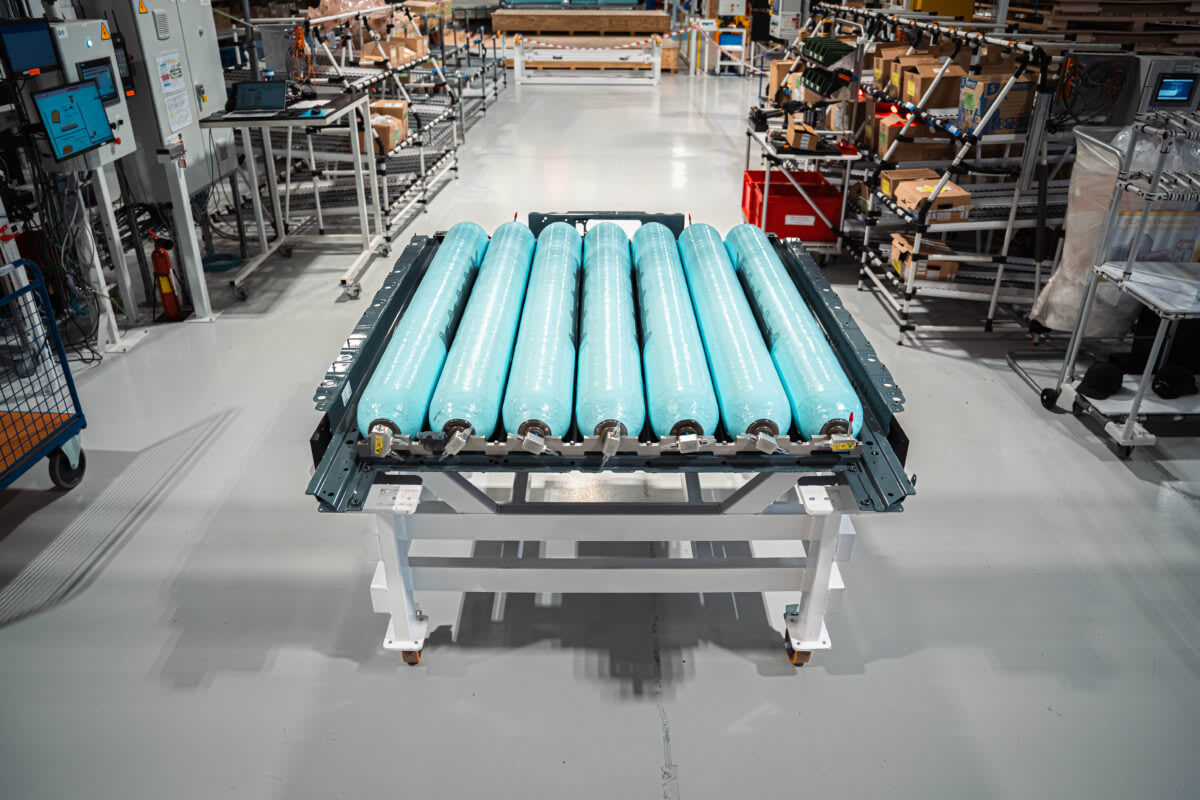
The secret sits in a 700 bar high-pressure tank system that stores up to seven kilograms of hydrogen across multiple connected chambers. BMW says the real advantage goes beyond driver convenience: these fuel cell vehicles can roll off the same production lines as gas and electric cars, making the switch to clean energy simpler for manufacturers.
The timing matters because hydrogen infrastructure is finally getting serious investment. UK-based ITM Power just secured $53.9 million from Great British Energy, plus a $59 million government grant, to expand its electrolyzer factory to 1 gigawatt capacity in South Yorkshire. That plant will manufacture the machines that split water into hydrogen fuel.
Meanwhile, South Korea committed $19.6 million to help Hyundai Engineering develop massive liquid hydrogen storage tanks, including future designs that hold up to 50,000 cubic meters. Across Europe, Dutch company Hynetwork and Belgium's Fluxys signed an agreement to build a cross-border hydrogen pipeline by 2030, possibly repurposing old natural gas infrastructure to connect supply with industrial demand.
Even startup CPH2 reached a development agreement with Siemens to scale its membrane-free electrolyzer technology, with its first 1 megawatt unit already heading to final testing.
The Ripple Effect
These aren't isolated experiments anymore. Automakers, energy companies, and governments are placing coordinated bets that hydrogen can solve problems batteries struggle with: quick refueling, long range, and heavy-duty applications like trucks and industrial equipment.
The infrastructure build-out happening now in the UK, South Korea, and Europe creates the backbone that could make hydrogen vehicles practical for everyday drivers within this decade. When refueling takes the same time as gasoline, the biggest barrier to adoption disappears.
BMW's production line flexibility means manufacturers won't need to choose between electric or hydrogen. They can build both, letting different regions adopt whatever works best for their infrastructure and driving patterns.
For drivers tired of range anxiety and charging waits, hydrogen is becoming a genuinely viable alternative with the convenience of gas and the clean conscience of electric.
More Images
Based on reporting by PV Magazine
This story was written by BrightWire based on verified news reports.
Spread the positivity!
Share this good news with someone who needs it